
From THE LONG GAME by Leander Schaerlaeckens, published on May 12 2026 by Viking, an imprint of Penguin Publishing Group, a division of Penguin Random House, LLC. Copyright © 2026 by Leander Schaerlaeckens.
Every time Ricardo Pepi goes home to Prosper, Texas, the place has changed.
In 1990, the city just north of the Dallas-Fort Worth metroplex counted 1,018 citizens; three decades later, there were a tad more than 30,000. Prosper grows and grows, bigger and richer, the leading edge of a suburban oil slick creeping from Dallas toward the Oklahoma border.
To get to Prosper, you set out from the north side of Dallas, from Plano and Frisco, where the large houses in the developments look so similar — brick facade, elaborate stonework, wrought iron fence — that you wonder how people manage to distinguish their own homes from those of their neighbors. A bumper sticker on the back of a large SUV has a message for other drivers: “WELCOME TO AMERICA, NOW SPEAK ENGLISH.” Next to that is a sticker of a smiley face. Navigate the jumble of overpasses and ramps and elevated highways, and then cut through the flat, empty scrublands due north. And there, suddenly, is Prosper, plopped right into the middle of the nothing, all of it brand-new.
“When I haven’t been home in a couple of months, and I go back in the summer, it’s going to be completely different,” Ricardo Pepi said. “I leave home at Christmas, and then I come back and I see new houses everywhere.”
Read more:Portugal’s Rafael Leão defends red card punch as protecting a teammate
The Pepis’ home looks exactly like all the ones next to it. New. Modern. Tidy. Manicured front yard. Not exactly small, but hardly ostentatious. On the inside, there is a lot of gray. A sign hangs over the back door: “CON DIOS TODO ES POSIBLE.” A living room wall is adorned with a mosaic of pictures, mostly from Ricardo’s youth soccer career, a frame-by-frame timeline of a child so large the family still calls him “Gordo” even though he is tall and lean now. So much bigger than his peers was Ricardo that the parents of opponents used to demand to see his birth certificate — even if they had already faced him and seen it. When the exasperated Pepis complied, proving once again that Ricardo was, in fact, younger than the other kids, those opposing parents resorted to lobbing jibes at the preteen during the games. “¿Cuándo se casará?” “When is he getting married?” That kind of thing.
It’s only been a few years since the Pepis moved to Prosper. They bought the place after Ricardo signed his first professional contract with FC Dallas’s senior team, before he made the national team, before the record-setting $20 million transfer to FC Augsburg in Germany. He only lives here some of the year now, when he isn’t in Europe or on the road. His family followed him to North Texas, only to get left behind again.
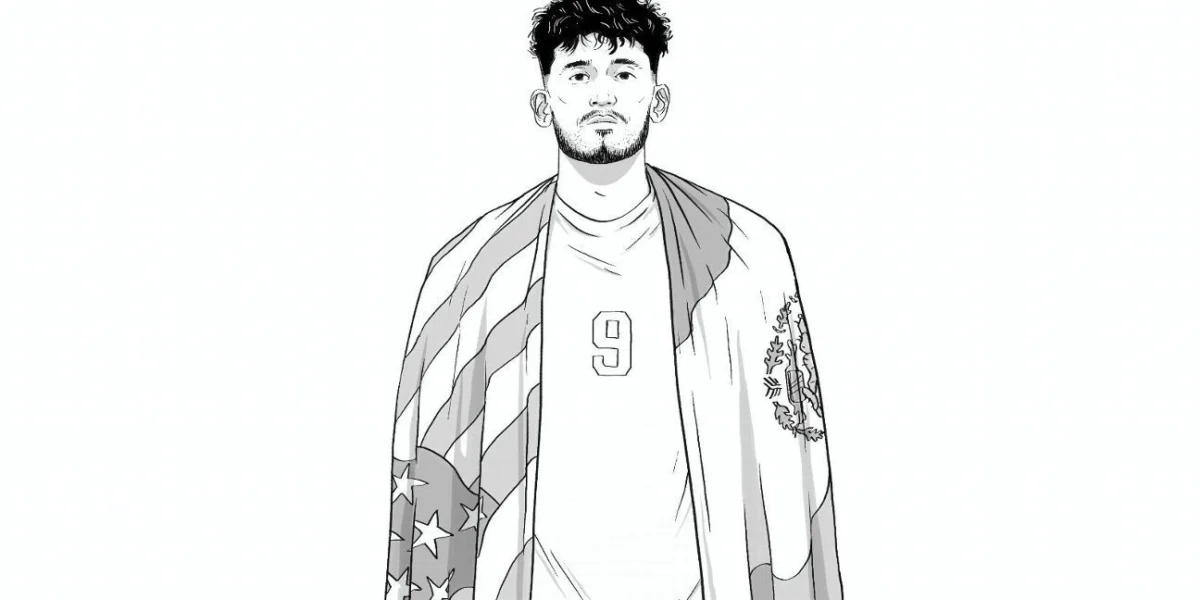
Daniel Pepi and his wife, Annette, were both born in Juárez, Mexico. She stayed there for all her childhood; Daniel crossed the border at 7 and was raised in El Paso. Juárez and El Paso are twin towns cleaved by a heavily fortified boundary. Still, it feels like a single, rambling place to the locals. Daniel and Annette met on a soccer field. Daniel played in one of El Paso’s men’s leagues, a hub of social life there. Annette’s family was as besotted by soccer as his was.
Daniel and Annette got married in 2002. She crossed the border to El Paso permanently. Ricardo was born in January 2003. Daniel was 23 years old when he became a father. Annette was 16.
Read more:Chronic fatigue: Might B12, folate play a role in prevention?
“I was young; she was younger,” Daniel recalled. “We kind of started our life from nothing, trying to live day by day. Back in El Paso, life was not that easy. Starting a family, you have to work long days and sometimes it’s really hard.”
The first few years were rocky. They found a house, only to move back in with his parents when they couldn’t make rent. They bounced around. Then they scraped together enough money to buy a plot of land and a trailer in San Elizario, a speck of a town in the Chihuahuan Desert, tucked up against the Rio Grande and the Mexican border, consumed by the sprawl of El Paso but also very much of Juárez. San Eli, as the locals call it, was once a part of Mexico, until the Treaty of Guadalupe Hidalgo ended the Mexican-American War and made it a part of the U.S. Culturally, emotionally, it never stopped being Mexican. It’s a town of skilled laborers, where people build their own homes with their own hands. Daniel, who had followed his father into the concrete-finishing trade at 13, now set about building his growing family a house on their lot. It took him six years. Annette bore two more children.
On the weekends, the Pepis went over the border to Juárez whenever they weren’t at the soccer field. The food was cheaper. Her family was there. They would stay the night and brave the enormous lines at the checkpoint to return to El Paso on Sunday. Daniel still played in the local men’s league — as a striker, and as everything else as well — and Ricardo hung around. The Pepis would get to the park as early as 8 a.m., when the games started, and stay there most of the day. Soccer was community. Cookouts. Drinks. Family. When he was 4, Ricardo asked his dad if he could start playing soccer.
One weekend morning, Daniel and Ricardo had a game at the same time. Daniel decided that his game took priority; Ricardo would have to miss his.
“We got into the car, and we started driving off to my game,” Daniel remembered. “Halfway there, driving on the freeway, I think to myself, ‘What the hell am I doing, man? It’s not like I’m going to miss much. It’s not like I’m having a career in this. And my kid’s just barely starting. Maybe he does have a shot.’ I turned the car around and we went to his game. Ever since that day, his or my other kids’ games were more important than anything.”
Daniel Pepi the soccer player was retired; Daniel Pepi the soccer dad was activated.
Pepi made some kind of select team for a tournament in Las Cruces, New Mexico, an hour away. The coach put Pepi, a striker, in goal and gave him no further instruction. The Pepis and some other parents decided there and then to break off and form their own team, the Lions. Daniel became a coach. The team was on the road a lot, a kind of shoestring travel team facing moneyed opponents wherever it went. Keeping the preteen Pepi and his prodigious goal-scoring gift in competitive games became a financial priority for a family still only just getting by.
“Sometimes we had to go to a tournament, go to Albuquerque, San Diego, Phoenix,” Daniel said. “You used to do whatever you needed to do to get that money and take them. Sometimes we used to borrow some money. Sometimes I would ask for a loan at my job, or from my dad. Sometimes I had to pawn the title to the car. Whatever we had to do to just keep going.”
Read more:James Milner retires after 24 Premier League seasons
Ricardo was conscious of the gulf in circumstances between the Lions and most of their opponents, the bevy of rich, largely white teams in the private, for-profit youth soccer scene.
“It motivated me to do better than them because I know they had an easier way,” he said. “Being a Latino, you don’t get as many opportunities as others get. It’s either because of your circumstances or because people don’t see the actual talent in you. Or people don’t want to see that talent in you.”
He may have been only a child, but Ricardo understood his family’s sacrifices.
“You start noticing these little things and start thinking, ‘They’re putting in a big effort for me to make it to these tournaments, so then I better go out there and actually make it happen,'” he remembered. “It was difficult because I just put a lot of pressure on myself. I wanted to help my family back in some way.”
Read more:Could an avocado a day really help blood sugar control?
He worked hard, and, knowing that he wasn’t always the most skillful player on the field, he asked Daniel to do extra drills. Daniel was tough on him, pulling Ricardo from games when he dogged it.
“When he thought I was being lazy, he would always get me off the field and he would take me home and say, ‘If you don’t want to play, then throw your uniform away, your boots away. You’re not going to waste my time or my money,'” Pepi said. “It was really direct, but I feel like I’m here for that reason.”
When Pepi was 10, in 2013, Daniel and his fellow dads handed control to a more experienced coach who took the team to FC Dallas’s new affiliate in El Paso. FC Dallas was an established MLS team with a checkered competitive record but a sterling reputation for developing talent through its live-in, all-expenses-paid youth academy. A great deal of good fortune put Pepi on the radar of a professional team ten hours east.
Had FC Dallas not recently decided to begin scouting El Paso, had Ricardo’s new coach not sought an affiliation — over Daniel’s objections, ironically — there’s no telling whether anybody would have noticed him. He would hardly have been the first talented Mexican American to go entirely overlooked. He might have gotten lost in the tangle of minor leagues. Or he might have set out to try his luck as a free agent, a dime-a-dozen fringe prospect in the Mexican leagues, like hundreds of Mexican Americans have done.