

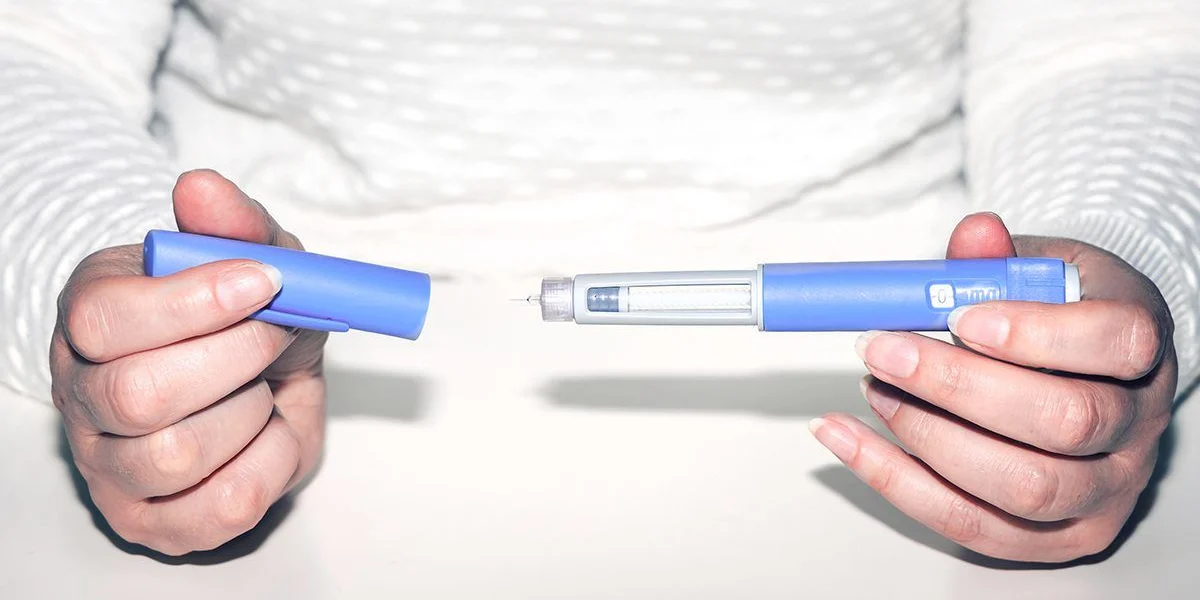
Fertility is closely linked to metabolic health, with obesity being a significant factor that can negatively affect reproductive function in both males and females.
Having overweight or obesity can contribute to hormonal imbalances, insulin resistance, chronic inflammation, and altered reproductive hormone signaling, all of which may impair fertility.
In females, obesity is often associated with conditions such as polyendocrine metabolic ovarian syndrome (PMOS), formerly knows as PCOS, while in males, it can reduce testosterone levels and adversely affect sperm quality.
Thus, lifestyle changes, such as adopting balanced dietary plans, engaging in regular physical activity, and maintaining a healthy weight, can help enhance reproductive outcomes and support fertility.
GLP-1 receptor agonists, such as Wegovy, which contain the active ingredient semaglutide, are a class of medications widely used for obesity and type 2 diabetes.
Now, emerging research suggests these medications may also have positive effects on reproductive health. Two studies indicate that GLP-1 drugs may offer reproductive benefits, in addition to supporting weight loss and metabolic health.
Firstly, an analysis published in Fertility and Sterility found potential improvements in fertility-related outcomes among women with PMOS.
Secondly, a review of clinical trials presented at ENDO 2026 — which is yet to appear in a peer-reviewed journal — found that GLP-1 drugs may improve testosterone levels and sperm quality in some men with obesity.
While the findings add to growing interest in the relationship between metabolic health, weight management, and reproductive function, the study authors advise caution and note that further research is necessary to investigate this association.
Read more:Is it bad that Elon Musk has a trillion dollars? Yes, and here’s why | Ingrid Robeyns | The Guardian
In a proof-of-concept study, researchers from the University of Colorado Anschutz Medical Campus evaluated a subset of participants enrolled in the ongoing RESTORE clinical trial.
The RESTORE study is investigating whether semaglutide or metformin can help restore ovulation and improve reproductive health in adolescents and adults with PMOS and obesity.
PMOS is a common endocrine and metabolic condition associated with infertility and obesity. Many females with the condition are unable to find treatments that effectively address both reproductive symptoms and metabolic complications.
“Raised body mass index (BMI) reduces fertility by causing hormonal imbalances, which can disrupt ovulation in women,” Clare Thompson, MBBS, BSc, nMRCGP, General Practitioner at the Cadogan Clinic, where she leads the Weight Management Service, who was not involved in the study, explained to Medical News Today.
“Excess fatty tissue produces oestrogen, which changes the natural hormone balance required for regular menstrual cycles and egg release. A higher BMI can also alter the fluid surrounding developing eggs, affecting their quality and ability to be fertilised by sperm,” Thompson explained.
“Finally, a higher BMI changes the uterine lining which can make it harder for an embryo to attach and therefore increases the risk of miscarriage,” she added.
“GLP-1 medications can help a patient to lose weight safely which can kick start their fertility by regulating the hormone balance again which may cause regular ovulation to occur, resulting in an increased chance of pregnancy,” Thompson noetd.
However, “there are many other reasons a female may be overweight other than simple lifestyle choices, such as PMOS, which primarily reduces fertility by disrupting ovulation,” she further explained.
“It describes a scenario where the hormone imbalance causes a relative rise in androgens (male hormones) alongside insulin resistance, which stalls egg development. Without regular ovulation it becomes difficult to conceive and predict when a woman’s fertile window is for reproduction. Some PMOS patients also experience lower egg quality and viability or even issues with their uterine lining, which can make implantation harder.”
Read more:Type 2 diabetes: Semaglutide may help protect bone health
– Clare Thompson, MBBS, BSc, nMRCGP
The analysis focused on participants ages 12 to 35 years who achieved at least 10% weight loss while receiving injectable semaglutide.
Investigators reported that improvements in reproductive markers appeared earlier than anticipated, prompting the publication of preliminary findings before completion of the larger study.
According to the researchers, the findings suggest that semaglutide could potentially address both aspects of the condition simultaneously, by improving metabolic health while also supporting reproductive function.
However, the study authors emphasized that the current analysis is preliminary and involved only a subset of participants. The RESTORE trial is ongoing, and longer-term data will be necessary to determine whether the observed reproductive benefits are sustained.
“The researchers concluded that substantial weight loss during semaglutide treatment was linked to considerable improvements in reproductive health among women with PMOS and obesity,” Thompson highlighted.
“The results suggest that addressing excess weight and the underlying metabolic dysfunction associated with PMOS can help restore hormonal balance and improve reproductive function. The findings deliver early evidence that semaglutide may offer a dual benefit, targeting obesity and key reproductive challenges associated with the condition, including irregular menstruation and impaired fertility.”
Separately, a review of five randomized controlled trials presented at ENDO 2026 found that GLP-1 drugs, such as semaglutide and liraglutide, do not appear to harm male fertility and may even improve testosterone levels and sperm quality in some men with obesity.
“The relationship between obesity, metabolic health, and fertility has been well established for many years,” Philip Werthman, MD, board-certified urologist, men’s health specialist, and director of the Center for Male Reproductive Medicine and Vasectomy Reversal in Los Angeles, CA, who was not involved in the study, told MNT.
Read more:Movie Review: ‘The Death of Robin Hood’ drains the blood, and life, out of an old English legend
“In both men and women, obesity can disrupt normal reproductive hormone signaling, impair fertility, and negatively affect reproductive outcomes. In men, we commonly see lower testosterone levels, functional hypogonadism, erectile dysfunction, and poorer semen parameters,” Werthman explained.
Researchers from the University Hospitals Coventry and Warwickshire and Warwick Medical School in the United Kingdom conducted a review of trials examining GLP-1 medications in men ages 18 to 65 years, comparing GLP-1 therapies with placebo or alternative treatments.
Across the studies, GLP-1 drugs showed no evidence of negatively affecting testosterone levels, reproductive hormones, sexual function, or sperm quality.
Notably, a 24-week semaglutide trial reported improvements in sperm morphology and cholesterol levels while maintaining stable hormone levels. Another 16-week study found that liraglutide increased testosterone and related reproductive hormones in males with obesity-related low testosterone.
The researchers note that health outcomes in these men were superior to those achieved through testosterone replacement therapy alone.
This suggests a potential shift from testosterone replacement in males with obesity and low testosterone, instead treating excess weight and metabolic health, which can restore hormone levels and preserve fertility.
“The male fertility data are also becoming increasingly compelling,” Werthman added. “Obesity-related hypogonadism is one of the most common reversible causes of low testosterone that I see in practice. Several studies have demonstrated improvements in testosterone levels and certain semen parameters following treatment with GLP-1 receptor agonists.”
“Reports involving liraglutide have shown improvements in sperm concentration, motility, morphology, and testosterone levels. More recent semaglutide data suggest improvements in sperm morphology and testosterone while preserving normal gonadotropin signaling.”
– Philip Werthman, MD
“One of the most important clinical distinctions is that GLP-1 therapies appear fundamentally different from testosterone replacement therapy for men who wish to preserve fertility,” he noted.
“Exogenous testosterone can suppress sperm production by shutting down the hypothalamic-pituitary-gonadal axis. In contrast, GLP-1 receptor agonists improve metabolic health and may improve endogenous testosterone production without impairing spermatogenesis,” Werthman explained.
While the exact mechanism is not fully understood, researchers suggest the reproductive benefits from GLP-1 drugs may be driven by improvements in metabolic health.
Obesity is known to affect hormone regulation, ovulation, sperm production, and overall reproductive function. Weight loss can help restore hormonal balance and improve fertility outcomes in both males and females.
GLP-1 drugs can improve blood sugar regulation, reduce appetite, and often produce substantial weight loss. These metabolic improvements may indirectly support reproductive health by reducing inflammation, improving insulin sensitivity, and restoring hormone production.
In those with PMOS, insulin resistance is a major contributor to hormonal imbalances and ovulatory dysfunction. Addressing these underlying metabolic problems may help restore regular ovulation and improve fertility.
“The evidence suggests that weight loss is the primary driver of the reproductive improvements seen with semaglutide, as substantial weight reduction is known to improve hormone balance, ovarian function and fertility in women with PMOS.”
“However, GLP-1 drugs may also have direct effects on reproductive health via mechanisms such as insulin signalling and ovarian function. Further studies are needed to determine how much of the benefit comes from weight loss versus the medication itself,” Thompson noted.
Similarly, obesity-related low testosterone is often linked to metabolic dysfunction rather than primary testicular disease. This means that weight reduction may help restore natural hormone production.
Read more:Tyra Banks sues Netflix over ‘America’s Next Top Model’ documentary, alleging defamation
“As a male fertility specialist, I view these findings as highly encouraging,” Werthman emphasized. “The broader benefits of GLP-1 therapy—including improvements in body composition, insulin resistance, cardiovascular risk factors, sleep apnea, and overall metabolic health—can all positively influence reproductive function.”
“Because infertility, obesity, metabolic syndrome, and low testosterone frequently coexist, treating the underlying metabolic disease may have substantial downstream reproductive benefits. Overall, I believe most of the fertility benefits observed with GLP-1 therapies are currently best explained by weight loss and metabolic improvement,” he told us.
“However, the consistency of emerging data in both men and women raises the possibility that these medications may ultimately prove to have direct reproductive effects as well. Larger prospective studies specifically designed to evaluate fertility outcomes will be needed to answer that question definitively,” Werthman added.
Despite the encouraging findings, both research teams emphasize that the evidence remains preliminary.
The semaglutide study in females represents an early proof-of-concept analysis from the RESTORE clinical trial, while the male fertility findings were based on a relatively small number of studies with varying methodologies.
While the findings are promising, neither semaglutide nor other GLP-1 receptor agonists have been approved specifically as fertility treatments.
Future studies may examine whether these reproductive improvements translate into higher pregnancy rates, improved live birth outcomes, and long-term reproductive benefits.
For now, the findings provide early evidence that the fertility conversation surrounding GLP-1 medications may be more nuanced than previously thought.