

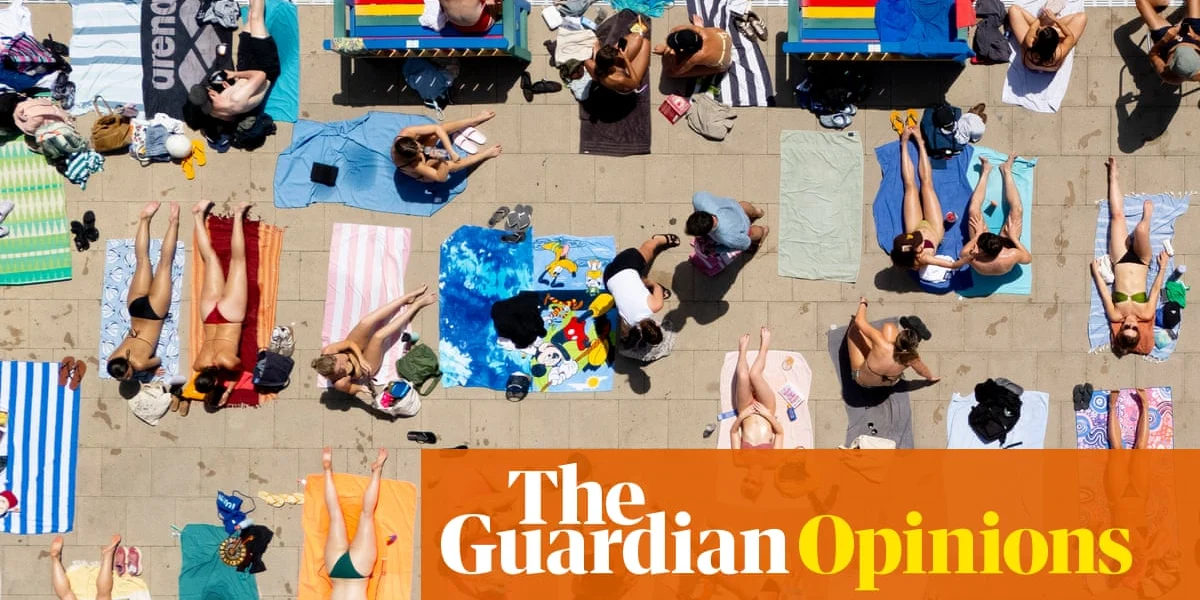
High summer has returned to the UK, and with it, the usual warnings about the dangers of sunlight and reminders to seek shade and cover up. After years of such advice, most members of the public naturally assume that the science connecting sun exposure to poor health is well established, so people are often shocked to learn that the opposite is true: those who spend more time in the sun tend to be healthier. A lot healthier.
I know because I began researching the subject nine years ago after stumbling upon some studies – and I’ve stayed on the case ever since, now summarising everything we know in my new book, In Defense of Sunlight. It contains good news for many people: we don’t have to fear the sun nearly as much as we thought. In fact, most of us could benefit from a bit more exposure.
We’ve always known that sunlight hitting skin produces vitamin D, but we now know that it actually produces dozens of different beneficial molecules. Those molecules lower blood pressure, reduce inflammation, increase energy and alertness, improve sleep, and make you feel better by releasing natural endorphins in the brain. The result? Less disease, better longevity.
Read more:Manchester United sign midfielder Youri Tielemans from Aston Villa
Let’s run the numbers. In 2024, scientists published a study in which they attached light-sensing wrist monitors to more than 88,000 volunteers in the UK Biobank dataset and tracked their light exposure, day and night. Then they followed those volunteers for years to see how they fared. The ones who received the most daylight were 34% less likely to die from any cause than those who got less light exposure than average. Even after accounting for exercise, diet, and other confounding factors, the light-getters were still 17% less likely to die.
But what about skin cancer? Aren’t people who are getting lots of sun more likely to get skin cancer, too? They are, but it is less deadly than most people think. Skin cancer is very common, but the vast majority of cases are minor, requiring simple removal. Melanoma, the much more dangerous kind of skin cancer, is fairly rare. Overall, about 3,500 people die of skin cancer in the UK each year – just 1% of the 350,000 deaths from cancer and cardiovascular disease overall. Skin cancer shouldn’t be downplayed, and it would be great if we could eliminate it forever, but if encouraging people to hide from the sun is raising their risk of developing these more impactful diseases, it’s time to begin a new conversation.
Read more:Weight loss: 8-hour fasting may help sustain results for a year
Part of the reason the benefits are so much greater is because it doesn’t take much sun to get them. Nobody needs a huge amount of sunlight; sunburns are clearly detrimental and are associated with higher rates of melanoma. The dangers come from getting almost no sunlight – and, unfortunately, that’s exactly the amount more and more people are getting.
If you’re wondering why we don’t hear about this more often, I chalk it up to what’s known as anchoring bias, a psychological term that refers to people’s tendency to cling to the first piece of information they hear about a subject, even if better information comes along later. We all tend to do this as individuals, but institutions are even more susceptible to it. In this case, the powers that be spent so much time and effort convincing people to get out of the sun that they are loth to admit the reality is more complicated.
So what should we do? Well, the answer is going to be different for different people. What’s right for you will depend on who you are, where you are, and what time of year it is.
The original recommendations to shun the sun came from Australia – one of the sunniest places on Earth, with a predominantly fair-skinned population that is ill-adapted to it. There, those recommendations made sense. (Although they have resulted in a surprisingly high level of vitamin D deficiency.)
Read more:Police investigating death of South Africa World Cup player Jayden Adams
But in a low-light environment like the UK, where the sun tends to be less intense and lower in the sky, different recommendations are in order. On bright summer days, it makes sense to limit your exposure, and sunscreen can help. Although it impedes the skin’s ability to produce vitamin D by blocking ultraviolet light, it still allows other wavelengths of light to work their magic. These benefits range from improved sleep and circadian alignment to reduced inflammation and anxiety. And by protecting against skin cancer, it gets more people outside, with all the rewards that entails.
Most important, though, is to keep in mind who you are. Fair-skinned individuals with blond or reddish hair are much more susceptible to skin cancer than other people; they really do need to be cautious. If you have more melanin in your skin, your risk goes down substantially. And if you have a lot of melanin, you are unlikely to develop skin cancer from UK-level sun, and stand to benefit most of all.
Read more:Erling Haaland is Norway’s World Cup machine — and the internet’s ‘babygirl’
There’s much more to say, both about the science and about the history of how we developed such a strange relationship with the sun in the first place, but I’ll leave that for the book. For now, please enjoy the beautiful light of the northern summer. It’s brief – and truly not to be missed.