

In the comic strip Calvin and Hobbes, the titular characters occasionally played a game known as Calvinball.
The rules were amorphous. At any moment, something like a “30-yard base wicket” may become part of the game. Determining a “winner” was besides the point, as the score for one game was given as “Q to 12.” The fictional, farcical sport entered public consciousness and was even cited by US supreme court justice Ketanji Brown Jackson in a blistering dissent last year.
In the first decade or so of Major League Soccer’s existence, Calvinball became a term of derision as the league struggled early with player acquisition and allocation. Salary-cap rules were stringent, except when they weren’t. If, for example, colorful Mexico goalkeeper/forward Jorge Campos wanted to have a Ferrari while he was in Los Angeles, the league could somehow accommodate him. Teen phenom Freddy Adu went into the draft – but with his family insisting that he play for nearby DC United, the league made sure that was where he landed.
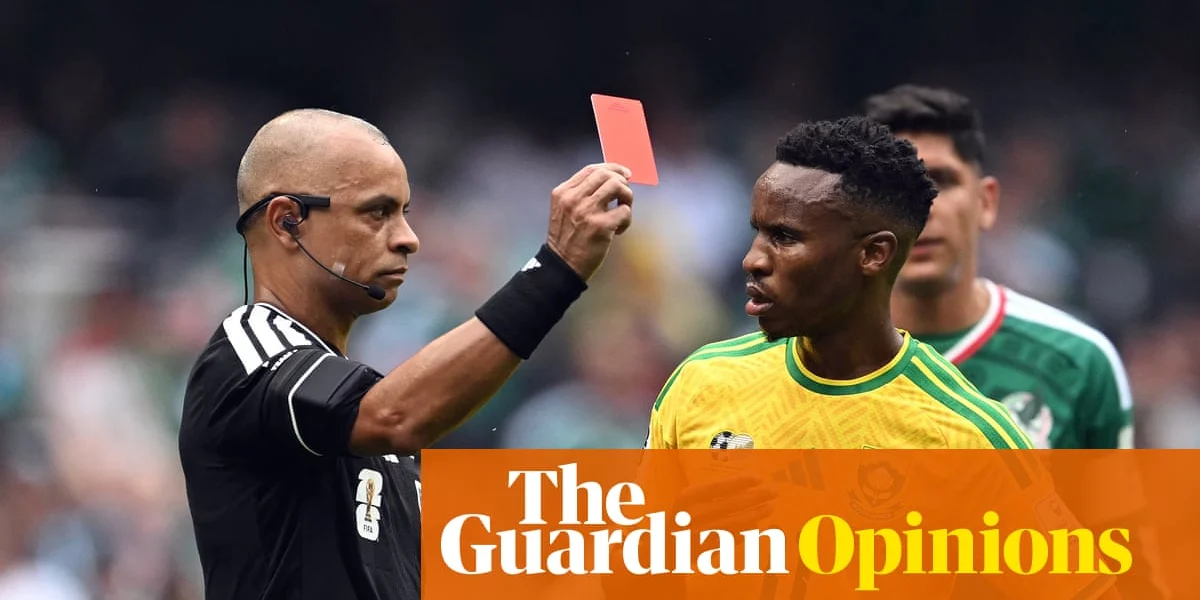
World Cups – even those that don’t include an unexpected application of Fifa regulations to rescind a red card ban given to a host country’s star forward, or a Cablegate – often have a whiff of Calvinball. Some incidents are simply byproducts of bringing together so many teams and referees, then sorting out the small details of interpretations and practices that evolve differently in different parts of the world. What may seem an obvious foul to Europeans may elicit a shrug from a referee from elsewhere, and vice versa.
Read more:Aerobic, combined training most effective for reducing blood pressure
But Fifa doesn’t help itself by insisting that the annual changes to the laws of the game should be applied atthe World Cup, not after it. Fifa isn’t in full control of the laws – it has half the vote at the International Football Association Board – but it has leeway over when to apply the changes. This year, the laws officially changed on 1 July, but in Ifab’s words, “competitions starting before that date may implement the changes earlier or delay their implementation until no later than the start of the next competition”. The tournament we call the World Cup is technically the final playdown of a tournament that runs all the way back to the beginning of qualification, and that started before 1 July, so there’s no reason why Fifa needs to get its referees to enforce laws that have hardly been tested in any widely broadcast competition.
Some years, those changes are simple. In 2022, the concept of having five substitutions instead of three was easy to understand. Goalline technology, tested in various competitions before the 2014 World Cup, wasn’t difficult to grasp.
But for many viewers, some World Cups are the first glimpses of changes that are truly groundbreaking. VAR first appeared in the 2018 World Cup, well before its implementation in top European competitions. And many changes may seem like minutiae at first glance – until they have dramatic impact on the game.
Read more:Mason Greenwood agrees deal with Fenerbahçe after Atlético Madrid drop pursuit – sources
Ask Paraguay’s Miguel Almirón. In his team’s opener against the USA, he tumbled to the ground while running alongside defender Tim Ream, and referee Danny Makkelie booked Ream. Until recently, ordinary fouls and yellow cards weren’t subject to review. But in the revised laws, the “mistaken identity” clause has been rewritten to include “when a player is shown a yellow/red card but the offence for which the card was shown was committed by another player of either team”. Replays showed Almirón had fooled the referee with a well-executed flop, so Ream’s yellow was wiped clear and Almirón was booked for simulation. (In the quarter-finals, Switzerland’s Breel Embolo became the next victim of the check. His case was even more impactful on the game: the yellow card, initially awarded to Argentina’s Leandro Paredes and then reversed, was his second, and Embolo’s sending-off left the Swiss with 10 men in a 1-1 match they would lose in extra time.)
The “mistaken identity” change was in an Ifab circular summing up actions from the annual meeting held 28 February. Two months later, Ifab held a special meeting and approved a second batch of changes,. Among them was a new sending-off offense: “covering their mouth when communicating with an opponent in a provocative, derisory or inflammatory manner or situation”. Perhaps Almirón wasn’t up to speed, because that’s exactly what he did in Paraguay’s second game, and he was duly sent off, prompting a costly rant from a Paraguayan commentator.
In other situations, recent changes have left a lot of room for confused interpretation. A player being substituted must be off the field within 10 seconds of “being shown or, where there is no board, of the referee’s signal for the substitution to take place, except where this is not possible due to safety/security or injury”. That opens the door for players to decide on the spot that they have a nagging calf injury and will have to limp off, then complain if the referee doesn’t buy it.
Read more:Argentina inspired by Maradona for England World Cup semifinal
Under the current laws, the referee is charged with allowing play to continue for a minor injury and stopping play if they deem the injury to be serious. Countless times in this World Cup, play has continued while a player lies in a crumpled heap, sometimes while both teams look at each other and the referee in utter bafflement. The old-school approach of one team putting the ball out of play and then getting it back in a reassuring show of sportsmanship isn’t completely gone but is rare.
Some parts of the laws seem to have been collectively wiped from memory. The laws allow no room for interpretation if a player takes off his shirt in a goal celebration. That’s a yellow card, even if the goal is disallowed. Egypt’s Mostafa Ziko didn’t see yellow for his celebration after putting the ball in the net against Argentina in a brilliant sequence that would have put his team up 2-0. (A few minutes later, he scored a goal that stood and did give his team a 2-0 lead.)
Also unenforced at this World Cup: the protocols for suspending a match when a particular homophobic chant is heard in the stands. Mexico has been punished for it in the past, but matches have proceeded and no fines or warnings have been announced even though the chants have been loud enough to escape broadcasters’ attempts to muffle them.
Read more:US negotiator Brett McGurk will release a book on the Hamas hostage crisis
While ignoring such obvious infractions, game officials have been literally splitting hairs on other calls. Croatia’s equalizing goal against Portugal was ruled out when a sensor in the ball indicated that Igor Matanovic had made the slightest contact with a ball en route to teammate Josko Gvardiol. When the ball was passed, Gvardiol was not in an offside position, but when it brushed Matanovic’s hair, Gvardiol had crossed the line. Ruling: no goal. If Matanovic sported the Pierluigi Collina hairstyle, the goal probably would’ve stood.
Such calls have made many fans bemoan the very existence of VAR. But it’s not inherently the fault of having a replay process such as the ones that work splendidly in American football, cricket and other international sports.
Technology or not, some calls will simply come down to human judgment. In cases such as the initial call against the USA’s Folarin Balogun, the judgment may depend on whether you believe the laws of physics supersede the laws of the game. The call is still being argued weeks after the fact, with the central question being whether Balogun should be expected to land his foot somewhere safe while a defender is crashing into him.
Read more:Wilson, Portland benefit from rare call to earn draw with Utah
All Ifab and Fifa can do is communicate clearly. That has notbeen the case with the handball infractions law, which has been rewritten so many times over the last few years that it has turned into one of those playground games in which one person whispers “I like hamburgers” to a classmate, and after a chain of whispers from one classmate to another, it comes out as “purple mambo dishwasher”.
Perhaps Fifa should reconsider the notion of implementing so many changes when the whole world is watching in a state of growing bewilderment.