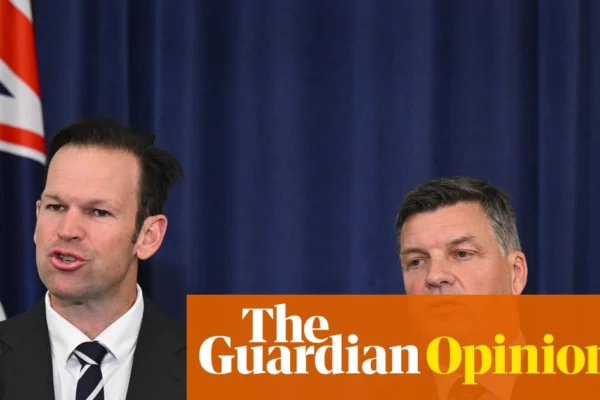

Barnaby Joyce is now the One Nation Treasury spokesperson, which serves as a lovely reminder of his triumphant 15 weeks as shadow spokesperson for finance and debt reduction from December 2009 to March 2010. A period during which he went to the National Press Club and confused millions with billions, and talked about “net gross public and private debt” which … is not a thing.
But with Pauline Hanson too busy swanning around in the UK meeting with far-right convicted criminals to care about her own constituents, someone has to talk about things that might affect Australians.
His start has not been great.
He suggested the Reserve Bank of Australia should have the power to call for spending and regulatory cuts. This, he argues, would make the RBA more independent. It wouldn’t. It would make it more political. It would also give power over government spending to unelected officials in the RBA.
Call me crazy but I like people accountable to the public to be the ones who decide how to spend public funds.
It would also lead to governments appointing political hacks to head the RBA to ensure they agree with what the government is doing. That would not be a good outcome.
But while it is tempting (and generally sensible) to dismiss all One Nation policies out of hand, they do have a couple of economic propositions that deserve debate.
A people’s bank
The idea of a people’s bank is not an original one, which is probably why it is not a bad one. Back in 2009, six pretty high-level economists recommended the creation of a people’s bank in the aftermath of the global financial crisis.
It has also been the Greens’ policy for a while – their national platform has the aim of “the establishment of a publicly-owned bank”. Back in 2018 I wrote on the policy. It was a good idea then, and remains so.
The main reason is the utter dominance of the big four banks.
One economist told the Australian Financial Review such a bank was absurd because “there’s a reason why the big four banks have been around for a really long time – they’re actually really good at doing their core business of assessing credit and matching borrowers and lenders together.”
No. The reason the big four banks have been around for a really long time is an historically systemic oligopoly built out of the Commonwealth Bank previously being government-owned, and the four pillars policy that has prevented any of the four being merged with each other.
The big four have a great “core business” of operating in an oligopoly where combined they have more than two-and-a-half times the amount of home loans than the rest of the banking sector:
If the graph does not display click here
Read more:How 1 avocado a day may help reduce heart disease risk
The big four currently generate 80% of the interest income from housing loans – a level greater than was the case before the GFC:
If the graph does not display click here
Suggesting that is due to great business acumen really requires an astounding level of naivety.
There is no reason why the government could not own a bank – in 1989–90, before it began to be privatised, the Commonwealth Bank delivered a $110m dividend to the Australian government because it made profits.
Yes, the state banks of South Australia and Victoria went belly up – but that wasn’t due to government ownership, but rather a seriously deluded faith in corporate shonks rather than staying true to the business of being a place for people to put their savings and borrow to buy a home.
More competition might help reduce the gap between what the banks charge you for a loan and what they pay you for a deposit – which has grown to pre-GFC levels:
Read more:12 states challenge Paramount’s takeover of Warner Bros, say merger would ‘extinguish competition’
If the graph does not display click here
Anything that helps improve competition, produce better services, lower fees and reduces the oligopoly power of the big four is a good thing, whether it be through Australia Post or another entity.
Thirty-year loans fixed at 5%
The other idea to go alongside the people’s bank was offering fixed 30-year mortgages at 5%.
Unlike most other advanced economies, a majority of Australians have flexible mortgages:
If the graph does not display click here
This means interest rate rises have a bigger impact here than other nations, but it also means the brunt of reducing inflation falls more sharply here on mortgage holders.
Read more:Argentina inspired by Maradona for England World Cup semifinal
Right now, a 5% mortgage would be very attractive, given the current average rate for a three-year fixed mortgage is 6.74%. The current 10-year bond yield (the interest rate the government pays) is 4.83%, which would suggest the loans would not generate any profit for the government:
If the graph does not display click here
But the problem with housing has not been the ability of people to get a home loan – it has been the price of the homes.
This policy – aside from whether it would mean a government bank might actually make a loss on a home loan – would increase the number of people bidding for houses at auctions and the amount of money they are prepared to pay. That would lead to higher prices.
The last thing we need now after finally delivering a policy that reduces demand and house prices is a new policy that suddenly makes taking out a home loan much cheaper.
Pauline Hanson has suggested the loans would be capped at $11.5bn and won’t cost the budget because it will just replace the Housing Australia Future Fund (Haff).
Read more:FIFA denies ball hit wire in England’s first goal vs. Norway
Except the Haff’s $11.5bn is used to generate income from investments, and then every year $500m from it is used to address “acute housing needs, social housing or affordable housing” – ie increase the housing stock.
One Nation plans to instead use that money to give out around 15,600 home loans (using the current average home loan of $735,000). That’s not a lot, given in the past year there were 120,841 first-home buyer loans taken out.
Who would be eligible? Would there be a cap on each loan size? Would it be first come first served? Would it only be for new housing? Would it actually address any problem or just give cheaper loans to people who could have received a loan anyway?
Such actual policy questions remain rather unanswered, which is perhaps why it took a couple days to go from a policy to, according to Joyce, “a discussion piece – it is not policy”.
All of which suggests the best way forward for One Nation is to just use other people’s ideas like a people’s bank, because when they go out on their own, they generally seem to provide little worth or substance.