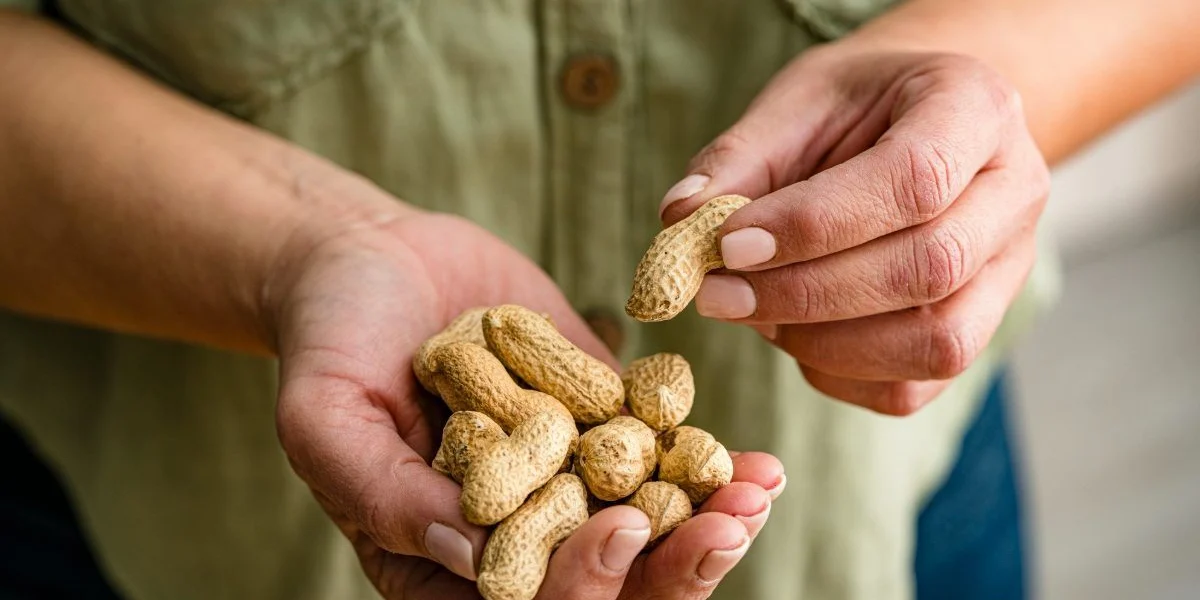
Eating peanuts could help reduce the risk of type 2 diabetes.
This is according to a recent study published in November in the American Journal of Clinical Nutrition. The researchers explored the effects peanut consumption can have on blood lipids, specifically very long-chain saturated fatty acids (VLCSFAs).
Increased circulating VLCSFA levels are already associated with lowered risks of type 2 diabetes and heart problems.
Now, the new study, funded by the Peanut Institute Foundation, suggests that peanuts, in particular, could lead to changes in blood lipids and reduce the risk of type 2 diabetes.
The researchers found that changes in blood lipids resulting from consuming peanuts were associated with an 11% lower risk of developing type 2 diabetes in the larger population study.
The study combined data from the 6-month ARISTOTLE randomized trial and the large EPIC-Potsdam cohort. The ARISTOTLE trial included 63 healthy participants between the ages of 18 and 33 years. Each day for 6 months, they consumed one of the following:
Read more:Cardiometabolic disease: How sleep could support brain health
Participants otherwise consumed their regular diet, though grapes, wine, berries, and dark chocolate with more than 70% cacao were excluded as they had high levels of resveratrol, an antioxidant in peanuts. Other nuts were also excluded.
Data from the EPIC-Potsdam cohort included 774 cases of type 2 diabetes and 547 cases of cardiovascular disease. The researchers used information from this cohort to determine whether the lipid changes seen in the ARISTOTLE trial were associated with reduced diabetes risk.
While the findings do not establish that eating peanuts directly lowers the risk of type 2 diabetes, the researchers observed an 11% lower risk, with the association linked to VLCSFA-containing lipids.
Sirisha Vadali, MD, board certified noninvasive cardiologist, advanced lipidologist, and Program Director of HonorHealth’s Cardiometabolic Program, spoke with Medical News Todayabout these findings.
“What’s interesting here is that the researchers didn’t just ask people what they ate. They looked for a measurable fingerprint peanuts leave in the blood, then tracked whether people carrying more of that fingerprint went on to develop diabetes. An 11% lower risk is a meaningful signal,” said Vadali, who was not involved in the study.
Read more:Psoriasis: Vitamin B5 derivative may help calm overactive immune cells
“But it’s an association from a population study, not proof that peanuts prevent diabetes, and the trial that identified those lipid changes was small: 63 young, healthy adults. So I’d frame it as one more piece of evidence that the quality of the fats we eat matters for metabolic health, not as a reason to treat peanuts like medicine,” she explained.
Tiffany Marie Hendricks, MD, DipABFM, DipABLM, double board certified physician and metabolic health educator, who was also not involved in the study, added, “The study found a peanut-related pattern in blood lipids that was linked with lower risk in a larger population study, and the authors themselves call this hypothesis generating. It is a signal worth studying more, not a prescription.”
The researchers concluded that the reduced risk of type 2 diabetes was “partly through BMI.”
MNT asked Vadali how important BMI was to the study’s findings.
“Very important. Once the researchers accounted for BMI, much of the connection between the peanut lipid signature and lower diabetes risk faded. To me, that suggests a big part of the benefit may come down to body weight and body composition,” Vadali explained.
“Peanuts are a combination of protein, fiber, and unsaturated fat, which is exactly what keeps people full and helps them snack less on refined carbs. The authors call this part of the analysis hypothesis-generating, so we can’t say definitively that weight is the whole story.”
Vadali also expressed that “[t]wo people with the same BMI can have very different metabolic risk.”
Hendricks told MNT:
“BMI looks very important here. The authors found that body weight could explain a large part of that link, around 89 percent in their analysis. That tells me we cannot separate the peanut pattern from weight. It may be that the link is largely reflecting weight, and that is why I would be careful not to present peanuts alone as the reason for the lower risk.”
Participants consuming peanuts ate either 25 g of roasted peanuts with skins or 32 g of peanut butter each day.
MNTwanted to know how realistic this amount would be for people to consume each day if they are looking to add peanuts to their diet or increase their current intake.
Read more:Vegan vs. Mediterranean diet: Research explores links with weight loss
Vadali explained that these quantities represent a realistic and sustainable dietary recommendation for people looking to reduce their diabetes risk, adding that “that’s one of the things I like most about this study. Twenty-five grams is a small handful of peanuts, and 32 grams is about two tablespoons of peanut butter. That’s affordable, shelf-stable, and easy to fit into a normal day.”
However, added Valadi, “[t]he caveat is that peanuts are calorie-dense, so the goal is to swap them in for something less nutritious, like chips, crackers, or a pastry, not to add them on top of everything else. Portion size is where people tend to go wrong.”
Hendricks explained, “I would not present peanuts or peanut butter as a standalone diabetes prevention diet. I would present them as a sensible food choice inside a bigger pattern: fiber, protein, healthy fats, foods that help you feel full, and steady habits like movement and sleep.”
She concluded, “Practically, that could look like swapping chips or cookies for a small handful of peanuts, or using natural peanut butter with fruit or vegetables instead of a sweet spread. I would still advise people to get their blood sugar tested and talk with their clinician about their own risk.”