

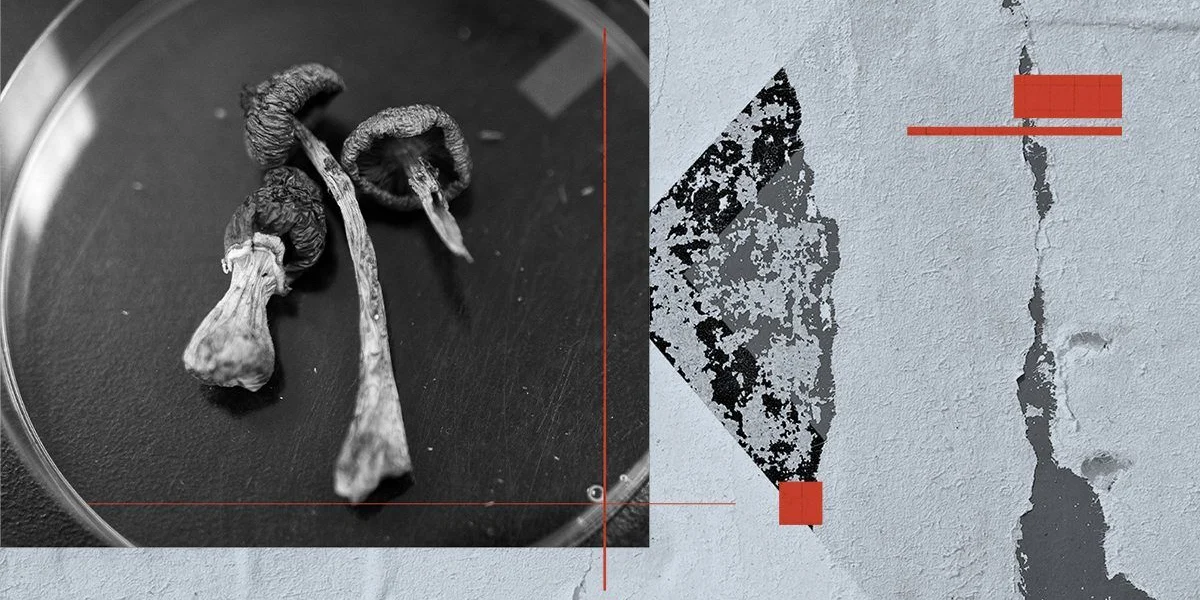
A new study suggests a single high dose of psilocybin may trigger brain changes that persist for weeks after the experience.
The exploratory study found that the psychedelic, which is found in “magic mushrooms,” may not only alter brain activity but may also improve mood, insight, and thinking flexibility over time.
While the study was limited in its participant pool size, the findings add to research that examines how psilocybin could potentially support mental health.
The study is published in Nature Communications.
Recent research shows that psilocybin may be a treatment option for mental health conditions, such as depression, that are not responsive to standard treatments. Controlled use of psilocybin is legal in only three states, though.
The psychedelic is suspected to work by increasing brain flexibility and disrupting rigid thought patterns. However, scientists are unsure exactly how this occurs.
In the new placebo-controlled study, researchers set out to better understand both the psychological effects of psilocybin and its potential impact on brain structure. They recruited 28 healthy adults with no prior psychedelic use.
They administered two doses of psilocybin one month apart. The scientists started with a low dose of 1 mg, which they used as a control, and then followed up with a much higher dose of 25 mg.
The sessions took place in an environment that the study authors described as being “dimly lit, aesthetically pleasing.” The participants wore eye masks while resting on a bed and listening to music while being monitored.
The researchers conducted EEG tests to measure brain activity during the experience and MRI scans to examine brain structure and connectivity before their psilocybin dose, as well as one month later. They also used diffusion tensor imaging (DTI) to look at the brain’s white matter pathways.
The participants also completed psychological assessments measuring insight, well-being, and cognitive flexibility multiple times after each session.
When the researchers analyzed the data from the 1 mg dose of psilocybin, they did not note any significant changes. However, the 25 mg impacted the participants in all measured areas.
The large psilocybin dose caused strong effects, and most of the participants described it as being the “single most unusual state of consciousness” of their lives.
During the experience, the researchers observed increased “brain entropy” on the EEG. According to the Journal of Neuroscience Methods, brain entropy is the “measure of the complexity of brain activity that has been linked to various cognitive abilities.”
This can lead to making it easier to break out of unhealthy thought patterns.
The participants with the biggest increases in brain entropy reported more psychological insight the next day and improved mental well-being at the 4-week point after taking the high dose of psilocybin.
Read more:Novel anticoagulant shows reduced recurrent stroke risk
The researchers also found structural changes in brain pathways linked to decision-making and emotion.
DTI scans showed changes in white matter pathways one month after the large dose of psilocybin. These shifts may reflect changed or more efficient brain connectivity.
The scientists say that if further studies confirm this, it will be the first time “anatomical ‘neuroplasticity’” was found in a psychedelic study in humans.
When speaking with Medical News Today, the senior study author Robin Carhart-Harris, PhD, a neurology professor at UCSF, touched on the psychological well-being aspect of the study.
“It will therefore be relevant to people with depression and anxiety who will typically be low in well-being,” said Carhart-Harris. “This study suggests psilocybin therapy can improve general mental health and suggests candidate brain and psychological mechanisms for how this happens.”
Zishan Khan, MD, a board-certified psychiatrist and Regional Medical Director with Mindpath Health, who was not involved in the study, spoke with MNT about the study findings.
Khan described the study as being “carefully conducted, but still early-stage,” noting that it helps link the “acute trip” to measurable brain and well-being changes over time.
While Khan found the multimodal design a key strength, he pointed out that the small participant pool means the findings are “hypothesis-generating rather than clinically definitive.”
Khan also said that the brain changes may reflect neuroplasticity, but interpretation remains “complex” and requires further study over a longer period of time.
When asked about clinical use, Khan said the study adds to the growing credibility of using psilocybin as a psychiatric treatment, but the study alone does not “justify viewing psilocybin as ‘ready for primetime’ in routine psychiatric practice.”
Andrew Coop, PhD, professor and associate dean for students at the University of Maryland School of Pharmacy, who was not involved in the study, also spoke with MNT.
“Psilocybin has the potential to be a mainstream treatment, and several Phase III clinical trials are currently ongoing,” shared Coop. “Studies such as this add to the evidence of how psilocybin works, that it is due to a combination of the physiological effects on neurons and the actual psychedelic experience.”
Coop also noted that the study gives further credibility to the new federal executive order relating to psilocybin. The order moves to accelerate psychedelic research for potential medical access for mental illness.
“Such conditions are devastating for patients, and evidence of the mechanism of action enhances the progress of psilocybin to being able to legally and safely help patients,” said Coop.