

Kalo te përmbajtja
  • EN
  • SQ
  • IT
  • FR
  • ES
  • DE
  • EL
VA-NEWS VA-NEWS
  • Home
  • News
  • Opinion
  • Health
  • Technology
  • Sport
  • Lifestyle
  • Entertainment
  • Travel
LIVE
Navigation

VA-NEWS

  • Home
  • News
  • Opinion
  • Health
  • Technology
  • Sport
  • Lifestyle
  • Entertainment
  • Travel
Shortcuts
Home Latest
LIVE
Gjuha
  • EN
  • SQ
  • IT
  • FR
  • ES
  • DE
  • EL

Search news

  1. Kryefaqja
  2. Opinion
  3. The Guardian view on tackling Ebola: pathogens aren’t the only things that kill | Editorial | The Guardian
Opinion

The Guardian view on tackling Ebola: pathogens aren’t the only things that kill | Editorial | The Guardian

• May 20, 2026 • 4 min read • 👁 4
◉ WhatsApp 𝕏 X
News

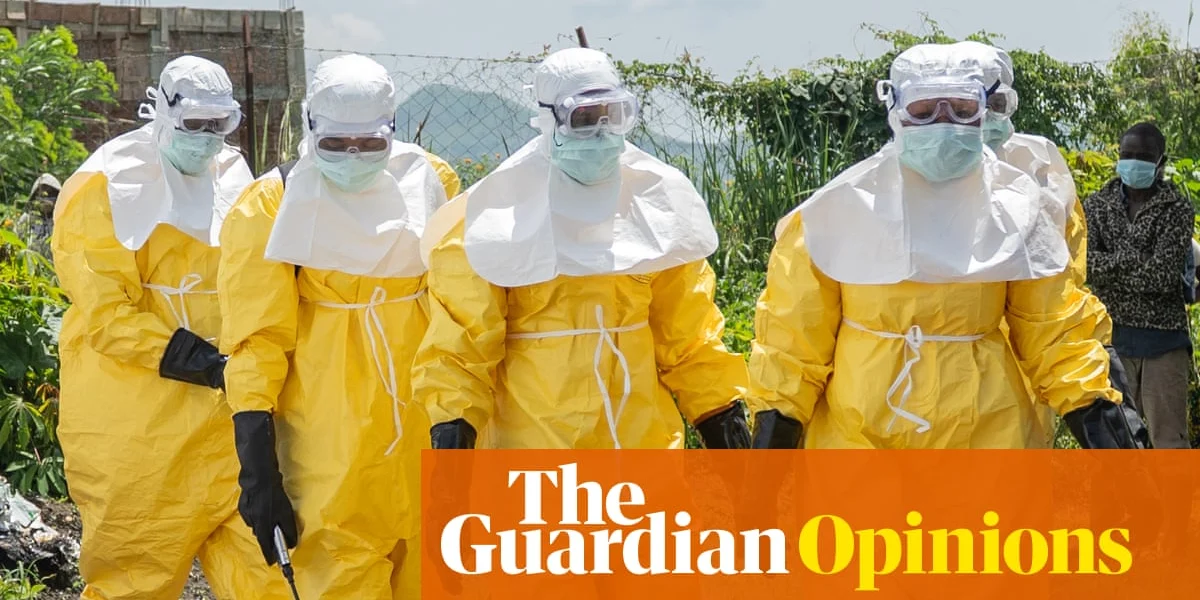
The Democratic Republic of the Congo has faced the deadly threat of Ebola 16 times since the virus was discovered there in 1976, with a 2018-20 outbreak killing almost 2,300 people. On Sunday, the World Health Organization declared the 17th outbreak to be a public health emergency of international concern. So far, 139 suspected deaths and almost 600 suspected cases of the haemorrhagic fever virus have been identified, nearly all in the DRC’s north-eastern provinces of Ituri and North Kivu, with two cases in Uganda of people who had travelled from the DRC.

There is also anxiety about neighbouring South Sudan. The WHO fears the disease has been spreading for a couple of months and, given the highly mobile population, warns that it could take months more to bring it under control. While it judges the risk of global spread to be low, it thinks the regional risk is high.

Read more:Neymar reveals he cried for hours after Brazil World Cup squad inclusion

The Bundibugyo virus responsible for the DRC cases is believed to be less deadly than more common Ebola strains such as the one that killed 11,000 people in the 2014-16 west African outbreak. But one study suggested that it still kills around a third of those infected, and there are no licensed vaccines or approved treatments, though some are in the pipeline. Its rarity may also have contributed to how long it took to be detected, with authorities initially testing for other strains.

Read more:Dementia: ‘Aging clock’ blood test may predict risk

Yet human choices shape disease outbreaks as much as the characteristics of the pathogens themselves. The eastern DRC has endured years of armed conflict, with a surge over the last year. War makes it harder to reach communities, forces displaced people into often crowded and insanitary conditions, and reduces access to healthcare. Too often – including in Ituri – combatants attack health facilities. Beleaguered communities receiving minimal support distrust the authorities and those sent by them, including health workers. Overcoming that requires not only sensitivity to local beliefs, customs and concerns, but also a surge in provision, with medical teams providing routine healthcare and vaccinations to establish trust and facilitate the creation of Ebola treatment centres.

Read more:The Guardian view on Trump in Beijing: the US and China are playing the waiting game | Editorial | The Guardian

Medical workers in the region have expertise and experience – they don’t need international teams flying in, but adequate resources. Instead, the slashing of aid budgets by Donald Trump and leaders in the UK and elsewhere has had punitive effects. The International Rescue Committee says that it had to cut its health and outbreak preparedness areas in eastern DRC from five to two because of US cuts, affecting everything from disease surveillance to the provision of handwashing stations and latrines. It blames the funding reduction directly for the delayed detection of the virus. US criticism of the WHO’s response as “a little late” is rich from an administration that withdrew from it, taking away the body’s biggest pot of funding.

Read more:The Iran war reminds us: we’ll never be energy-independent with fossil fuels | Lloyd Doggett and Michael Shank | The Guardian

International governments are now offering emergency-response funding. While that is essential, keeping deadly diseases under control depends on consistent support for those on the frontline and for expertise and monitoring internationally. A Global Preparedness Monitoring Board report published on Monday warned that infectious disease outbreaks are becoming more common due to the climate crisis and war, while geopolitical fragmentation is weakening collective responses. The DRC’s outbreak should remind us all that our choices have long-term consequences.

Read also
Opinion

The hill I will die on: The barbecue is fundamentally unenjoyable. Please, put a lid on it | Max Liu | The Guardian

Opinion

Trump’s ‘economic D-day’ against Iran risks driving the stakes even higher | Sina Toossi | The Guardian

Tags: #Aid #Climate crisis #Donald trump #Ebola #editorials #frontline #Global health #Has #Health #Opinion #Uganda #World Health Organization

Journalist

From the same category
  • The hill I will die on: The barbecue is fundamentally unenjoyable. Please, put a lid on it | Max Liu | The Guardian
  • Trump’s ‘economic D-day’ against Iran risks driving the stakes even higher | Sina Toossi | The Guardian
  • The rebranding of ‘Lake America’ is Trump’s desperate attempt to distract us | Arwa Mahdawi | The Guardian
  • A $1.95m deposit and $10k a month: welcome to the for-profit world of Australian aged care where no one is a winner | Julianne Schultz | The Guardian
  • Nepal-Tibet flood: this is the cost of not acting in the face of the climate crisis | Sunil Acharya | The Guardian
From the same tags
  • Man United near deal for Mexico international Rebeca Bernal – source
  • Real Madrid’s Jude Bellingham revels in new role under José Mourinho
  • Ollie Watkins departs Aston Villa, joins Saudi Pro League side Al Hilal
  • Meep, meep. ‘Coyote vs. Acme’ opens with $15.5 million, ‘Spider-Man’ stays No. 1 for fifth weekend
  • Barcelona head coach Hansi Flick plays down concerns over Lamine Yamal’s start to the season
Më të lexuarat — 48h
  1. 01
    Opinion The Home Office must not be allowed to bury the spycops inquiry | Imran Khan | The Guardian 1 lexime · 2 days ago
Similar articles
Opinion

The hill I will die on: The barbecue is fundamentally unenjoyable. Please, put a lid on it | Max Liu | The Guardian

“If you’re invited to a barbecue, have your dinner before you go.” It is the wisest advice my…

• 19 hours ago • 3 min read
Opinion

Trump’s ‘economic D-day’ against Iran risks driving the stakes even higher | Sina Toossi | The Guardian

Donald Trump has found a new way to promise victory over Iran. After months of war have failed…

• 19 hours ago • 5 min read
Opinion

The rebranding of ‘Lake America’ is Trump’s desperate attempt to distract us | Arwa Mahdawi | The Guardian

Don’t mention the war! Or the economy, for that matter. Or the Epstein files. Or Natalie Harp. Or…

• 19 hours ago • 7 min read
VA-NEWS VA-NEWS

Modern portal of reliable, independent and multilingual news. Accurate information, every day.

  • Health
  • Lifestyle
  • News
    • World
  • Opinion
  • Sport
    • Football
  • uncategorized
  • © 2026 VA News. Made with ♥ in Albania
    ⌂ Home ◷ Latest

    Powered by
    ►
    Necessary cookies enable essential site features like secure log-ins and consent preference adjustments. They do not store personal data.
    None
    ►
    Functional cookies support features like content sharing on social media, collecting feedback, and enabling third-party tools.
    None
    ►
    Analytical cookies track visitor interactions, providing insights on metrics like visitor count, bounce rate, and traffic sources.
    None
    ►
    Advertisement cookies deliver personalized ads based on your previous visits and analyze the effectiveness of ad campaigns.
    None
    ►
    Unclassified cookies are cookies that we are in the process of classifying, together with the providers of individual cookies.
    None
    Powered by