

If a US-Iran deal is about to be reached, three months on from the launch of Donald Trump’s Operation Epic Fury, it will not be a day too soon for oil markets, which are approaching a dangerous tipping point.
The cost of a barrel of crude on the spot market – for immediate purchase, effectively – has bounced about $100 since Iran predictably responded to the onslaught from the US and Israel by closing the strait of Hormuz.
That price remains well below historic highs, and because it has not surged into the stratosphere, it can look as though markets have settled into an uneasy stasis.
Yet beneath the surface, every week that goes by has drawn the energy markets closer to what economists call a “non-linear adjustment”, wonk-speak for chaos.
Thus far, several factors have helped to ease potential supply constraints, including a record coordinated release of strategic oil reserves; rerouting of some Gulf production to pipelines, bypassing the strait of Hormuz; and a rapid fall in imports to China, which some analysts believe may reflect Beijing drawing down stockpiles.
But the International Energy Agency (IEA), whose executive director, Fatih Birol, has been sounding the alarm from the start, said last week that oil stocks are being depleted at a record rate. And several analysts have issued warnings in recent weeks that the point may be fast approaching when they drop to crisis levels.
That could push prices so high as to cause “demand destruction” – the falling back of consumption to meet constrained supply – on a scale much more economically damaging than anything we have yet seen.
Hamad Hussain, who covers climate and commodities for the consultancy Capital Economics, warned recently: “If the strait remains effectively closed and commercial oil inventories in the OECD continue to be run down at the same pace as they were in April, oil stocks could reach critically low levels by the end of June.”
He suggested that that could push Brent crude prices to $130-$140 a barrel; and risk “more disorderly and economically damaging cuts to oil demand”.
Read more:Vitamin D supplementation could support cognitive health from birth
His warning echoed earlier analysis by JP Morgan’s Natasha Kaneva, who said stocks in OECD countries could reach “operational stress levels” by early next month.
“Well before the system is emptied, high prices begin to ration demand,” she said. “Consumers drive less, industry cuts runs, airlines trim schedules, and refiners reduce throughput,” she added, describing this as a shift from a “managed” adjustment to a “forced” one.
Or, as the IEA warned: “With global oil inventories already drawing at a record clip, further price volatility appears likely ahead of the peak summer demand period.”
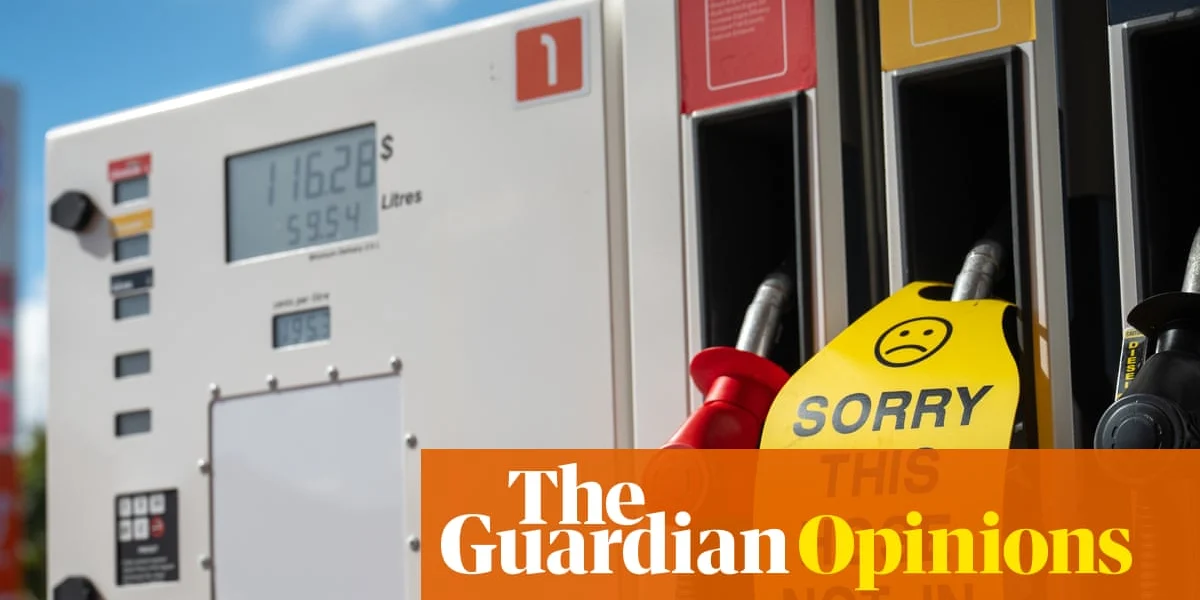
The US has been relatively insulated from the impact of the oil shock, as a net exporter of crude since the shale boom. But American consumers are not protected from surging global energy prices. Research by Prof Jeff Colgan, at Brown University, suggested last week that consumers have paid an extraordinary $40bn (about £30bn), or $300 per household, in additional gasolene costs since the war began.
And the Washington-based Institute for International Finance (IIF) fretted last week, in an edition of its regular capital flows report, called The Long Tail of the Shock, that disruption is now spreading far beyond the oil markets.
Read more:Why is Elon Musk so threatened by the casting of The Odyssey? | Arwa Mahdawi | The Guardian
“The first phase of the shock centred on the rapid repricing of oil as markets reacted to disruption risks across the Middle East and critical shipping routes. The second phase is proving more consequential because the adjustment is spreading across LNG [liquid natural gas], refined products, fertilisers, shipping, and industrial inputs, creating a broader deterioration in supply reliability and production efficiency,” the IIF said.
The institute underlined the fact that oil prices, which tend to fall on every fresh rumour of a peace deal, may have underplayed the seriousness of the wider disruption under way.
“Crude benchmarks may soften intermittently as recession fears rise or geopolitical tensions ease temporarily, while LNG, fertilisers, freight costs and selected industrial inputs remain elevated, because the broader issue is no longer spot oil supply alone, but the reliability and flexibility of the global production system itself,” it said.
It is unclear as yet whether any deal will involve a complete reopening of the strait of Hormuz, with Tehran relinquishing control. Even if marine traffic rapidly resumes, however, the IIF predicts only a “partial normalisation”, with the energy system remaining “tighter and more fragile than before the shock”.
Indeed, by demonstrating that it is no longer willing or able to police free navigation through the waterways of the Middle East, the US may in effect have semi-permanently raised the cost of global commodities.
In the teeth of the immediate crisis, governments in scores of countries have already introduced measures to constrain energy demand, in an attempt to limit the impact of the crisis on consumers. And forecasters have marked down expectations of GDP growth in oil-importing countries, as higher costs bear down on economic demand.
But if peace talks falter yet again, and the weeks continue to tick by without resolution, the oil market could enter a new and more volatile phase. In the short-term, that would mean surging inflation and perhaps outright shortages of oil-based products. But over time, those challenges could be outweighed by the fear of recession.
Trump has suggested that he does not think about the finances of ordinary Americans when negotiating with Iran. But it is not just his own citizens who have a stake in the standoff being resolved: in increasingly fragile energy markets, stringing talks out for even a few more weeks could be catastrophic.