
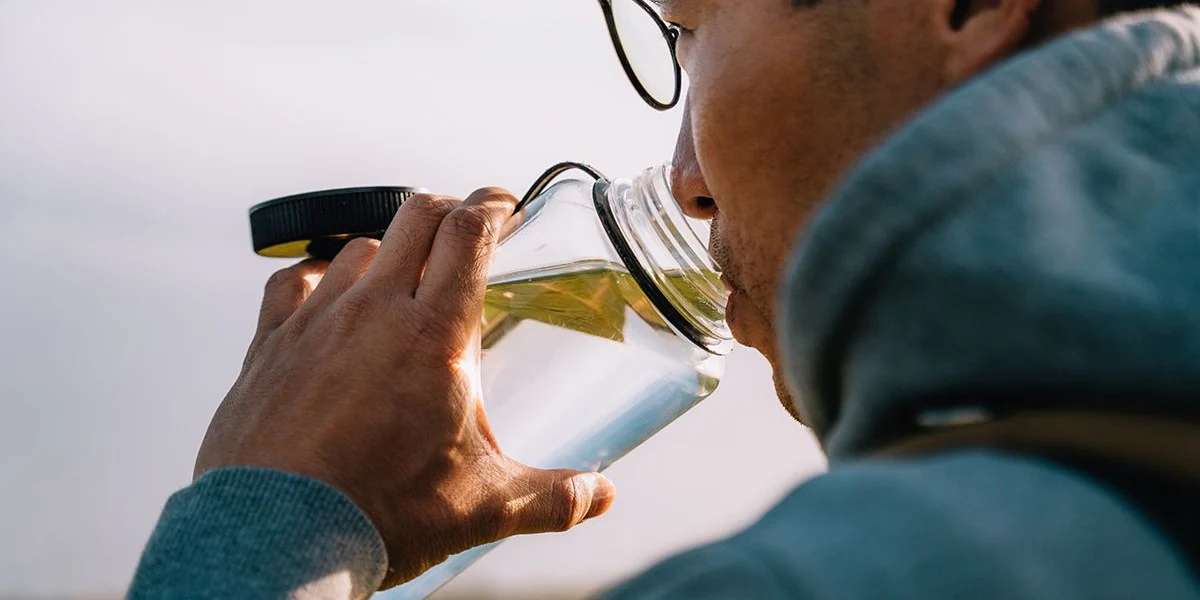
A study published in Pharmaceutics in April 2026 looked at whether different liquids could affect how medication is released in the body.
The study examined 22 beverages to determine whether any sped up the release of medication. It found that alkaline mineral water impacted the breakdown of gastro-resistant coatings.
Gastro-resistant coatings, or enteric coatings, are coatings on certain medications designed to protect the drug from stomach acid. The coating helps ensure the medication does not break down in the stomach, releasing it once it reaches the intestines.
Swallowing certain pills with vehicles such as alkaline mineral water may therefore affect how well the treatment works. Better instructions on how to take the medication, such as taking it with tap water, could help reduce this risk.
If medication does not come with clear instructions on the vehicle, or liquid, with which to take it, individuals may opt for something they find easier to swallow or more palatable.
Depending on the liquid type, it may affect when the active ingredients are released, and this may make the treatment less effective or not effective at all.
Read more:Is the ‘5 a day’ recommendation enough for heart health?
The study focused on 22 commonly consumed beverages to see how they affected gastro-resistant coatings. Examples include:
The research found that the gastro-resistant coatings began to break down in 5 to 15 minutes when tested in Salvus medicinal mineral water and Peridot natural mineral water, respectively.
For example, soaking the tablets in Salvus medicinal mineral waters for 5 minutes saw the premature release of more than 90% of the active pharmaceutical ingredients. The study referred to this as a “near-complete coating failure.”
Prolonged soaking of 15 and 30 minutes further increased this premature release also in Peridot natural mineral water, Parádi, and Hunyadi medicinal mineral water.
On the other hand, tap water and filtered water both produced a lower drug release.
“With one of the alkaline medicinal mineral waters, over 90% of the drug was released after just five minutes of soaking. And the fact that the patients most likely to open capsules — elderly or dysphagic ones — are often the same people who drink these alkaline waters makes it a real safety concern, not just a lab curiosity,” Nikolett Kállai-Szabó, PhD, an author of the study, explained to Medical News Today.
Read more:James Milner retires after 24 Premier League seasons
The study examined the patient information leaflets and summaries of product characteristics (SmPCs) for 103 medications with a gastro-resistant coating to determine whether there was guidance on the type of liquid to take with the medication.
There was no specific guidance in 42 SmPCs, whereas 21 SmPCs recommended taking the medication with water. However, they did not specify the type of water.
There were clear administrative instructions in 9 SmPCs, with examples of suggestions including water, apple sauce, apple juice, tomato juice, and yogurt.
The study notes that all 9 of these cases were for manipulable medications. These are medications that can be split, crushed, or opened to change the dosage or make it easier to swallow.
“It’s interesting to see that beverages people often perceive as healthy or harmless may still interact with medications,” Opel Baker, GP at Mayfield Clinic Brighton & Hove, said to Medical News Today. Baker was not involved in the study.
Read more:Arsenal sign Piero Hincapié on permanent deal after one year loan
“Many patients are aware that grapefruit juice can affect certain drugs, but fewer realise that products such as mineral waters, fruit juices, protein drinks or herbal beverages can likewise influence medication stability or absorption.”
Manipulating the drugs may also affect how quickly or when in the body it is absorbed, so clear guidance on administration may be particularly important in these cases.
Ultimately, the study found that only 8.7% of the oral medications assessed came with clear instructions on what liquid to take them with.
When asked about the absence of specific guidance, Kállai-Szabó explained that, “Our hope is simply that studies like ours can help fill that gap, so that future guidance can give patients and carers a little more clarity in these real-world, everyday situations.”
“Regulatory information has traditionally focused on factors known to have a significant clinical impact, such as food interactions, alcohol consumption or specific contraindications. If emerging evidence suggests that the type of water or beverage used can meaningfully affect certain medications, there may be a case for reviewing and strengthening guidance in this area,” said Baker.
The study authors explain that unclear administration instructions may affect the outcome of the treatment. This means that taking oral drugs with certain medications may make them less effective or even not effective at all.
Read more:How oatmeal, avocado, peppermint oil may help treat diabetes
The authors also point out that this may be particularly problematic for people with dysphagia, or swallowing problems, as they may be more likely to split the medication to make it easier to swallow. Older evidence suggests that around 300,000 to 600,000 people in the United States are affected by swallowing disorders each year.
People with dysphagia may also be more likely to take the medication with alkaline mineral water, according to the study authors.
“Even simple guidance, like recommending drinkable tap water or filtered water, could help — especially the elderly and those with swallowing difficulties, who most often modify how they take their medication,” said Kállai-Szabó.
“If robust evidence shows that certain beverages reduce the effectiveness of specific medicines, then clearer guidance should be provided both in patient information leaflets and during consultations. This would help patients make informed decisions and reduce the risk of treatment not working as intended,” explained Baker.
“At the same time, any recommendations need to be proportionate and evidence-based. We do not want to create unnecessary anxiety or make medication management more complicated than it needs to be,” added Baker.