
Kalo te përmbajtja
  • EN
  • SQ
  • IT
  • FR
  • ES
  • DE
  • EL
VA-NEWS VA-NEWS
  • Home
  • News
  • Opinion
  • Health
  • Technology
  • Sport
  • Lifestyle
  • Entertainment
  • Travel
LIVE
Navigation

VA-NEWS

  • Home
  • News
  • Opinion
  • Health
  • Technology
  • Sport
  • Lifestyle
  • Entertainment
  • Travel
Shortcuts
Home Latest
LIVE
Gjuha
  • EN
  • SQ
  • IT
  • FR
  • ES
  • DE
  • EL

Search news

  1. Kryefaqja
  2. Opinion
  3. The world is lurching from one economic crisis to the next. What should we expect from our government? | Nicki Hutley | The Guardian
Opinion

The world is lurching from one economic crisis to the next. What should we expect from our government? | Nicki Hutley | The Guardian

• July 1, 2026 • 5 min read • 👁 1
◉ WhatsApp 𝕏 X
News

The pandemic changed a lot of things in Australia – and around the world – for better and worse. Two legacies that stand out to me from an economist’s perspective are an increased expectation on how governments should support us during troubled times, as well as an increased focus on domestic economic security, both with consequences for inflation and interest rates.

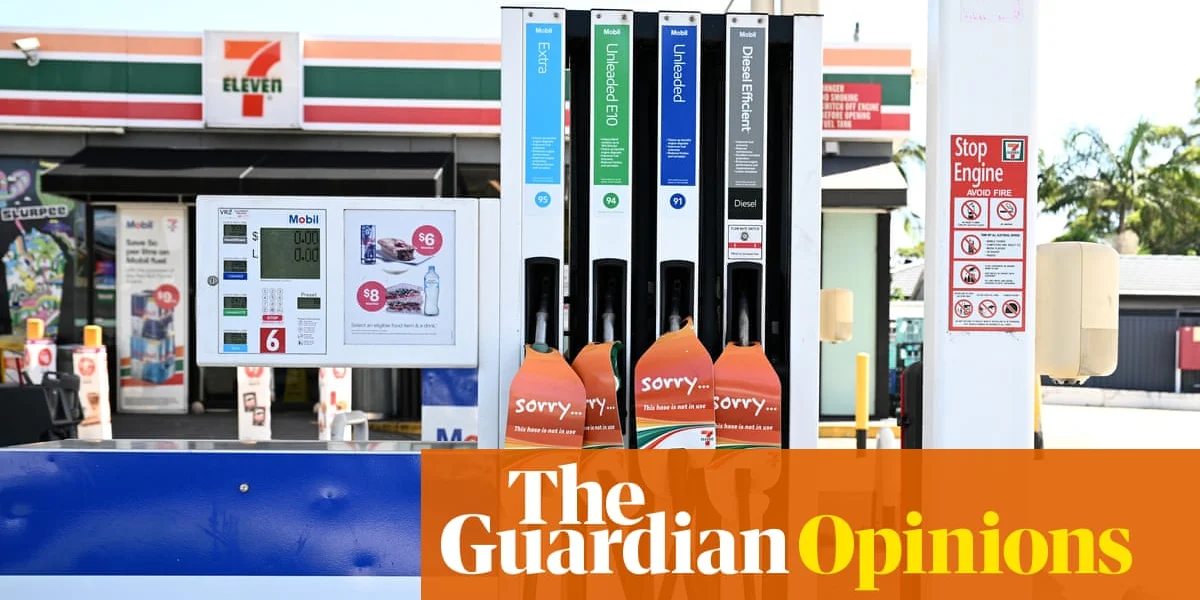
The shortage of protective equipment, rapid tests and toilet paper during the early pandemic will not be forgotten easily, and the recent jump in fuel prices, and especially images of some pumps running dry, brought back some of those painful memories.

Cost-of-living pressures – not just from the fuel crisis – remain, unsurprisingly, the number one concern of households. Businesses, too, are weary of supply chain disruptions and sticky inflation. Over the past five years, the only time headline inflation has dipped into the Reserve Bank’s target zone (of 2% to 3%) has been when governments have provided temporary support for energy prices, following Russia’s invasion of Ukraine and, more recently, fuel prices.

Read more:Malik Tillman is having a great World Cup for the USMNT, but he’d never tell you himself

In May and June this year, in response to the fuel crisis, the Australian Bureau of Statistics brought back a survey of business conditions and sentiment. This survey was introduced early in the Covid pandemic to provide more timely information on how the nation’s businesses were handling the crisis. Now, as then, there are some very useful insights.

Almost three-quarters of businesses reported that higher fuel prices had a negative impact on their business. In May, 47% of businesses absorbed those rising costs and 44% in June. Presumably this is because they considered the price rises to be temporary and/or that consumer demand was not strong enough to allow for increases. However, in May, 12% did pass on higher prices and in June that rose to 15%. Not great news for inflation, but it could have been worse.

Read more:The Guardian view on Venezuela’s earthquake: a test of state capacity and Trump’s promises | Editorial | The Guardian

Perhaps of greater concern, 9% of businesses reported reducing their workforce in May in direct response to higher fuel prices, and 8% in June. Businesses in accommodation and food services reported a whopping 28% reduction in their workforce (33% in May). And 15% of businesses reported delaying or cancelling investment plans in June. The recent fall in global oil prices is indeed welcome.

Given the tough times we are facing from the collective pressures of higher prices, higher interest rates and slowing demand, it’s little wonder governments are under pressure to provide more support.

But just what is reasonable for us to ask of our governments?

Read more:Japan’s Eiko Kadono, author of ‘Kiki’s Delivery Service,’ still believes in the magic of books at 91

Use of the word “polycrisis” has surged over the last couple of years. Geopolitical uncertainty, rising inflation and falling productivity, the climate crisis, accelerating biodiversity loss and rising inequality flood our headlines and social media. We can feel the collective pressure from these colliding events, and we want someone to fix it for us. But we want them to do so quickly and in a cost- and pain-free way. We are looking for magic bullets that, sadly, don’t exist.

In response to the New South Wales budget, handed down on 23 June, one small business owner welcomed cost-of-living relief handed down by the treasurer in the form of toll caps and registration changes, but lamented it wouldn’t make a huge difference. “It won’t make you a millionaire,” he said. But is there anyone who genuinely thinks that is the role of government? Perhaps. It seems to me those who often want government to spend less and “get out of the way” do so selectively. Heaven forbid we should increase the rate of jobseeker so that people are not living in poverty, especially if it means losing some of the tax perks on a $10m super balance!

Read more:Ed Miliband as chancellor would benefit every part of the UK – and the bond markets | Josh Ryan-Collins | The Guardian

The question for government is not only one of cost and trying to rein in deficits that show no sign of ending any time soon. It is also a case of where governments should intervene. Which brings us to the concept of “economic security”.

Economic security, typically, entails producing goods more expensively at home because we want to avoid global supply chain vulnerabilities. Recent world events have given greater urgency to that idea.

Read more:When racism is so entrenched in Australia, could paying lip service to multiculturalism do more harm than good? | Anhaar Kareem | The Guardian

But that does not mean governments should – or even can – solve all our problems. New research from leading independent thinktank e61 Institute shows a large productivity gap exists between Australian and US firms operating in Australia, notably in the manufacturing and information sectors. e61 attributed the gap to US firms’ investing more in intellectual property and in being able to employ that IP more successfully. For all of businesses’ claims that red tape or tax rates are making their lives hard, the evidence suggests that much potential improvement in business performance in fact lies within their own hands.

Governments have a clear role to play in shaping our lives for the better, particularly when crises erupt, and in helping those most in need. But we must stop expecting governments to solve every problem. The entrepreneurial spirit in Australia needs to get off life support if we are to advance as a nation.

Read also
Opinion

What will we get out of the AI boom? The data suggests lots of noisy, energy-hungry datacentres and not much else | Greg Jericho | The Guardian

Opinion

Andy Burnham should rip up our undemocratic first past the post system – even if some in Labour disagree | Neal Lawson | The Guardian

Tags: #Ask #Australia #Climate crisis #Energy #Food #Has #media #Oil #Performance

Journalist

From the same category
  • What will we get out of the AI boom? The data suggests lots of noisy, energy-hungry datacentres and not much else | Greg Jericho | The Guardian
  • Andy Burnham should rip up our undemocratic first past the post system – even if some in Labour disagree | Neal Lawson | The Guardian
  • Does Nigel Farage know what people really think of him? I do – and he won’t like it | Aditya Chakrabortty | The Guardian
  • My home state is set to hand a breakthrough to the German far right. It’s a disaster decades in the making | Marcus Böick | The Guardian
  • The royal commission revealed the breadth of antisemitism in Australia – but key opportunities were missed | Michael Visontay | The Guardian
From the same tags
  • ‘Kily’ González to replace Guillermo Hoyos as Inter Miami coach
  • ‘Perfect’ signing Rodri makes Barcelona debut as newcomers shine
  • Gotham FC’s Rose Lavelle in concussion protocol, out Friday vs. Portland
  • MLS suspends Inter Miami coach Hoyos for repeated late kickoffs
  • Stadium woes force Boston Legacy to play 2027 NWSL season in R.I.
Më të lexuarat — 48h
  1. 01
    Lifestyle Yayoi Kusama, who splashed polka dots across art world, dies at 97 in Tokyo 2 lexime · 1 day ago
  2. 02
    Football Man City confirm Ayyoub Bouaddi signing from Lille 2 lexime · 2 days ago
  3. 03
    Opinion Does Nigel Farage know what people really think of him? I do – and he won’t like it | Aditya Chakrabortty | The Guardian 2 lexime · 20 hours ago
  4. 04
    Football Julián Álvarez misses Atlético Madrid training due to ‘illness’ 1 lexime · 2 days ago
  5. 05
    Opinion No, AI doesn’t mean the end of mathematics – at least not yet | Bruce Schneier and Kasra Rafi | The Guardian 1 lexime · 2 days ago
  6. 06
    Football Alejandro Balde must improve to stay at Barcelona – Flick 1 lexime · 2 days ago
  7. 07
    Opinion It shouldn’t be a secret who the prime minister has dinner with, and what was discussed. Australians deserve to know | Geoffrey Watson | The Guardian 1 lexime · 2 days ago
Similar articles
Opinion

What will we get out of the AI boom? The data suggests lots of noisy, energy-hungry datacentres and not much else | Greg Jericho | The Guardian

The debate around AI and datacentres is such that, to paraphrase Paul Keating, if you walked into any…

• 20 hours ago • 5 min read
Opinion

Andy Burnham should rip up our undemocratic first past the post system – even if some in Labour disagree | Neal Lawson | The Guardian

A poll in the Mail on Sunday at the end of June was remarkable. It had not just…

• 20 hours ago • 5 min read
Opinion

Does Nigel Farage know what people really think of him? I do – and he won’t like it | Aditya Chakrabortty | The Guardian

Who can stop Nigel Farage? Which voters would actually dig out their ID and schlep down to the…

• 20 hours ago • 7 min read
VA-NEWS VA-NEWS

Modern portal of reliable, independent and multilingual news. Accurate information, every day.

  • Health
  • Lifestyle
  • News
    • World
  • Opinion
  • Sport
    • Football
  • uncategorized
  • © 2026 VA News. Made with ♥ in Albania
    ⌂ Home ◷ Latest

    Powered by
    ►
    Necessary cookies enable essential site features like secure log-ins and consent preference adjustments. They do not store personal data.
    None
    ►
    Functional cookies support features like content sharing on social media, collecting feedback, and enabling third-party tools.
    None
    ►
    Analytical cookies track visitor interactions, providing insights on metrics like visitor count, bounce rate, and traffic sources.
    None
    ►
    Advertisement cookies deliver personalized ads based on your previous visits and analyze the effectiveness of ad campaigns.
    None
    ►
    Unclassified cookies are cookies that we are in the process of classifying, together with the providers of individual cookies.
    None
    Powered by