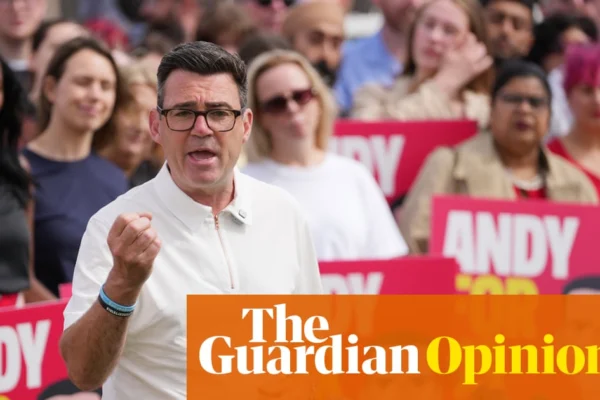


The question of the UK’s relationship with the EU has resurfaced with Keir Starmer’s premiership drawing to a close and Andy Burnham, his likely successor, preparing to enter No 10. Wes Streeting, until recently one of the contenders for the top job and now a possible future chancellor of the exchequer, went as far as to say recently that Britain should be back in the EU.
The “rejoin” debate in the UK has focused squarely and, parochially, on two things. The first is the cost imposed by Brexit on the UK economy, the second is the price of rejoining – in other words, whether the UK would be able to win back its previous opt-outs from the Euro and Schengen areas.
But this discussion fails to grapple with the bigger international and far more serious questions: what has the EU now become – and is it a club that UK political elites and the public would or should want to rejoin?
Read more:What to Stream: Rolling Stones, ‘Little House on the Prairie’ and ‘Backrooms’
The EU of 2026 is an organisation built increasingly on common borrowing, an assertive joint industrial policy and a growing role in security and defence that encroaches on the traditional powers of nation states. It is also an EU that is moving toward a far more assertive stance with regard to the US and China than that of the British government. Understanding these changes should be the central theme of any rejoin debate in the UK.
In the years since the UK exited, the EU has in some ways changed beyond recognition. Confronted with a series of shocks and crises, the remaining 27 governments have responded with substantial levels of joint debt backed by the EU budget. To deal with the consequences of Covid, the EU borrowed €100bn from capital markets which it then lent to member states to support their furlough programmes. As the pandemic worsened, the EU borrowed a further €750bn which was largely passed on to the 27 governments as grants for green and digital investments.
The US’s retreat from its promise to keep Europe secure prompted the European Commission to borrow €150bn to support more defence-industrial collaboration between EU members through the Security Action for Europe (Safe) initiative. Much of the EU’s aid to Ukraine has been funded in similar ways.
This represents one of the most profound shifts in the history of European integration. Common borrowing is not merely a new financing tool but a form of quasi-political and fiscal integration that many Eurosceptics long warned the EU would eventually pursue. Had the UK remained a member, it would almost certainly have opposed it. In many cases it sought to veto or significantly dilute any moves in this direction.
And common debt will be the EU’s tool of choice to respond to future shocks. As part of the EU’s next long-term budget spanning the years 2028 to 2034, Brussels has proposed the creation of a permanent fiscal capacity thatwould give it the ability to borrow from capital markets, whenever needed. More shared borrowing will necessitate more supranational taxation. That is why the commission is also pushing for more EU-wide corporate and digital taxes to help repay the EU’s growing debt load.
The EU of 2026 is also more interventionist and protectionist when it comes to its single market. Its increasingly permissive approach to state aid, alongside instruments such as the proposed Industrial Accelerator Act – designed to boost Europe’s strategic industries and counter unfair Chinese competition and supply-chain dominance – and Safe reflect a new willingness to use industrial policy as a geopolitical tool. Brussels has targeted Chinese overcapacity and restricted US firms’ access to EU defence financing through “buy European” requirements intended to strengthen Europe’s own industrial base and the continent’s strategic autonomy.
Under both Conservative and Labour governments, the UK historically opposed closer European fiscal integration, large scale supranational borrowing and an activist EU industrial policy, preferring open markets. Successive British governments have also preferred to preserve close economic, security and strategic ties with Washington while balancing increasingly hawkish rhetoric on China with continued economic pragmatism. The EU’s stance toward both countries is heading in a much more combative direction.
The bloc’s growing push for technological sovereignty marks another departure from British instincts. The commission’s tech sovereignty package reflects a growing determination to reduce the EU’s dependence on Silicon Valley providers. While the UK shares some of the EU’s concerns, British governments have been more comfortable operating within a US-led technology ecosystem, favouring transatlantic cooperation over these issues.
Artificial intelligence may prove the clearest example of divergence on tech policy. Whereas the EU has led with comprehensive regulation, the UK has deliberately marketed itself as a lighter-touch alternative, arguing that freedom from EU rules strengthens its attractiveness for AI investment and innovation.
Institutionally, too, the EU is moving away from traditional British preferences. The arrival of Hungary’s new prime minister, Péter Magyar, has provided senior EU officials with the opportunity to move away from national vetoes in EU law-making in areas such as foreign policy, sanctions and even EU enlargement – and towards a majority voting approach long championed by Brussels, Paris and other advocates of a more sovereign Europe.
Read more:Portugal coach: ‘Childish’ to compare Ronaldo’s needs to Messi’s
These developments are not necessarily wrong for the EU. Nor should they mean the UK should not seek to rejoin, or that a future British government could not pull the EU back in a more liberal direction from within. But any serious rejoin debate must start from an honest assessment of what the EU has become.
The real question is no longer whether Britain could recover its old opt-outs and budget rebates, but whether it is prepared to join a union that is more fiscally integrated, more interventionist, more geopolitical and, in many respects, markedly less British than the one it left.