
Let’s get two things clear right from the start.
Firstly, antisemitism is a real and significant issue, and there has been an increase in incidents of it in Australia in recent times.
Secondly, the coverage by our public broadcasters of events in the Middle East and the impact of those events in Australia has not been perfect. Many complaints have been made and, while most have been investigated and dismissed, some at the ABC in particular have been rightly upheld.
I accept both of those things without reservation.
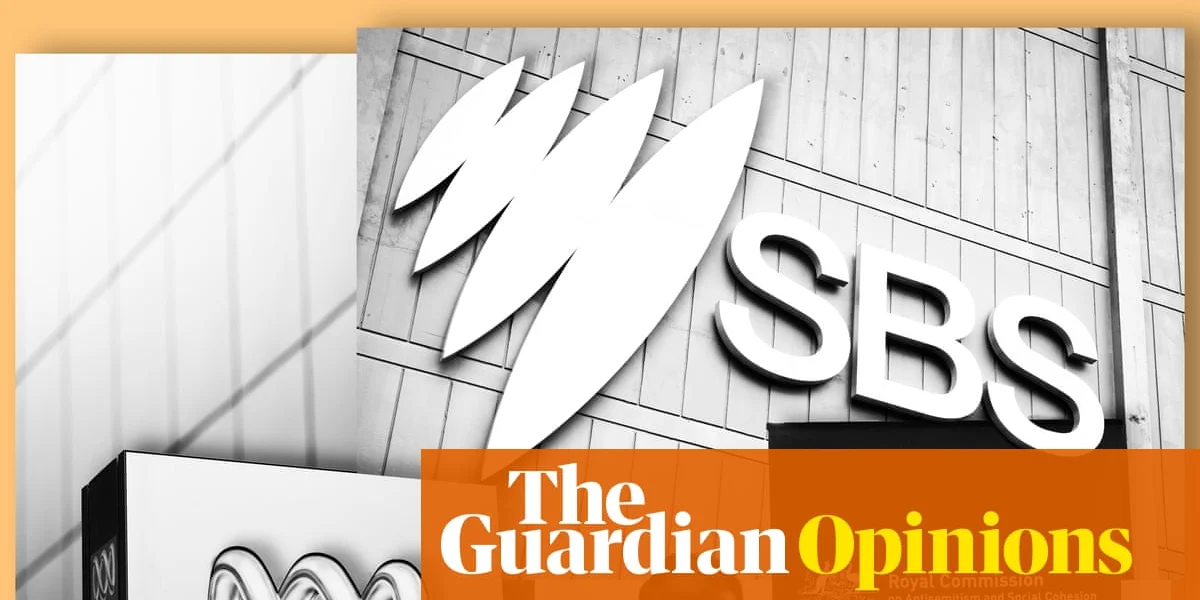
Despite that, I believe the solutions proposed by Australia’s antisemitism envoy, Jillian Segal, to these problems are ill-conceived. Worse than that, they are dangerous to the future of the kind of free, independent and rigorous news media that Australia needs more than ever right now.
Read more:Ultra-processed foods: Excess fat in blood may harm metabolism
The first proposal is that the public broadcasters should accept a specific definition of antisemitism developed by an international body and incorporate it into their own editorial standards. One of the key reasons proposed for doing this is that the Australian government has adopted it.
I don’t even want to get into the controversy around this definition, and why many groups question aspects of it. Let’s assume for the sake of argument that it is a perfect definition. The fact remains that, for very good reasons related to editorial independence, public broadcasters are required to develop and make public their own editorial standards. They do not adopt the standards of external bodies and they most certainly do not take their lead on editorial matters from the Australian government.
In my 40 years in public broadcasting there were countless examples of external pressure on both the ABC and SBS to accept external definitions, often from governments or pressure groups, on what constitutes a terrorist, when something should be called a genocide, what it means to be un-Australian, and countless other issues. It was often when an issue was most contested and disputed that the calls would be strongest for the media to call a spade a spade and adopt a preferred way of describing something.
Language can easily become weaponised, and words can be used to “define away” real and significant differences of opinion. The best solution to this is for public broadcasters to do what they are obliged to do – by all means be mindful of the best external advice available, but develop and enforce their own independent editorial standards in all areas. I am glad to see this is happening and I hope it continues.
The second key proposal by the envoy is even worse than the first. Despite the fact that the only two internally independent ombudsmen in the whole of the Australian media are at the ABC and SBS, and despite the fact that their decisions are already subject to review by an independent statutory regulator in the form of the Australian Communications and Media Authority, there apparently needs to be a new independent body established just to decide whether the public broadcasters are antisemitic or not.
Read more:Norway vs. England more than Harry Kane vs. Erling Haaland face-off – Ståle Solbakken
I have questions.
Who would be on this body, and how would they be appointed? What powers would they have? How would we know that its members were themselves unbiased and well qualified to assess editorial matters? Why would we set up such a body to examine issues of antisemitism without also considering other similar bodies to examine, for example, other important issues of sexual, racial, age and disability discrimination enshrined in Australian law? And why, if it was set up properly, would this new body be any more or less capable of overseeing the editorial standards of our public broadcasters than ACMA, which is already charged with doing precisely that?
The dangers are obvious and real. We would be carving out a real and significant area of potential media bias and treating it differently to all other areas of news coverage by establishing a presumably powerful oversight committee to judge whether news reporting of that issue was appropriate or not. That doesn’t sound to me like the kind of media landscape anyone committed to a free press would welcome.
Read more:Cáceres says leaks about Uruguay’s Bielsa ‘twisted’
These are bad ideas. No doubt the suggestions are coming from a good place, driven by a desire to reduce the scourge of antisemitism and improve the media’s understanding and coverage of the issue. But this is not the way to do it. All Australian newsrooms, not just those at the public broadcasters, should be looking closely at themselves, their standards and their reporters, and the public should stand ready to hold them to account if they feel there are errors and misjudgements. Good journalism will always be accountable to the public. But it needs to be equally accountable, all the time, to all the public, and for the editorial decisions that it makes, not ones that are imposed on it by others.