

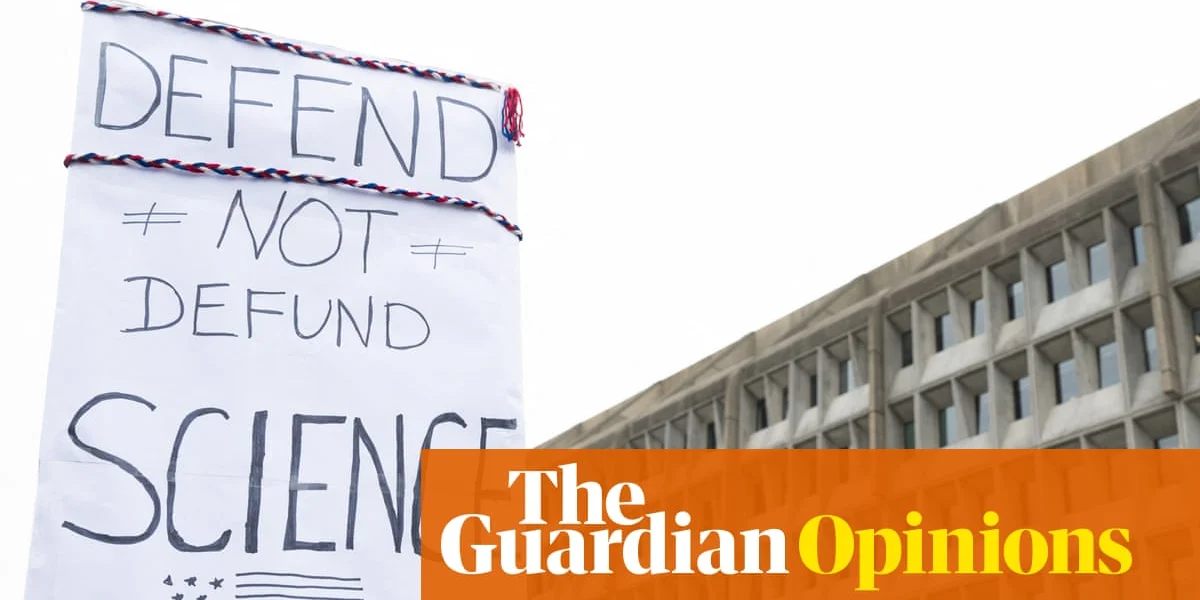
A politician who aims to gradually privatize and ultimately destroy an institution funded by tax dollars – say, a public school system or public transportation network – may choose to do so by strategically disinvesting resources from that institution until it becomes barely functional, leading users to look elsewhere to meet their needs. Eventually, the user-base of the public system gets so low or frustrated that it seems reasonable to scrap the thing entirely, or re-direct public funds to private companies as contractors to provide the needed “service”. We’ve seen this strategy play out many times in states and city councils across America.
It appears that the endgame of the Trump administration’s attacks on science and the research funding ecosystem is similar: grant freezes and administrative disarray at federal funding agencies such as the National Institutes of Health (NIH), new layers of project review by political appointees hunting for forbidden keywords such as “disparity” and “marginalized”, and proposed new restrictions to make international collaboration difficult or impossible all point towards a world where it’s just too onerous to do federally-funded scientific research. Is the goal to make scientists simply give up on the endeavor?
A new set of proposed rules released in May by the Office of Management and Budget (OMB) outlines dozens of changes to the US Code of Federal Regulations governing the handling of grants and federal financial assistance. The rules undermine the scientific peer review process that has been in place for decades and codify oversight of award decisions by political appointees. Grants must be evaluated to determine whether they advance the president’s policy priorities. The proposed rules prohibit the use of funds “to support a bilateral or multilateral collaboration, agreement, program, or activity with a covered foreign country or covered foreign entity.” Depending on how this clause is interpreted and implemented, it could create formidable obstacles to collaborations between US and (eg) Chinese scientists on scientific projects related to topics such as cancer, environmental health, or new technologies. Professional scientific associations including the American Astronomical Society state plainly that “the proposed rule, if passed in its current form, would enact policies that would cause significant harm to the scientific community, research institutions, and professional societies”. They urge scientists and members of the general public to submit public comments on the OMB proposal to express opposition; the comment period closes on July 14th.
Reducing the number, size, or scope of available funding opportunities is one way to damage the scientific ecosystem; creating uncertainty about the availability or timing of funding also undermines the ability of junior researchers, in particular, to develop careers in science. Without the ability to plan or make decisions with a long time-horizon (research projects may take many years to complete), junior researchers are nudged towards leaving science or leaving the U.S.
Read more:Aging brain: Walking faster may slash cognitive decline risk by 50%
If the goal is to shrink the publicly funded science sector, and hence the US scientific research enterprise as a whole, then the government is doing a great job. There are also signs that indicate what our leaders envision will “replace” academic research labs: private tech companies. Science magazine reports that the National Science Foundation (NSF) is cutting budgets for basic science research programs and re-directing money to a new $1.5 billion initiative called “X-Labs” meant to support the creation of new products and technologies by looking “outside of traditional institutions.” The suggestive name and language surrounding this initiative (a previous iteration was called “Tech Labs”) points strongly toward the involvement of private companies and a move away from universities and basic science research organizations. This is dangerous because private tech companies are by their nature motivated by profit, not by the goal of advancing knowledge, improving the public’s health, or ensuring the wellbeing of future generations. Re-directing scarce research resources to companies will lead to research that is divorced from the public good and not democratically accountable: the companies primarily reflect and respond to shareholder interests. Recall the politician who divests resources from public transportation infrastructure and boosts private companies: the trains and buses get worse, people are forced to turn to the private sector to get around, and then companies can raise their prices and trap citizens in a worse equilibrium.
Read more:U.S. President Donald Trump confirms he asked FIFA to review Balogun red card
We must stop the gradual but persistent degeneration of the scientific research ecosystem. Contributing a public comment to oppose the new OMB rules is one crucial step that anyone may take to help. Contacting elected officials to fight these moves in Congress is another. In any case, to prevent the death of US science by a thousand cuts and incremental regressions, all of us should be vigilant to the seemingly boring or bureaucratic changes that the Trump administration aims to impose on funding and oversight of science to advance its anti-science agenda.
Read more:South Africa midfielder Jayden Adams dies aged 25, weeks after World Cup appearance