
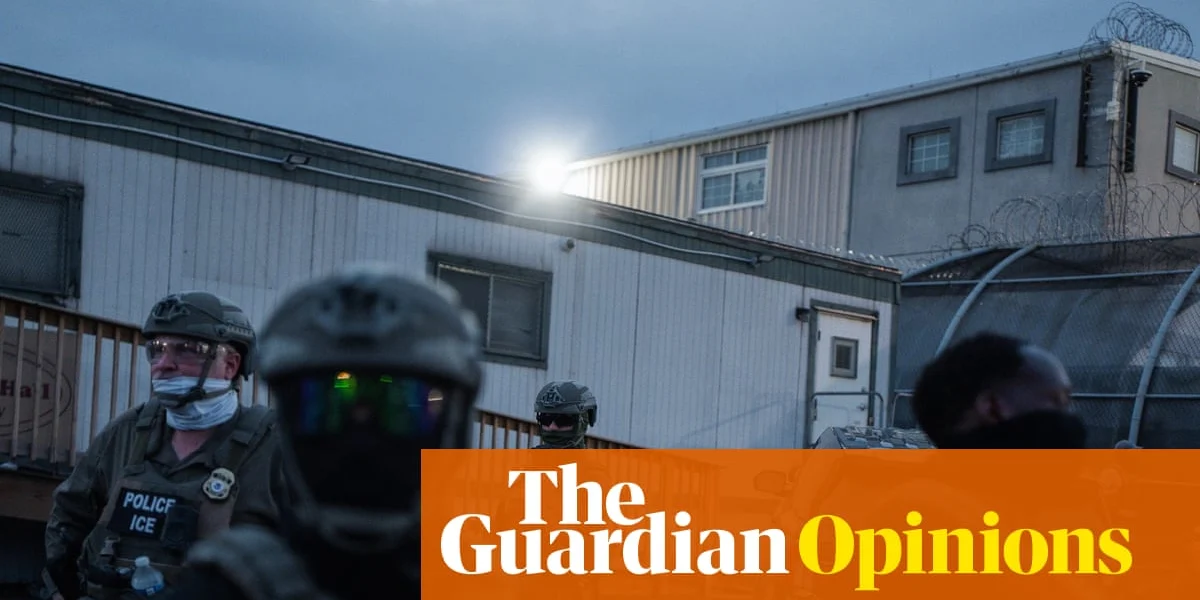
We don’t have concentration camps today in the United States, but we have something close. More than 65,000 people are currently confined in demeaning, often dangerous, sometimes torturous and increasingly deadly conditions not because they have committed a crime, but because they have committed the civil infraction of being on the wrong side of a border. They are ripped from their homes, their families, their jobs and are shipped hundreds of miles away where they languish in squalid, freezing cold and punishing conditions with limited and sometimes no access to lawyers, loved ones, nutritious food, sunlight or medical care. At least 52 people have died in ICE custody since the second Trump administration came into office. Tens of thousands have been held in solitary confinement.
Oversight mechanisms of these facilities have been gutted, members of Congress have been turned away, and ICE has stopped reporting basic and legally mandated data about who is inside and what happens to them. The rapid expansion of the detention system, the inherent inhumanity of policing human mobility, and lack of oversight is partly why a woman in Arizona, who has been detained for 16 months without proper medical care to treat her leukemia, has reportedly lost more than 70lb and is regularly vomiting blood. It’s why people in a now shuttered camp in Florida were allegedly subjected to a two-by-two-foot outdoor punishment cage. The stories that leak out of these camps should terrify not only the migrants directly targeted, but should alarm the conscience of us all.
Calling such facilities “detention centers” sanitizes their brutal and increasingly deadly reality. Calling them “Alligator Alcatraz” or the “Cornhole Clink” sensationalizes them.
As a journalist who has spent a decade reporting on immigration and border enforcement, I’ve dedicated much of my career to trying to expose a reality glossed over and concealed by whitewashing official designations. Which is why I’ve started to call them camps, not only because of the accurate historical resonance of the term, but as a warning. The word camp best captures the political function they serve: concentrating, immobilizing and excluding populations deemed unwanted.
Concentration camps under the Third Reich began not with the extermination camps of Auschwitz or Treblinka, but as holding centers that incarcerated alleged subversives. They followed a model first developed in Cuba and South Africa by the Spanish and British respectively at the end of the 19th century, and later mirrored in the United States with Japanese American “internment camps”. This is the history that we must invoke to help us understand, and ultimately close, today’s immigration camps. The Italian philosopher Giorgio Agamben calls the variations of camps a “progression”, suggesting that there is slippage among them.
A definitional aspect of detention camps is that they strip people of, or at least diminish, their legal personhood. And while people held in immigration camps are not completely outside the sphere of law, they are mocked by the law. As the scholar Dan Stone writes of people held in immigration camps: “They are very close to falling into [philosopher Hannah] Arendt’s category of the superfluous stateless person from whom the ‘right to have rights’ has been removed.”
Read more:The world is on fire, and who does Trump blame? The Canadians | Arwa Mahdawi | The Guardian
A concentration camp, in its most basic definition, is a place where a targeted civilian population, not necessarily accused of a crime, is detained and at least some of their basic rights are suspended. That’s precisely what’s happening in the United States today. We don’t need to stretch history or force an analogy to see how the term applies to immigration detention: US officials have long used the term themselves. FDR called for concentration camps to detain Japanese Americans even before the second world war, and then built them to lock away more than 120,000 people during the war. In a 1981 memo, released as the Reagan administration began caging tens of thousands of Cuban and Haitian refugees, an immigration taskforce worried that “the appearance of ‘concentration camps’ which, at the present time, would be filled largely by blacks, may be publicly unacceptable”. They used scare quotes, but successive administrations have only expanded the immigration camp system in the United States.
While the prison system is also rife with suffering and injustice, there is at least a semblance of court regulation and due process. People suffering inside prisons or jails are there, the logic goes, because of something they allegedly did. In immigration camps, along with concentration camps, people are locked up because of who they are or where they are from. That is an even more penetrating attack on their personhood.
Read more:Chelsea bolster defence as Maxence Lacroix arrives from Crystal Palace
Not only is the current administration spending billions to try to rapidly grow the camp system, they are trying to make it more painful and permanent. Last fall, the Board of Immigration Appeals ruled that no undocumented migrants who entered the country without inspection would be eligible for release on bond. The camp became mandatory: indefinite detention without the benefit of trial by jury. And while the fifth circuit recently ruled that people held under that mandatory detention statute must get a bond hearing within 90 days, that ruling merely claws back a modicum of rule of law. Nobody gets released because of the ruling. They just, for now, get to make their case for freedom every 90 days instead of never. An appeal from the government is expected.
Meanwhile, despite some rollbacks of the spectacular violence seen in the streets of Minneapolis and elsewhere, more immigrants than ever before are being arrested in this country, and tens of thousands of them – abducted off the streets – will suffer for weeks, months, or longer in the camps. Recent reporting detailed just how cramped some of these facilities can be, with 86 people at one point held in a small room – a “closet of humanity that smelled of sweat, urine and feces”. In one notoriously abusive Texas camp, one person said he was told: “You’re only getting out deported or dead.”
Read more:12 states challenge Paramount’s takeover of Warner Bros, say merger would ‘extinguish competition’
Immigration camps in the United States today disappear people politically before, all too frequently, they disappear them physically. To combat the suffering we should use language that reveals the inhumanity rather than conceals it. The word camp does just that.