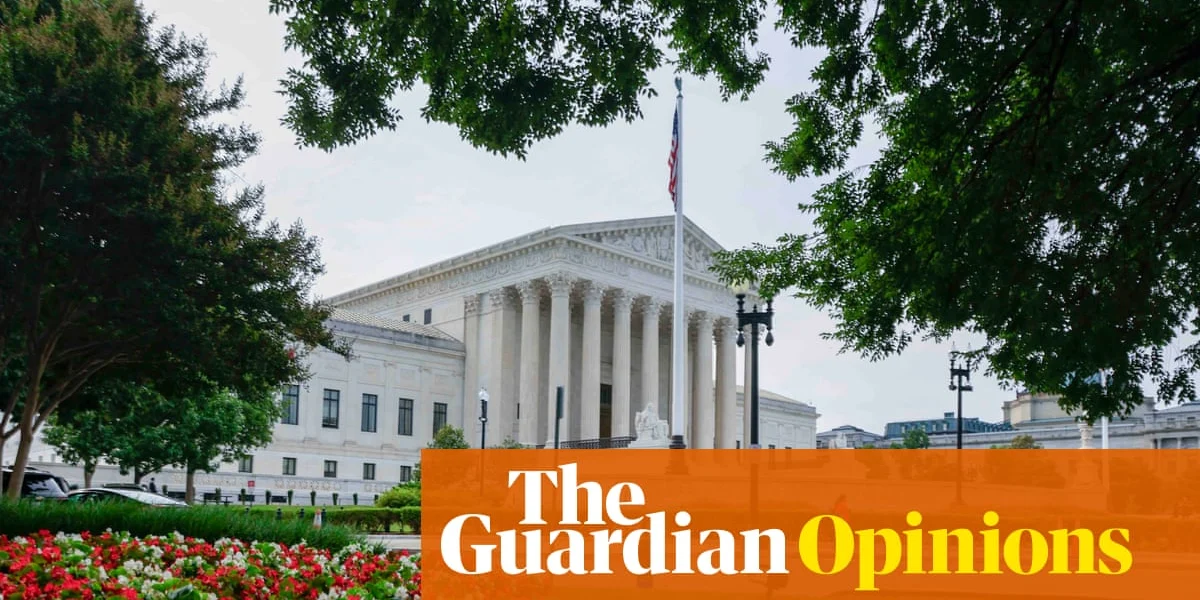
Congress ratified the first amendment in 1791 but the supreme court didn’t breathe life into it until after the first world war, when prosecutions of antiwar protesters led the justices Oliver Wendell Holmes and Louis Brandeis – and then, fortunately, other justices as well – to realize that US democracy would be undermined, not strengthened, by allowing the government to suppress disfavored political opinions.
Repression during the cold war led the court to better protect the freedom of association, and government efforts to cover up official ineptitude and criminality during the Vietnam war spurred the court to better protect the freedom of the press. It took time, but in each of these instances the court responded to wartime repression by developing new legal doctrine that more robustly protected first amendment freedoms.
Unfortunately, the supreme court hasn’t thus far responded the same way to repressive policies introduced in connection with the “war on terror”.
Read more:Who would fall in love with a fake NFL player? Plenty of sensible people | NFL | The Guardian
After the September 2001 terrorist attacks, our information ecosystem was restructured to protect what the government said were urgent national security imperatives. Both the executive branch and Congress introduced myriad new forms of censorship, surveillance and secrecy, all purportedly intended to keep Americans safe. Many of these policies were in deep tension with freedoms that the first amendment had long been understood to protect – but rather than limit these policies, the court accommodated them.
The result is that today we find ourselves with a weakened first amendment at a time when we desperately need its protections.
The war on terror began testing the first amendment from its very beginning. The government barred the press from immigration hearings in the first weeks after 9/11. The intelligence agencies began relying heavily on national security arguments to keep crucial information about their policies from the public, and the justice department invoked the same arguments to withhold legal opinions that had far-reaching implications for individual rights, including ones about torture and extrajudicial killing.
Read more:With AI memes, Trump promotes mythical version of himself as challenges stack up ahead of midterms
The Bush administration revived a cold war-era practice of denying visas to foreign scholars, writers and artists critical of US foreign policy. Congress expanded the law prohibiting the provision of “material support” to blacklisted groups, extending the statute so far that it reached some forms of speech.
Congress also amped up government surveillance, reviving old programs and inaugurating new ones, many massive in scale. The Patriot Act, which Congress passed just weeks after the attacks, dramatically expanded the government’s surveillance authorities, and Congress extended those powers repeatedly in subsequent years. The FBI exploited new communications technologies to track journalists’ emails and phone calls, and the justice department began using the Espionage Act to prosecute journalists’ sources.
Not all of these issues were presented to the supreme court, but the court batted away almost all of the ones that were. It declined multiple opportunities to consider the constitutionality of national security surveillance. It refused multiple chances to consider the constitutionality of gag orders imposed on the recipients of national security letters – administrative subpoenas issued in foreign-intelligence investigations.
Read more:Inter Miami’s Mateo Silvetti has season-ending shoulder surgery
It also declined an opportunity to consider whether the first amendment guarantees the public a right of access to opinions issued by the foreign intelligence surveillance court – a question that the Knight First Amendment Institute (which I lead), the ACLU, the former solicitor general Ted Olson, and many former intelligence officials all urged the court to take up. (The justices Neil Gorsuch and Sonia Sotomayor dissented from the denial of certiorari, asking: “If these matters are not worthy of our time, what is?”)
Over the course of the quarter century that followed 9/11 – a period during which the court heard about a dozen cases involving the second amendment and about 70 involving intellectual property law – the court agreed to hear only three cases involving conflicts between the government’s counter-terrorism policies and free speech. In each of those cases, it narrowed or weakened first amendment rights.
Read more:Movie Review: ‘By Any Means’ is a propulsive action thriller set against the Civil Rights Movement
In Humanitarian Law Project v Holder, a challenge to the material support law, the court held that the government could make it a crime for a human rights organization to provide training in human rights law to groups that the government had designated as terrorist organizations. In Clapper v Amnesty, which I argued, the court decided that human rights groups lacked standing to challenge a mass surveillance law because they couldn’t prove that their own communications would be collected; the decision had the effect of shielding most national security surveillance from ordinary constitutional review.
More recently, in TikTok v Garland, the court rejected a first amendment challenge to a law that banned Americans from accessing the short-form video app, crediting national security arguments that even the NSA’s general counsel had rejected. That decision purported to be a narrow one but it significantly undermined Americans’ right to access information and media from abroad.
The supreme court’s failure to defend the first amendment against the considerable encroachments of the war on terror has handed the Trump administration a broad set of tools it can use in its assault on democratic institutions and freedoms. Government whistleblowers who inform the public about abuse or criminality in the military or intelligence agencies – and journalists and publishers who report on those abuses – risk prosecution under the Espionage Act. Those who participate in anti-ICE or pro-Palestinian demonstrations do so under the shadow of the expanded material support laws. Government secrecy about matters relating to war and foreign policy, such as government surveillance in the national security sphere, has become all but unchallengeable.
It’s not surprising that 9/11 and the war on terror would test the protections of the first amendment, as they were tested repeatedly by crises and conflicts in the last century. What is surprising and noteworthy is the extent to which the supreme court has failed to rise to the challenge, as its predecessors did, to ensure that the freedoms of speech and the press emerged from these stresses not just intact but fortified against future pressures.
We’re suffering the consequences of the court’s failure now. We’ll preserve our democracy against Trump’s assault – but there’s no question that the court’s record during the war on terror has strengthened the hand of our authoritarian president and weakened our own.