
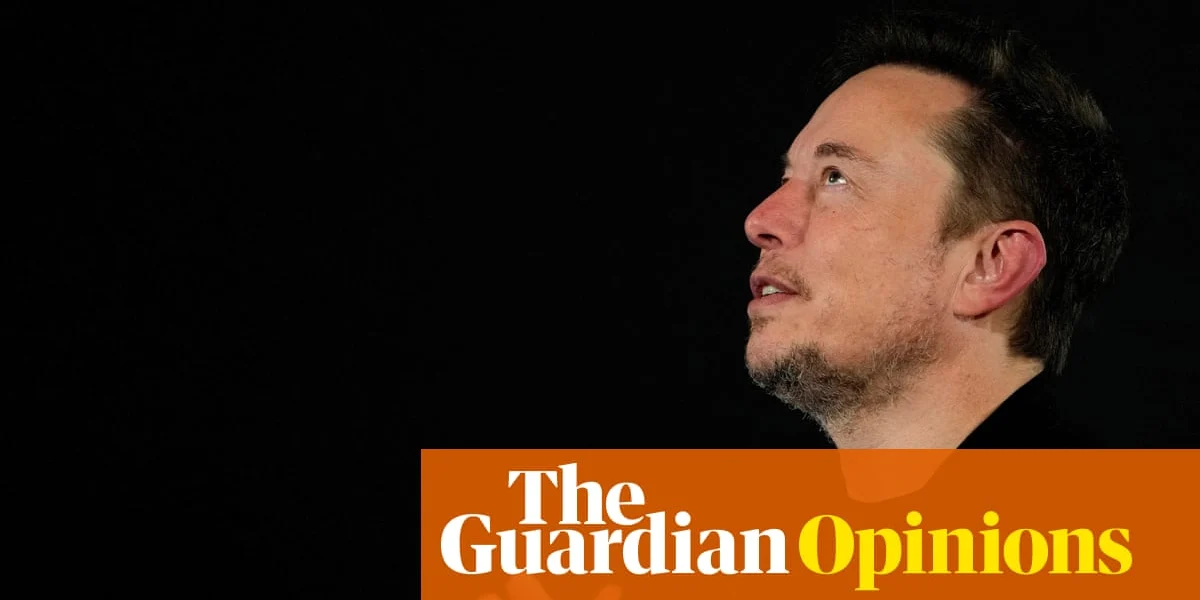
The stock market listing of SpaceX has led to an outpouring of celebration, from Wall Street to Silicon Valley. Yet those who rejoice in Elon Musk’s fortune surpassing the $1tn mark need to be reminded of a simple and vital truth: the mere existence of trillionaires is a major political and economic problem, probably the defining issue of our time.
Simply put, there is a fundamental tension between extreme wealth and the very possibility of democracy. Extreme wealth is always an extreme power. It’s the power to stifle competition, the power to shape public discourse, the power to influence policymaking, the power to buy elections, the power to stall social progress.
This problem is not new: all the thinkers of democracy, from Aristotle more than 2,000 years ago to Lea Ypi at the London School of Economics today, have highlighted the corrosive nature of extreme wealth for society.
Even conservative thinkers acknowledge it. James Madison, the father of the US constitution and a hero to today’s conservatives, famously wrote that wealth inequality is as poisonous for democracy as war. “In war, too, the discretionary power of the Executive is extended; its influence in dealing out offices, honors, and emoluments is multiplied … The same malignant aspect in republicanism may be traced in the inequality of fortunes,” he wrote
For some time, after the second world war, it looked like extreme wealth belonged to the past and that we could forget this problem. After the shocks of the wars and the rise of progressive income and inheritance taxation – with top marginal tax rates that reached nearly 100% in both the UK and the US in the postwar decades – extreme wealth had largely disappeared. But it’s now coming back in full force.
In 1989, the first year the Sunday Times Magazine compiled its famous rich list, the 0.001% wealthiest families living in the UK – about 200 families – owned wealth equivalent to 5% of UK GDP. Today that same group of the population owns wealth equivalent to 20% of UK GDP. It means that if they spent all their wealth, these 200 families could buy the equivalent of a fifth of all the goods and services produced in a given year in the UK.
The explosion has been even bigger in the United States, where the wealth of the super-rich now far exceeds its peak of the beginning of the 20th century. At the height of the Gilded Age, around 1910, the four largest American fortunes owned wealth equivalent to 4% of US GDP. Today, that same tiny fraction of the population, the top 0.00001% – which now includes 19 households – could buy 14% of everything produced in a given year in the US.
Read more:Why is Elon Musk so threatened by the casting of The Odyssey? | Arwa Mahdawi | The Guardian
That’s how Musk could buy Twitter on a whim for $44bn in 2022; that’s how Larry Ellison can buy TikTok, CBS and CNN today; that’s how billionaires could account for 20% of all political donations in the 2024 federal election cycle.
There is sometimes a view that the wealth of these billionaires is somehow “virtual”: it is not like cash at the bank but merely notional. The super-rich would be benign figures, according to this view, less influential than unions or advocacy groups.
But extreme wealth is in fact always very real, and a lot of the problems in today’s world are downstream of the booming influence of the super-rich on policymaking.
Read more:Vampires, literary monsters and a cake: The Tony Awards offer a number of intriguing, possible wins
The first trillionaire himself couldn’t illustrate it better. Tesla, the company Musk founded in 2003, didn’t turn a profit until 2020. This didn’t prevent him from buying Twitter, and turning the social network into a platform for a variety of political and ideological causes, including getting Donald Trump re-elected. His fealty earned him a quasi-cabinet position, the direction of the so-called “department of government efficiency (Doge), with total freedom to slash government spending not to his liking.
During his tenure, Doge shut down the US Agency for International Development (USAID), leading to the termination of numerous programs tackling malnutrition, HIV and preventable diseases around the world. A study published in the Lancet found that these funding cuts could result in more than 14m deaths, including 4.5m in children younger than age five, by 2030. Great wealth is never “virtual”.
When the power of wealth is wielded by sociopaths, the consequences are a matter of life and death. But the individual merits or kindness of billionaires are in fact irrelevant. No one should want to live in a society where one single individual can be worth $1tn, no matter their personal virtues: such levels invariably skew power, distort marketsand sap our democratic ideals.
Read more:Jill Biden’s book is the last thing we need right now | Arwa Mahdawi | The Guardian
So where do we go from there?
While there is an array of policies that can constrain the power of the super-rich, any solution has to involve fixing one of the most grotesque anomalies of our time: that the super-rich often live nearly tax free today.
A recent body of research, summarized in my book We Need to Tax Billionaires, has established that the super-rich pay very little income tax, because they find ways to report very little income. There was even one year when Jeff Bezos pretended he was so poor that he claimed – and received – the child tax credit. All of this may be legal, but it fuels the explosion of wealth and power at the top.
The most effective way to start reining in billionaires is to create an unavoidable minimum tax on their wealth. In a report commissioned from me by the G20 in 2024, I proposed a minimum tax rate equal to 2% of wealth for people with net worth above $100m. This would make it impossible for the super-rich to pay less tax than middle-class workers – a matter of basic equality before the law.
Beyond democracy and fairness, taxing billionaires would now have large budgetary implications. The flipside of the upsurge in their wealth is that the potential revenue gains from a billionaire tax are now large. A minimum tax equal to 2% of wealth for households with net wealth above £100m in the UK would bring in £15bn annually – 0.5% of GDP. £15bn, from just about 1,000 families, each year.
For comparison, the fiscal savings expected from the catastrophic 2024 decision by the UK prime minister, Keir Starmer, to scrap the winter fuel allowance for retirees were estimated at about £1.5bn annually.
It is time to break decisively with the perverse logic in which retirees, the poor or immigrants are expected to balance the budget, while the rich are to be allowed to live tax-free in their own parallel society. There cannot be a law more lenient for the rich and powerful than for the rest of us. If ever there was a time to act, it is now.