
Some public health threats make global headlines: Covid-19. Ebola. Famine. When these disasters hit, photographs and videos of people suffering and dying spur countries to respond, international bodies to cooperate and individuals to donate supplies and money. Yet one of the world’s deadliest threats gets almost no attention at all, because it is largely invisible to the public and mostly absent from media coverage: air pollution.
Every day, billions of people are inhaling air that is shortening their lives and making them sicker with every breath. Every year, air pollution kills more than 8 million people worldwide. That’s more deaths than HIV, malaria and tuberculosis combined. It hides in plain sight and strikes without mercy, leading to heart and lung disease, cancers and other deadly conditions.
The heaviest burden falls on low- and middle-income communities and nations, but it is a problem that stretches across all classes and countries.
Read more:Dementia: Recombinant shingles vaccine linked to lower risk
The good news is this is a fixable problem – and the public doesn’t need to wait for national governments to act. Cities can implement their own solutions – and as the world convenes in London for Climate Action Week, the success that the English capital and New York have had in reducing pollution can help overcome opposition to bold climate action.
Experts at King’s College London predicted that from 2016 it would take almost 200 years for London to meet legal limits for roadside nitrogen dioxide (NO2) without action. But with robust and bold action from City Hall, London did it in nine.
Read more:King Charles appoints actor Helen Mirren to a select group in his birthday honors list
How? By following the data. Alongside an extensive network of automatic and passive monitors, low-cost air quality sensors were installed across the city in areas where people live, play and work – schools, hospitals and cultural centres – through the Breathe London programme. But data alone is not enough. Progress comes down to how it is used and by whom. That’s why the Breathe London network also engaged with community leaders and the general public to increase awareness and install additional sensors in the areas most in need.
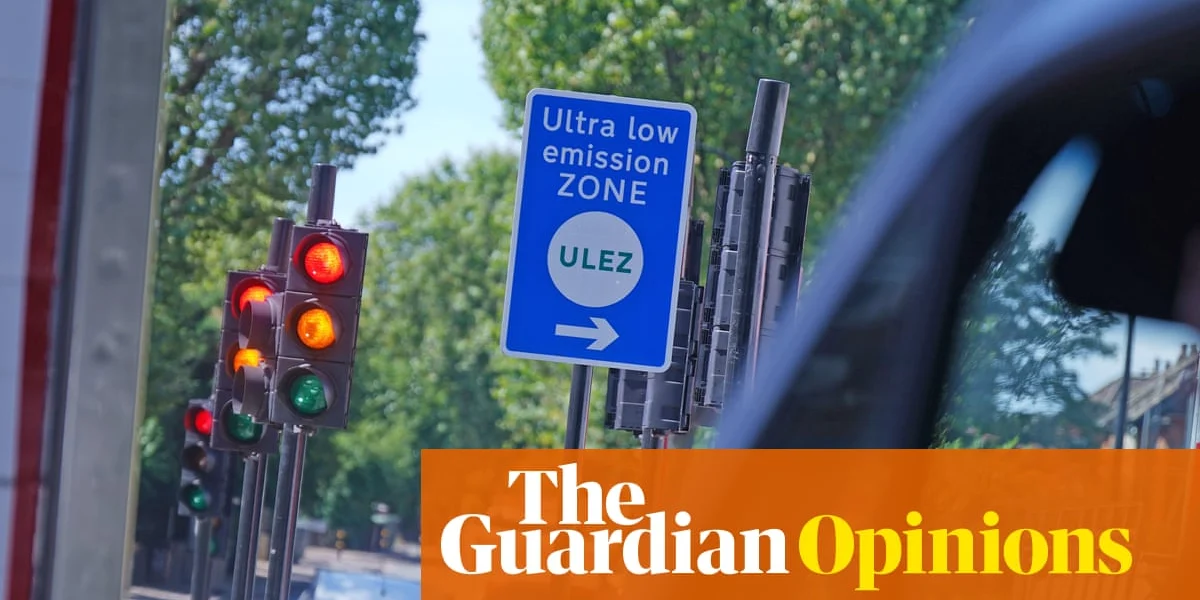
The data helped to inform solutions, such as the ultra-low emissions zone (Ulez) – the world’s largest clean air zone – and the rollout of zero-emission buses on London’s streets, which have made a real impact and driven air pollution levels down drastically. Taking those steps required facing down political opponents, pressure groups and vested interests but – as the data makes clear – the public has benefited. Only this month, new research published by Imperial College London found that fewer Londoners were admitted to hospital with breathing and heart problems as a direct result of the impact of the Ulez.
Read more:Spanish mayor cancels DR Congo World Cup tuneup over Ebola fears
London built on the work that was pioneered in New York, where air-quality sensors helped city government target its efforts and drive air pollution down to a 50-year low. Both cities have demonstrated that rapid, measurable progress is achievable. In doing so, both cities have also shown that lower emissions and improved air quality are good for health, the climate and the economy, since improving air quality helps attract private investment. Now our mission is to help other cities do the same.
A new programme called Breathe Cities, launched by Bloomberg Philanthropies in partnership with Clean Air Fund and C40 Cities, was created to take what we’ve learned and spread those best practices around the world. This initiative gives mayors what they need to attack the problem head-on: real-time data on where pollution is worst, technical support to convert that data into policy solutions and a global network of cities to share ideas with. Breathe Cities will ensure that when something is working in one city, other cities will benefit, as those success stories become roadmaps for mayors across the globe to follow.
Read more:Cristiano Ronaldo’s Portugal were prepared for social media backlash at World Cup – Diogo Dalot
The early results are promising. We’re already seeing that blueprint work not only in global capitals such as London and New York, but also in cities with widely varying levels of resources and political dynamics.
Nearly 1,200 air sensors have been deployed across 14 participating Breathe Cities, including the first hyper-local networks ever established to detect pollution in Accra and Nairobi. Ten of these cities have committed to clean air zones by 2030, which will collectively cover an area where more than 18 million people live and work.
Read more:What to Stream: Paul Simon, ‘In the Hand of Dante,’ ‘Avatar: The Last Airbender’ and Star Fox
By using data, cities are attacking the problem of air pollution as a public health challenge and simultaneously making progress in tackling the climate crisis, rather than retreating from environmental protection as some national governments are doing. People rightly expect their local leaders to make it safe to walk outside. That includes protecting them from toxic pollution, as breathing clean air is a fundamental right.
The more cities that uphold that right, the more lives will be saved – and the more progress the world will make in the fight against the climate emergency.