

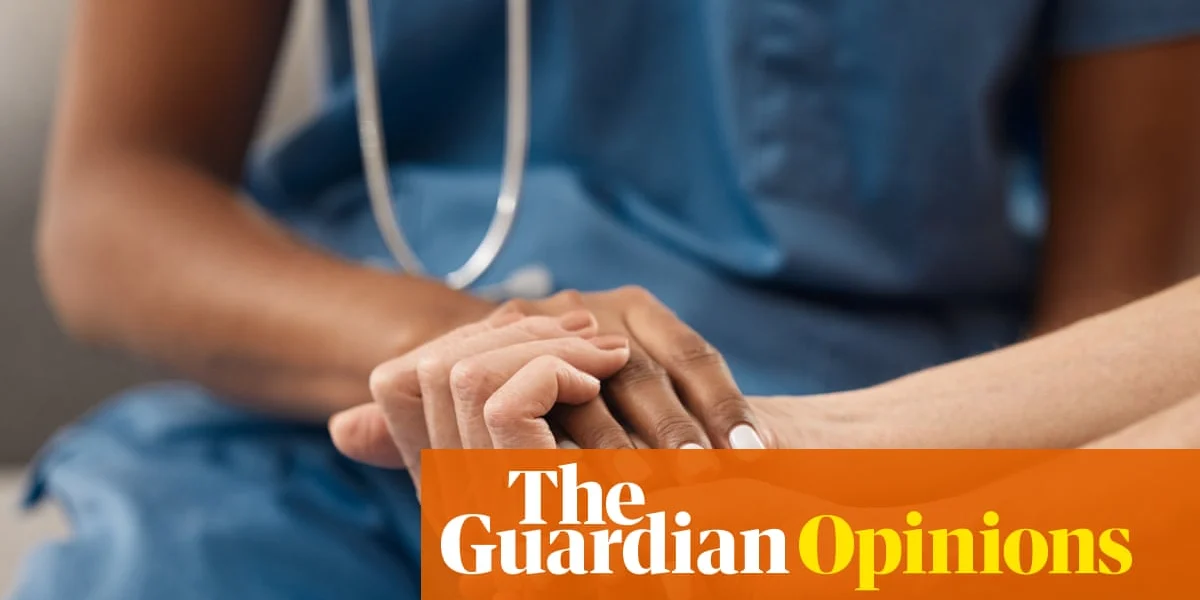
It could be her usual generosity or disquiet, subtly disguised, but she leads by asking about “the kids”. Mine, not hers.
The question from a patient who has known me for years is a reminder that goodwill in medicine goes both ways. I scroll to a photo of my daughter, flanked by her brothers.
“Do you think she looks like me?” I ask as I open her file.
She thinks about it.
“Your daughter is farmore beautiful.”
We both burst out laughing.
Then, to assuage my feelings, she adds, chuckling: “But you’re just fine.”
I realise that my difficult conversation with her will be much more difficult.
Read more:Lionel Messi scores again to seal perfect group stage for Argentina
Having undergone an array of cancer treatments over 10 years, this woman meets the definition of a survivor. I admire her capacity to appreciate the good in life even when that life seems unfairly punctured by insults. Having always preferred honesty over comfort, she knows that each new treatment offers a little less benefit. Even though I studiously avoid such analogies, she insists she will “fight”.
But lately I have felt a nagging obligation to gently shift her thinking. This is an especially difficult thing to do when people feel well but can still deteriorate without warning. Harder still is a family’s surprise because “no one knew”. No one knew that the disease could become immune to treatment, organs could fail and end-of-life care would go from concept to reality.
It is obvious that holistic care for incurably ill patients must include conversations about mortality but getting there is hard. Sometimes, patients aren’t ready. Other times, it’s their doctors. After all, in an era of abundance, there is always something else to offer desperate patients and keep hope alive.
A new study helps guide the way to change.
Researchers wanted to increase the number of serious illness conversations between oncologists and patients with a poor prognosis, noting that these conversations help us understand appetite for toxic treatment and the goals of care.
Read more:Juan Mata buys stake in A-League’s Melbourne Victory
They tested two simple nudges.
One was to mail a letter to the patient to encourage thinking about these issues. The second was to email the oncologist before the appointment to suggest that the patient may need such a conversation. A third cohort received both nudges.A fourth (the control group) received none.
The researchers then looked for evidence of a serious illness conversation in two places.
First, in the dedicated advance care planning section of the medical records. Since doctors might type a regular clinic note an AI algorithm also scanned the entire medical record.
In the dedicated advance care planning section, nudging the patient made no difference. Just 10% had a documented conversation, the same as those without a nudge.
This figure rose to 16% with a clinician nudge and 17% with clinician and patient nudge.
Read more:South Korea coach Hong Myung-Bo quits after World Cup exit, criticism from president
When the entire medical record was interrogated, the numbers improved. Again, nudging the patient made no difference: 22% of controls and nudged patients had documented conversations. When the clinician was nudged, the figure rose to 28% and when both clinician and patient were nudged, the figure was a healthier 32%.
There are a few takeaways.
The first is that serious illness conversations don’t happen anywhere near as often as warranted. This failing comes at an enormous cost to the patient and society. When they do happen, they are not appropriately documented. This matters most when patients are met in extremis by paramedics or emergency professionals who lack the time to mine the records.
(There is something to be said for the time-honoured tradition of putting one’s advance care directive on the fridge door.)
The second – and old – finding is that telling patients to have difficult conversations with their oncologist doesn’t work.
The salient lesson about serious illness conversations is that reminding doctors to have them is useful and reminding doctors and patients at the same time is even better.
Can you hear the objections?
Immediate barriers for clinicians include appropriate communications training (negligible), enough time (contested) and burnout (real).
As for the system, considering how often we get the appointment time and day wrong, I won’t start holding my breath about matching the right doctor with the right patient on the right day for a consequential conversation about death and dying.
But with insight (into why these conversations matter and how better doctor-patient communication saves precious healthcare dollars) and foresight (how do we build systems fit for the future?) change is possible – and necessary.
Facing my patient, I gently tell her that I hope her health stays strong. But I also know how much she cares about her family who love her dearly and want to do the right thing by her. So, for everyone’s sake but especially her own, it’s important to plan for a time when her health worsens.
At this, she nods thoughtfully.
She leaves and I can’t help feeling ordinary, even a little contrite.
I hear footsteps and she ducks her head in.
“Thank you, I needed to hear that.”
I exhale. Then I go back out to do it all over again.