

Kalo te përmbajtja
  • EN
  • SQ
  • IT
  • FR
  • ES
  • DE
  • EL
VA-NEWS VA-NEWS
  • Home
  • News
  • Opinion
  • Health
  • Technology
  • Sport
  • Lifestyle
  • Entertainment
  • Travel
LIVE
Navigation

VA-NEWS

  • Home
  • News
  • Opinion
  • Health
  • Technology
  • Sport
  • Lifestyle
  • Entertainment
  • Travel
Shortcuts
Home Latest
LIVE
Gjuha
  • EN
  • SQ
  • IT
  • FR
  • ES
  • DE
  • EL

Search news

  1. Kryefaqja
  2. Opinion
  3. Australia has had housing crises before: what can we learn from them? | Anne O’Brien | The Guardian
Opinion

Australia has had housing crises before: what can we learn from them? | Anne O’Brien | The Guardian

• July 20, 2026 • 5 min read • 👁 2
◉ WhatsApp 𝕏 X
News

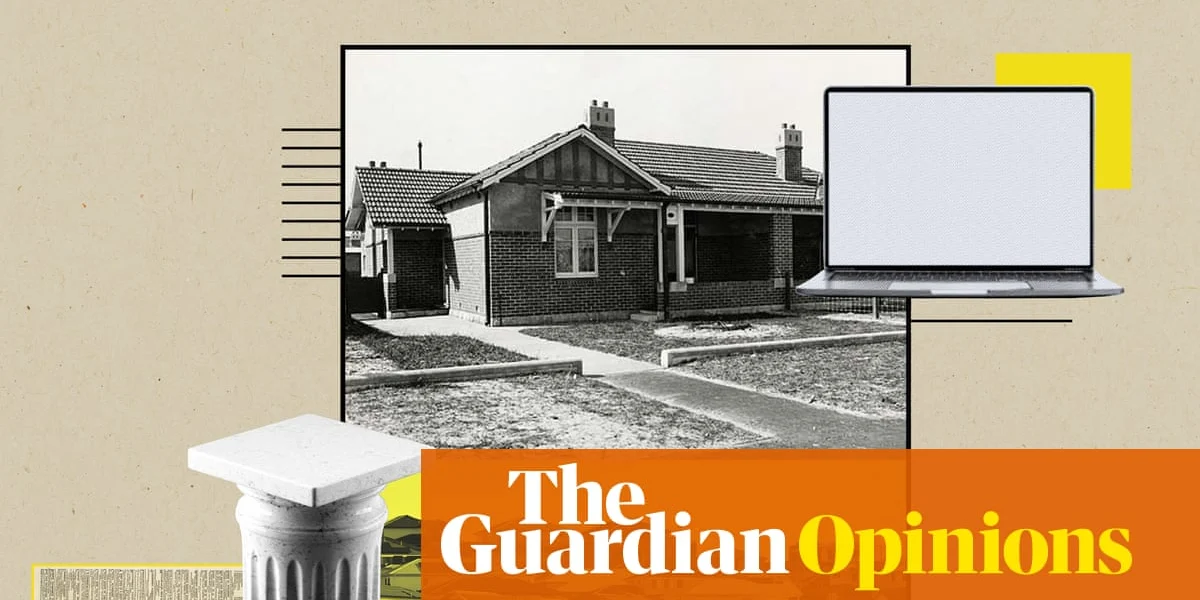
The federal government’s first major tax reform in nearly 30 years was a significant achievement that suggests we may have turned a corner on the housing crisis. It is a good time to revisit Australia’s housing history within the broader history of social policy.

This is a story of public investment for economic growth as well as for the needs of citizens. The railways, telegraphs, hospitals, schools and welfare that gave Australia a reputation for a “pragmatic” rather than “doctrinaire” approach to national development are well known. But governments also invested in housing despite some powerful resistance by interest groups.

This public investment in housing shows how democratic processes worked in this difficult policy area. Most was initiated by Labor governments, some by conservatives, but it all recognised the social and economic value of decent housing, and the difficulties of low-paid workers accessing it via the market. When the eminent architect John Sulman declared in 1914 that “the unsolved problem” in Australia was providing housing at a price that “the living wage workers can pay”, he articulated a “big truth” that remains largely unchanged.

Read more:Just tuning in for World Cup final? Let’s catch you up on what you’ve missed

Some public investments were easier to pull off than others. Australia’s first public housing in Sydney’s Rocks district supported the needs of commerce and shipping when it was constructed in the early 1900s. Part of the redevelopment of the wharves following an outbreak of the dreaded bubonic plague, The Rocks project gave licence to the conservative state government to fund more than 100 new dwellings because wharf labourers needed to live nearby for round-the-clock work.

But most builds were more contentious, pressured by citizen protest and supported by advocates of the garden suburb who saw inner-city housing as “slums” and a source of social decay. Daceyville, in Sydney’s south-east, was a prime example. Established after the election in 1910 of New South Wales’s first Labor government, it was precipitated by the demolition of swathes of housing for city improvement. By 1912 more than 5,700 people were displaced. Residents, city missionaries and the popular press mounted petitions and led deputations to register their dissent at what journalists were calling inhuman evictions.

Read more:What Rumi’s magnum opus can teach us about greed and contentment in the digital age of envy | Ali Hammoud | The Guardian

Daceyville was not the only outcome of this protest. The Strickland Building in Chippendale was the first of four blocks of inner-city flats erected by the Sydney city council between 1914 and 1927. With resident demand for housing near work trumping anti-slum orthodoxy, they are evidence of how contingent outcomes in this high-stakes context could be.

The largest and best-remembered investment was in the 1940s, the product of an extreme housing shortage and fear of social unrest. Thousands of families were living in boarding houses and various forms of temporary shelter following the Depression. The Commonwealth Housing Commission promised a “new social order”, which also sought to offset the attractions of communism. It broke new ground in declaring housing to be “a right” that should “cease to be a field of investment yielding high profits”. Between 1945 and 1956, more than 96,000 new dwellings were funded through the commonwealth-state housing agreement.

None of these public investments were sufficient but they eased rental pressure on working-class families to a greater extent than any intervention before or since and, leaving behind the orthodoxy of the “economic rent”, it enabled families in greatest need to access it. This investment also underpinned the leap in Australia’s home ownership rates from 53% in 1947 to 73% in 1966.

Read more:ESPN FC (7/19/26) – Live Stream – Watch ESPN

A downside of this pivot was that the stock that was sold was not replaced. The Menzies government saw home ownership as an alternative to public rental rather than a complement, so support wound down. Between 1958 and 1973 the proportion of new housing that was public fell from 17.8% to 7.7%. The waiting lists have been growing ever since.

In 2007, the Rudd government addressed once again the disparity between low incomes and market rents through a new housing policy. Despite its limits, it enabled thousands of people who would otherwise have remained homeless to access secure housing. This investment, part of the global financial crisis stimulus package, demonstrated how such policy can work to normalise fiscal intervention. It was redeployed early in the Covid pandemic, preventing widespread unemployment, and underpins the government’s recent tax reforms.

Read more:Some Americans are reluctant to cheer for the US at the World Cup. They shouldn’t be | USA | The Guardian

Australian governments’ past investments in housing were hard-won. Despite their limitations, they made access to housing more equitable because they recognised its social and economic value. Understanding their complexity and purpose helps expand and strengthen the options we now see as politically feasible.

Anne O’Brien is emeritus professor of history at the University of New South Wales. She is a member of the Australian Historical Association

Read also
Opinion

Australia and Canada can learn from each other on climate if we separate action from declaration | Rosa Galvez | The Guardian

Opinion

In Gaza, we’ve seen horror unfold with global powers’ support. Is that a blueprint for elsewhere? | Ahdaf Soueif | The Guardian

Tags: #Australia #Has #Live #Protest #Sydney

Journalist

From the same category
  • Australia and Canada can learn from each other on climate if we separate action from declaration | Rosa Galvez | The Guardian
  • In Gaza, we’ve seen horror unfold with global powers’ support. Is that a blueprint for elsewhere? | Ahdaf Soueif | The Guardian
  • George W Bush’s impunity led to Trump’s lawlessness | Kenneth Roth | The Guardian
  • The Smithsonian chief’s exit is a blow to democracy | Kimberlé Crenshaw and Jason Stanley | The Guardian
  • The hill I will die on: Comedians should not be hot | Amy Annette | The Guardian
From the same tags
  • Luna, Musah and the USMNT’s fringe players hoping for a bigger role in 2030
  • Messi scores but Nashville strikes late to deny Miami win
  • Man City’s Elliot Anderson: My first thought when getting ball is finding Erling Haaland
  • Arsenal’s Mikel Arteta fumes at Sunderland penalty decision: ‘Unacceptable’
  • Winless Tottenham lack confidence and physical conditioning – Roberto De Zerbi
Më të lexuarat — 48h
  1. 01
    Football Xabi Alonso wants more ‘boring’ wins as Chelsea draw with Hull 3 lexime · 13 hours ago
  2. 02
    Football Fenerbahçe coach Kartal misses training despite club blocking resignation 3 lexime · 2 days ago
  3. 03
    Football Man United vs. Man City combined XI: Two United players feature as Mbeumo, Dias miss out 3 lexime · 2 days ago
  4. 04
    Football Mourinho on Madrid’s Diomande: Huge potential but a lot to learn 2 lexime · 8 hours ago
  5. 05
    Football Man City’s Elliot Anderson: My first thought when getting ball is finding Erling Haaland 2 lexime · 6 hours ago
  6. 06
    Football Luna, Musah and the USMNT’s fringe players hoping for a bigger role in 2030 2 lexime · 4 hours ago
  7. 07
    Football Andoni Iraola cites ‘lack of freshness’ after Liverpool’s draw with Fulham 2 lexime · 12 hours ago
Similar articles
Opinion

Australia and Canada can learn from each other on climate if we separate action from declaration | Rosa Galvez | The Guardian

Canada and Australia are both democracies built on abundant resources, extraordinary biodiversity and world-class science, with prosperity built…

• 19 hours ago • 5 min read
Opinion

In Gaza, we’ve seen horror unfold with global powers’ support. Is that a blueprint for elsewhere? | Ahdaf Soueif | The Guardian

Last week, Itamar Ben-Gvir, Israel’s minister of national security, put out an AI-generated video that showed a conveyor…

• 19 hours ago • 5 min read
Opinion

George W Bush’s impunity led to Trump’s lawlessness | Kenneth Roth | The Guardian

If George W Bush’s abusive response to the September 11 attacks had been prosecuted rather than swept under…

• 19 hours ago • 6 min read
VA-NEWS VA-NEWS

Modern portal of reliable, independent and multilingual news. Accurate information, every day.

  • Health
  • Lifestyle
  • News
    • World
  • Opinion
  • Sport
    • Football
  • uncategorized
  • © 2026 VA News. Made with ♥ in Albania
    ⌂ Home ◷ Latest

    Powered by
    ►
    Necessary cookies enable essential site features like secure log-ins and consent preference adjustments. They do not store personal data.
    None
    ►
    Functional cookies support features like content sharing on social media, collecting feedback, and enabling third-party tools.
    None
    ►
    Analytical cookies track visitor interactions, providing insights on metrics like visitor count, bounce rate, and traffic sources.
    None
    ►
    Advertisement cookies deliver personalized ads based on your previous visits and analyze the effectiveness of ad campaigns.
    None
    ►
    Unclassified cookies are cookies that we are in the process of classifying, together with the providers of individual cookies.
    None
    Powered by