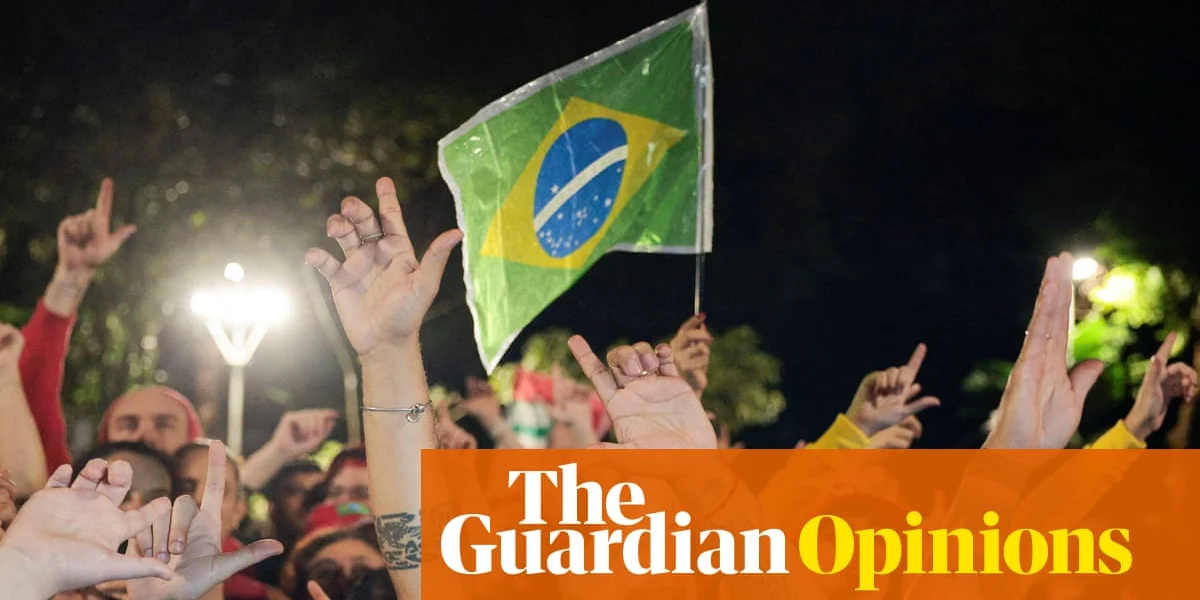
The impossible happened. President Luiz Inácio Lula da Silva won a fourth term in Sunday’s runoff election in Brazil, overturning Flávio Bolsonaro’s first-round lead in a historic comeback. No candidate has ever lost the first round and won the second, until now. Grassroots mobilisation, alongside social welfare policies, helped turn the contest into a referendum on Brazilian democracy, rallying voters against a candidate seeking to restore the legacy of his father, Jair Bolsonaro, imprisoned for plotting a coup after his 2022 defeat. Lula’s victory suggests that defending democracy can still be a powerful electoral argument against the ascendant right.
Having already consolidated most of the leftwing vote, Lula had limited room to attract supporters of other candidates after his first-round defeat. His best chance lay in mobilising abstainers and reconnecting with working-class voters. The Workers’ party intensified its grassroots and digital campaigns, using social media influencers and messaging networks to reach supporters. Nearly 3 million more Brazilians voted in the runoff, and Lula gained ground across the country, particularly in major cities and his north-eastern strongholds. He also appealed to voters’ immediate economic concerns, drawing on a record of reducing poverty and inequality, and increasing benefits under Bolsa Família, the landmark welfare programme he launched in 2003. Lula framed the election as a choice between protecting social gains and democratic institutions, or returning to the Bolsonaro family’s attacks on both, warning that his opponent would compromise Brazil’s sovereignty by aligning himself with Donald Trump.
The implications extend far beyond Brazil. Lula’s victory interrupts a regional trend: rightwing candidates have won seven presidential elections across Latin America in the past 18 months. Two decades ago, Lula was among the leaders of Latin America’s pink tide, a succession of leftwing governments that reshaped the region’s politics and sought greater autonomy from Washington. Today, he finds himself resisting a new regional wave moving in the opposite direction, without a comparable coalition of allies.
Read more:U.S. ousted from U20 Women’s World Cup in shootout loss to Brazil
Lula’s victory is welcome, but we shouldn’t forget that Flávio Bolsonaro won more than 48% of valid votes, demonstrating the enduring strength of a movement with substantial representation in an increasingly rightwing congress. His proposals on security and the economy appealed to voters frustrated by high living costs, including working-class Brazilians who had traditionally supported Lula. This mirrors the success of authoritarian-leaning rightwing candidates across the continent. Frustration with crime, economic insecurity and established political parties has propelled a new right promising tougher security policies and attacking progressive social agendas. From Nayib Bukele in El Salvador, to Javier Milei in Argentina, to the recent election of Abelardo de la Espriella in Colombia.
The emerging rightwing alliance is, in many ways, the mirror image of the pink tide, developing in close alignment with Trump and his ambitions to reassert US dominance over the hemisphere.The relationship is mutually reinforcing: rightwing leaders who gained ground through domestic discontent look to Washington to consolidate their power, while the US relies on those same governments and movements to advance its strategic interests. In his victory speech, Lula said the surge of street support in recent weeks “was a demonstration that this country refuses to be anyone’s back yard”. His declaration directly challenges the so-called Donroe doctrine, which asserts an expanded US role in policing the region.
Read more:Lung cancer: Can a new blood test warn of recurrence early on?
Since returning to office, Trump has used endorsements, sanctions, tariffs and financial assistance to reward allies and put pressure on opponents. He backed rightwing candidates in Honduras and Colombia. He has turned a blind eye to Salvadoran president Bukele’s negotiations with criminal organisations (Bukele denies having made an informal pact with these organisations). And ahead of Argentina’s 2025 legislative elections, he offered Milei a $20bn financial lifeline while warning that US generosity depended on the electoral outcome.
Security provides a particularly powerful instrument for this alignment. The Trump administration has invoked the fight against “narcoterrorism” to expand its military role and apply pressure on governments to accept Washington’s priorities. Terrorist designations have helped justify the operation that captured Nicolás Maduro in Venezuela, threats of unilateral strikes against Mexican cartels and joint military operations in Ecuador. Washington has also discussed similar operations with Colombia. The designations do not themselves authorise military action, but they strengthen the administration’s justifications to intervene beyond US borders.
Read more:Tyler Adams named USMNT captain for new World Cup cycle
Brazil demonstrates how this strategy can also serve Washington’s allies outside government. The Bolsonaro family had itself sought Washington’s intervention against the Brazilian judiciary during Jair Bolsonaro’s prosecution. The Trump administration imposed tariffs on Brazil and sanctions against supreme court justice Alexandre de Moraes. Following lobbying from the Bolsonaros, Washington also designated Brazil’s two largest criminal organisations as foreign terrorist organisations, reinforcing Flávio Bolsonaro’s campaign message that Lula was failing to confront organised crime.
The stakes extend beyond the Bolsonaro family’s political fortunes. Washington has pressed Lula for access to Brazil’s critical minerals as it seeks to reduce dependence on China. Lula has defended Brazil’s freedom to trade with other partners.
Read more:Man City appeal guilty verdict in Premier League breaches case
Brazil shows that Trump’s interventions can backfire. In 2025, Lula’s approval ratings rose after Washington threatened punitive tariffs over Jair Bolsonaro’s prosecution. The president turned the dispute into a defence of national sovereignty, making resistance to foreign interference a defining theme of his re-election campaign. The electoral effect of Trump’s involvement is difficult to isolate, but the backlash helped Lula mobilise support. Combined with grassroots organising, appeals to democracy and social welfare policies, it offers one possible response to the regional right’s advance.
Yet a defining feature of that resistance is that it has remained national. Brazil’s size gives it a capacity to resist Washington that none of its neighbours possess. Lula has also been pragmatic in keeping that resistance national, rather than attempting to forge a regional coalition against Trump’s hemispheric ambitions.He also faces a strengthened right at home. Flávio Bolsonaro has refused to concede, seeking to annul the election over a last-minute extension of voting hours that both campaigns had requested. Electoral authorities maintain that the extension did not affect the outcome.
The region’s rightward shift also obscures a fragmented political landscape. Across Latin America, deeply divided electorates have produced closely contested elections, complicating claims that either the left or the right has established a durable political hegemony. Brazil is a case in point: Lula’s victory interrupted the right’s advance, but nearly half of voters backed a candidate who embraced much of Trump’s agenda.
Lula’s victory shows that the rightward shift is neither inevitable nor irreversible. But the movement retains substantial electoral support, influence over the political agenda and a powerful ally in Washington. Brazil may have stopped the blue tide at its borders, but it has yet to emerge as a regional bulwark against it.