

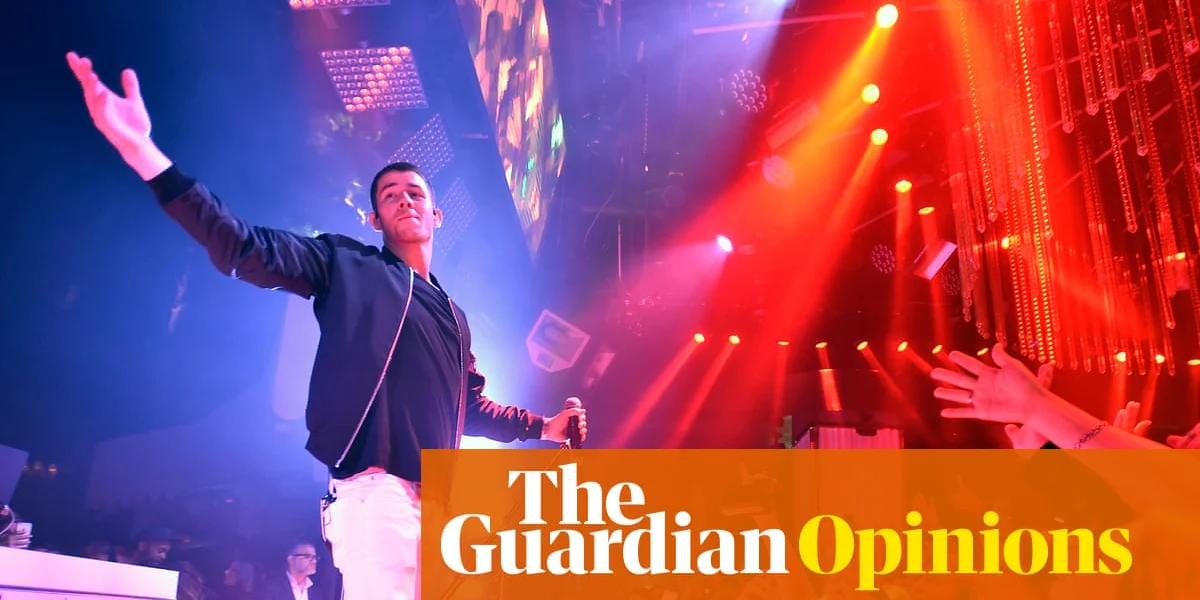
Three years ago, I agreed to accompany my children to a Nick Jonas concert. The appeal of the Jonas Brothers, and in this case only one of them, was unfamiliar territory.
The concert happened to land on a particularly inconvenient day. As I sprinted out of the hospital, my mind was filled with the “what if’s” and “should haves” about our work that day.
After lengthy negotiations with my daughter at the merchandise stand, we settled in as Nick Jonas began. I found myself surrounded by thousands of young people all singing the same songs, swaying to the same rhythm, and participating in the same moment.
At first I felt like an impostor, as if I was attending a party I hadn’t been invited to. However, as the evening progressed, my thoughts of “me” shrank as I was absorbed into the intoxicating collective of the crowd.
Bizarrely, it was Nick Jonas (now an unlikely permanent fixture on my playlists) who reminded me of an obscure phrase coined by a 19th-century sociologist – Émile Durkheim’s “collective effervescence”. He was describing how individuals who are normally preoccupied with their personal concerns get swept up into a kind of electric, communal intensity.
For “collective effervescence” to occur organically, bodies need to be present, in the same space, dancing to the same rhythm. The function, according to Durkheim, is to restore the social bonds and shared beliefs that are eroded by the drudgery of ordinary life.
Such a state is a rare universal in human culture. Cave drawings displaying communal dancing, often around a fire, are found across centuries and continents.
As a neuroscientist and practiced meditator, I’m familiar with the literature on ego dissolution. My own research on the Shambavi Mahamudra Kriya, an ancient yogic meditation practice, found that it reduces activity in the “default mode network” (DMN), the circuit in the brain that is responsible for planning, daydreaming and self-talking. Meditation is not alone in this; astronauts, big-wave surfers and skydivers all experience their egos melting away during an intense state of flow.
We need this network. Without it, we couldn’t plan tonight’s dinner. Yet too much self-referential thought wears us out. Neuroimaging suggests that those with depression struggle to switch out of the DMN-heavy, rumination mode.
We all need a break from ourselves sometimes. Nick Jonas showed me how “collective effervescence” could be the perfect circuit breaker.
Synchronized dancing boosts social closeness. Interestingly, some synchrony research suggests that shared dancing with “out-group members”, or those of a different age group, actually increased the chances of real life cooperation.
Here is where I believe concerts differ subtly from sports events or religious gatherings. Rhythm connects those who support different teams, and believe in different gods.
In the west, we are crying out for more opportunities to experience this group fizz.
A common sentiment is shared in the nightlife industry: “Phones killed the dancefloor.” This isn’t surprising. It’s hard to lose yourself in a crowd if you know you may find yourself again, getting ridiculed on a TikTok feed the next morning.
The prehistoric ritual of ecstatic, synchronous dancing is being quietly eroded, and the modern mind is paying for it.
Read more:Sir Anthony Hopkins on his debut album: ‘My first love is music’
The loneliness epidemic, compounded by the era of constant digital distraction and social comparison, is a serious public health risk. As the former US surgeon general Dr Vivek Murthy warned, loneliness carries comparable risks to that of smoking.
Covid-19 should have been our wake up call. The yearning for public, live music was deeper than many of us could have expected. We weren’t just robbed of the opportunity of seeing our favourite bands in the flesh. We were robbed of the collective effervescence that our nervous systems were built for.
It’s time to make dancing sacred again. Sadhguru, the yogi who taught me how to meditate, appeared on stage at Romania’s 470,000-capacity electronic music festival Untold to speak on the need for greater global, collective consciousness. This unlikely crossover is not without precedent. The Indian spiritual leader Swami Satchidananda sat cross-legged on stage at the Woodstock opening ceremony in 1969; it became a pivotal moment in the hippie folklore of the 60s.
We need to free dancefloors, concerts and festivals of their hedonistic connotations. Perhaps it’s time we assigned them the same “enriching” status as libraries and museums.
The spaces that reliably produce collective belonging deserve to be treated as public health assets. The dancefloor, for all its apparent frivolity, may be doing more for community health than we have the measurement tools to capture. These spaces do something that no app, no algorithm and no prescription can replicate. They return us, briefly, to something primal, prehistoric and necessary. That is worth protecting.
I have already arranged for my tickets to the next Nick Jonas concert, even though my teenagers’ tastes have changed. Thankfully, I still won’t have to attend alone.