

Kalo te përmbajtja
  • EN
  • SQ
  • IT
  • FR
  • ES
  • DE
  • EL
VA-NEWS VA-NEWS
  • Home
  • News
  • Opinion
  • Health
  • Technology
  • Sport
  • Lifestyle
  • Entertainment
  • Travel
LIVE
Navigation

VA-NEWS

  • Home
  • News
  • Opinion
  • Health
  • Technology
  • Sport
  • Lifestyle
  • Entertainment
  • Travel
Shortcuts
Home Latest
LIVE
Gjuha
  • EN
  • SQ
  • IT
  • FR
  • ES
  • DE
  • EL

Search news

  1. Kryefaqja
  2. Opinion
  3. The Guardian view on rare earths: it’s common sense to secure essential supply chains | Editorial | The Guardian
Opinion

The Guardian view on rare earths: it’s common sense to secure essential supply chains | Editorial | The Guardian

• August 31, 2026 • 3 min read
◉ WhatsApp 𝕏 X
News

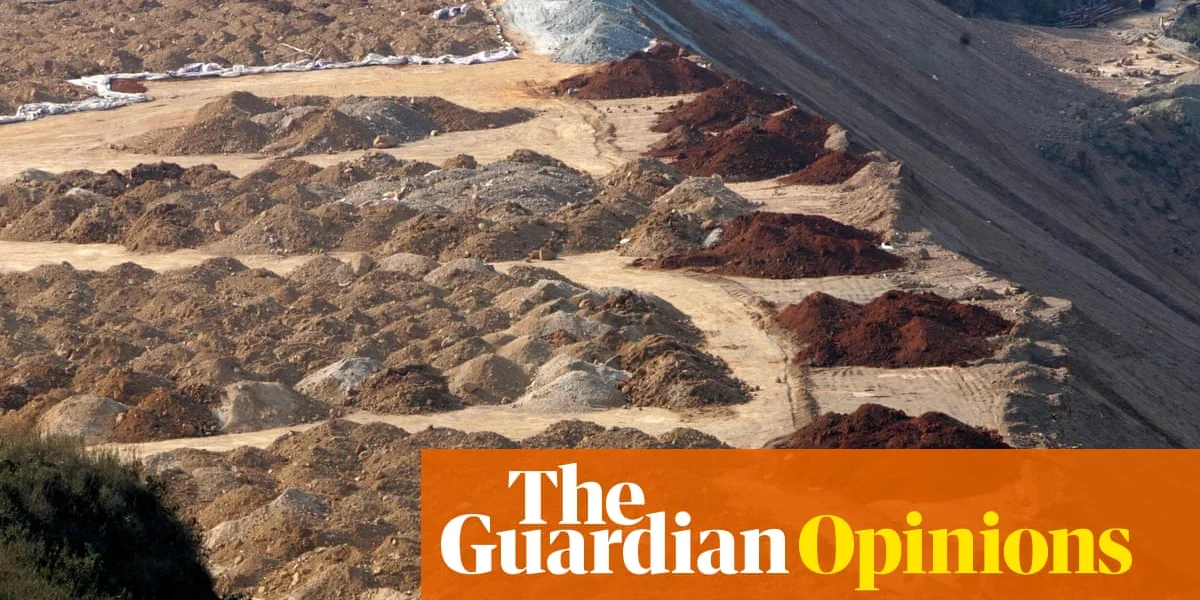
The alarm sounded 16 years ago. In 2010, China blocked exports of key rare earths to Japan in a row over disputed islands in the East China Sea. The critical minerals are essential to everything from advanced weaponry and iPhones to electric vehicle batteries and wind turbines, so the rest of the world took note. But it didn’t take much action. China still accounts for about 70% of rare-earth mining globally and 90% of separation and processing.

Then, last year, Beijing forced Donald Trump to back away from his trade war – not with its retaliatory tariffs, but the curbing of rare-earth exports. A scramble for new supplies began in earnest. The year-long trade truce is due to expire in November. The price of erbium, an element essential to communications infrastructure, has already jumped because of fears that export controls will soon be renewed.

Read more:How Mark Carney’s speeches have become political earthquakes | Ted Widmer | The Guardian

The 17 metals known as rare earths are far from rare; their name refers to the low concentrations in which they are found. Extraction and processing are costly, complex and often dirty, while returns are low. That’s why the US – which dominated the industry in the 1980s – and others outsourced production to China. Any plan to diversify supply chains must somehow build in predictable demand and pricing to succeed. Even now, US rare earths are reportedly flowing to Asia because of the lack of domestic demand. While “Big shovel” is becoming the new driver of geopolitics, rare earths are a tiny slice of the critical minerals market – worth less than $6bn globally last year.

Efforts to diversify supply chains had already begun. But the US-China standoff accelerated them. Last autumn, the Pentagon became the single largest investor in the US firm MP Minerals. In February, the Trump administration announced that it would spend $12bn to create a critical minerals reserve, focusing initially on rare earths. US officials have reportedly described their plan to create new supply chains as a “Manhattan Project” for rare earths. Others question the strategy behind the splurge of money and projects.

Read more:Trump’s midterm campaign theme is unrequited love | Sidney Blumenthal | The Guardian

China, which imports rare earths for processing and has seen them affected by the war in Myanmar, also wants to diversify its supplies. Washington and Beijing are looking to South Africa, Greenland and, in particular, Brazil, raising grave concern about the ecological impact. Innovation, particularly in finding ways to recycle rare earths or extract them from mining waste or runoff, could help meet demand and reduce environmental damage. But it will not stop the extraction drive.

Read more:Barcelona head coach Hansi Flick plays down concerns over Lamine Yamal’s start to the season

Earlier this year, the US launched a critical minerals coalition with 54 partners, including Australia, the European Commission and the UK. A multilateral approach is essential. But Europe and others know it would be extremely risky to count on Washington solely, given the unreliability of the Trump administration, its wild use of trade weapons and its threats to invade Greenland. Stockpiles of essential rare earths, serious investment and stronger partnerships with likeminded allies will be central to a solution. The 2025 European Critical Raw Materials Act set targets for reducing import dependence by 2030. France is already home to the biggest facility outside China to process all 17 rare earths, and a deal for Brazilian minerals is under discussion. But many fear that European countries are moving too slowly. That must change.

Read also
Opinion

The hill I will die on: No self-respecting adult should use the term ‘picky bits’ | Laura Snapes | The Guardian

Opinion

I’m giving birth as a battle rages over maternity care in Ireland. We shouldn’t have to pay to feel safe | Caelainn Hogan | The Guardian

Tags: #Australia #Brazil #China #Donald trump #Europe #france #Has #Industry

Journalist

From the same category
  • The hill I will die on: No self-respecting adult should use the term ‘picky bits’ | Laura Snapes | The Guardian
  • I’m giving birth as a battle rages over maternity care in Ireland. We shouldn’t have to pay to feel safe | Caelainn Hogan | The Guardian
  • It is now almost certain the world will warm past 1.5C. But ‘net-negative’ emissions are still possible | Wesley Morgan for the Conversation | The Guardian
  • As a therapist, here’s why I sometimes advise couples to end their marriage | Nicholas Purcell | The Guardian
  • Ratko Mladić, the ‘Butcher of Bosnia’, could not escape death. But his fascist ideas and ideology live on | Ed Vulliamy | The Guardian
From the same tags
  • I’m giving birth as a battle rages over maternity care in Ireland. We shouldn’t have to pay to feel safe | Caelainn Hogan | The Guardian
  • It is now almost certain the world will warm past 1.5C. But ‘net-negative’ emissions are still possible | Wesley Morgan for the Conversation | The Guardian
  • As a therapist, here’s why I sometimes advise couples to end their marriage | Nicholas Purcell | The Guardian
  • Ratko Mladić, the ‘Butcher of Bosnia’, could not escape death. But his fascist ideas and ideology live on | Ed Vulliamy | The Guardian
  • The Nepal floods seem a world away – but make no mistake, climate breakdown will affect us all | Nesrine Malik | The Guardian
Similar articles
Opinion

The hill I will die on: No self-respecting adult should use the term ‘picky bits’ | Laura Snapes | The Guardian

It’s a bittersweet time of year. The season of tiny shorts is giving way to wondering whether the…

• 14 minutes ago • 3 min read
Opinion

I’m giving birth as a battle rages over maternity care in Ireland. We shouldn’t have to pay to feel safe | Caelainn Hogan | The Guardian

There were no chandeliers in the public ward where I spent my first days as a mother, at…

• 14 minutes ago • 7 min read
Opinion

It is now almost certain the world will warm past 1.5C. But ‘net-negative’ emissions are still possible | Wesley Morgan for the Conversation | The Guardian

Anthony Albanese is in Palau this week for the annual Pacific Islands Forum and regional security is expected…

• 14 minutes ago • 6 min read
VA-NEWS VA-NEWS

Modern portal of reliable, independent and multilingual news. Accurate information, every day.

  • Health
  • Lifestyle
  • News
    • World
  • Opinion
  • Sport
    • Football
  • uncategorized
  • © 2026 VA News. Made with ♥ in Albania
    ⌂ Home ◷ Latest

    Powered by
    ►
    Necessary cookies enable essential site features like secure log-ins and consent preference adjustments. They do not store personal data.
    None
    ►
    Functional cookies support features like content sharing on social media, collecting feedback, and enabling third-party tools.
    None
    ►
    Analytical cookies track visitor interactions, providing insights on metrics like visitor count, bounce rate, and traffic sources.
    None
    ►
    Advertisement cookies deliver personalized ads based on your previous visits and analyze the effectiveness of ad campaigns.
    None
    ►
    Unclassified cookies are cookies that we are in the process of classifying, together with the providers of individual cookies.
    None
    Powered by