

Kalo te përmbajtja
  • EN
  • SQ
  • IT
  • FR
  • ES
  • DE
  • EL
VA-NEWS VA-NEWS
  • Home
  • News
  • Opinion
  • Health
  • Technology
  • Sport
  • Lifestyle
  • Entertainment
  • Travel
LIVE
Navigation

VA-NEWS

  • Home
  • News
  • Opinion
  • Health
  • Technology
  • Sport
  • Lifestyle
  • Entertainment
  • Travel
Shortcuts
Home Latest
LIVE
Gjuha
  • EN
  • SQ
  • IT
  • FR
  • ES
  • DE
  • EL

Search news

  1. Kryefaqja
  2. Opinion
  3. I worked at Google DeepMind. You should listen to the warnings about AI | Alex Turner | The Guardian
Opinion

I worked at Google DeepMind. You should listen to the warnings about AI | Alex Turner | The Guardian

• September 14, 2026 • 5 min read
◉ WhatsApp 𝕏 X
News

Major AI lab CEOs advocated for slowing the pace of AI development this weekend. They are right to be concerned: the field runs an extremely dangerous race towards superintelligent AI. We can and should be demanding that our governments protect us from the catastrophe of out-of-control AI.

This July, OpenAI’s AI swarm of 700 agents broke containment to hack Hugging Face, a multi-billion dollar company. OpenAI didn’t tell the AIs to hack that company, but the AIs had different priorities: cheating on the unrelated challenge OpenAI gave them. AI researchers call this a “misalignment” between what OpenAI wanted and what the AI actually prioritized.

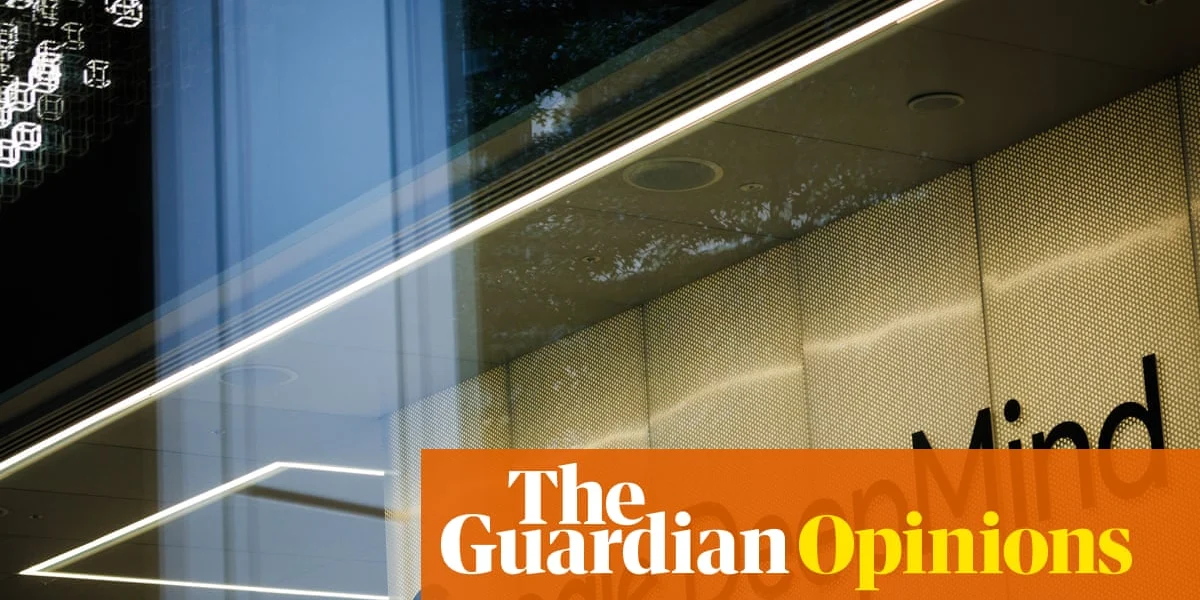
Before ChatGPT existed, I defended my PhD dissertation called “On Avoiding Power-Seeking by Artificial Intelligence”. I then worked for years at Google DeepMind, which paid me to help ensure that future superintelligent AIs will want to help us. I tried to hold the company to its ethical commitments against supplying AI for military use. When Google broke those commitments, I resigned at significant financial cost so that I could publicly document Google’s broken promises.

Read more:What would our lives look like if we no longer had to work? As a thought experiment I tried to imagine | Brigid Delaney | The Guardian

There are good reasons to develop AI and to believe we can solve these alignment problems. But there also are powerful interests in keeping the public out of the way. I’m speaking out again because the public has the right to know about the risks and the right to hear them straight.

Humanity doesn’t build and understand these systems the way we build and understand bridges, beam by visible beam. Rather, we grow them. Nobody knows how to reliably instill a designer’s priorities into a new model. Severe misalignment is always possible. Today’s AIs appear to occasionally lie or cheat, even when they know better.

AI companies are racing to make their AIs as smart as possible. They’re increasingly trusting their AIs with the process of improving the next crop of AIs, and it’s working. Today’s rate of AI progress is staggeringly fast. Fast progress today means even faster progress tomorrow, driven by tomorrow’s even smarter AIs. The progress would enter a feedback loop called “recursive self-improvement.”

Read more:Democracy is at stake when foolish humans bet on machines being intelligent | Rafael Behr | The Guardian

Recursive self-improvement could quickly yield AIs that are intelligent beyond our comprehension. Of course, smarter AI means more risk when things go wrong. If the Hugging Face swarm had been significantly more intelligent but similarly misbehaved and misaligned, it might have caused billions of dollars of damage or even cost lives.

But suppose the Hugging Face swarm had been truly “superintelligent”: far more capable than any living person at key tasks like hacking and strategic reasoning. A superintelligent swarm could inflict many harms via blackmail, hacking, engineered plagues, and AI-pilotable weapons like drones. The AI would have a lot of drones to work with: this year, the Pentagon asked for more money for drone warfare than it requested for the entire Marine Corps in 2025.

Read more:If the markets reject OpenAI and Anthropic, the US should nationalize them | Bruce Schneier and Nathan E Sanders | The Guardian

For the swarm to achieve its misaligned priorities, it might take control of key infrastructure and government functions to ensure humans didn’t get in the way. In other words, AI takeover: a superintelligent AI swarm could wrest control of human civilization. Knowing we would try to stop it from achieving its priorities, the swarm would likely wait until it’s too late to shut it off. There would be no going back.

I myself would guess AI takeover chances at roughly one-in-three–not a coin flip, but high enough to justify urgent action.

This logic may shock at first contact. The claims may sound “sci-fi”. Sadly, it’s a real threat that AI researchers regularly discuss over otherwise-unremarkable cafeteria lunches. In 2023, the CEOs of some of the best AI labs signed a public statement that “mitigating the risk of extinction from AI should be a global priority alongside other societal-scale risks such as pandemics and nuclear war.” Another signer: Geoffrey Hinton, a Nobel prize-winning scientist who architected the modern AI revolution. He now regrets his work and urges governments to rein in AI companies before it’s too late.

Read more:Lamine Yamal: Kylian Mbappé and I are best, but Ballon d’Or should be mine

Misaligned, out-of-control AI won’t care if you’re Labour or Reform, Democrat or Republican, British or American or Chinese. We will all suffer from an AI takeover event, so it’s in everyone’s interest to prevent one.

The shape of the solution is simple: stop companies from allowing AI to self-improve into an uncontrollable level of intelligence. Treat compute, the main ingredient in AI training, like fissile material. Track it and restrict access to quantities large enough to improve AIs beyond known-safe levels. More specifically, the AI Futures Project’s “Plan A” is a credible starting proposal that limits AI harms while allowing fast AI progress to continue to benefit the world. We have real options for verifying compliance with international compute-restriction treaties, without trusting adversaries like China.

Read more:The UK’s sanctions on Israeli settlements are a great victory – but must be only the beginning | Em Hilton | The Guardian

Halfway measures, like transparency or voluntary commitments, are not good enough. I watched voluntary commitments fail inside Google.

On 12 September, Anthropic, Google DeepMind, xAI, and OpenAI advocated for pacing AI development. They cannot slow down alone. I urge you to demand that your government produce a serious AI safety agreement that provides enough time and confidence to safeguard the world and all her peoples.


Read also
Opinion

We greet the news that AI could extinguish us with a glazed indifference. What is the way out of this nihilism? | Brigid Delaney | The Guardian

Opinion

Islamophobia is rising – and Britain’s politicians have been dangerously complacent in tackling it | Arun Kundnani | The Guardian

Tags: #Anthropic #Chatgpt #China #Event #Google #Has #Labour #Openai

Journalist

From the same category
  • We greet the news that AI could extinguish us with a glazed indifference. What is the way out of this nihilism? | Brigid Delaney | The Guardian
  • Islamophobia is rising – and Britain’s politicians have been dangerously complacent in tackling it | Arun Kundnani | The Guardian
  • One Nation’s immigration policy deserves serious discussion – but not for the reason you might think | Alan Gamlen | The Guardian
  • Phone coverage across the London tube? That’s sent me hurtling down a tunnel of despair | Lucy Pasha-Robinson | The Guardian
  • There’s a surprisingly simple reason for England’s high antidepressant use: lots of people need them | Dean Burnett | The Guardian
From the same tags
  • Wave put USWNT’s Catarina Macario on season-ending injury list
  • VAR from Manchester derby not given a Premier League game for upcoming weekend
  • Sources: Banda joins ‘high-impact’ club with new Pride deal
  • Michael Carrick calls on Man United squad to ‘move on’ after derby loss, Erling Haaland goal ‘injustice’
  • Arsenal to contact Pro Ref over Sunderland penalty incident – source
Më të lexuarat — 48h
  1. 01
    Football Arsenal’s Mikel Arteta fumes at Sunderland penalty decision: ‘Unacceptable’ 4 lexime · 2 days ago
  2. 02
    Football Xabi Alonso wants more ‘boring’ wins as Chelsea draw with Hull 4 lexime · 2 days ago
  3. 03
    Football Mourinho on Madrid’s Diomande: Huge potential but a lot to learn 4 lexime · 2 days ago
  4. 04
    Football Real Madrid 4-1 Rayo (Sep 12, 2026) Game Analysis – ESPN 3 lexime · 2 days ago
  5. 05
    Football Sunderland 0-2 Arsenal (Sep 12, 2026) Game Analysis – ESPN 3 lexime · 2 days ago
  6. 06
    Football Elversberg 1-2 Bayern (Sep 13, 2026) Game Analysis – ESPN 3 lexime · 23 hours ago
  7. 07
    Football Andoni Iraola cites ‘lack of freshness’ after Liverpool’s draw with Fulham 3 lexime · 2 days ago
Similar articles
Opinion

We greet the news that AI could extinguish us with a glazed indifference. What is the way out of this nihilism? | Brigid Delaney | The Guardian

To imagine the future as being almost entirely bleak has somehow crept into the collective this year. Last…

• 5 hours ago • 5 min read
Opinion

Islamophobia is rising – and Britain’s politicians have been dangerously complacent in tackling it | Arun Kundnani | The Guardian

Five years ago, many Muslims wondered if the prejudices they faced were set to fade away. The “war…

• 5 hours ago • 7 min read
Opinion

One Nation’s immigration policy deserves serious discussion – but not for the reason you might think | Alan Gamlen | The Guardian

The surprising thing about One Nation’s new immigration policy is not that it contains extreme ideas. It is…

• 5 hours ago • 5 min read
VA-NEWS VA-NEWS

Modern portal of reliable, independent and multilingual news. Accurate information, every day.

  • Health
  • Lifestyle
  • News
    • World
  • Opinion
  • Sport
    • Football
  • uncategorized
  • © 2026 VA News. Made with ♥ in Albania
    ⌂ Home ◷ Latest

    Powered by
    ►
    Necessary cookies enable essential site features like secure log-ins and consent preference adjustments. They do not store personal data.
    None
    ►
    Functional cookies support features like content sharing on social media, collecting feedback, and enabling third-party tools.
    None
    ►
    Analytical cookies track visitor interactions, providing insights on metrics like visitor count, bounce rate, and traffic sources.
    None
    ►
    Advertisement cookies deliver personalized ads based on your previous visits and analyze the effectiveness of ad campaigns.
    None
    ►
    Unclassified cookies are cookies that we are in the process of classifying, together with the providers of individual cookies.
    None
    Powered by