
The National Women‘s Soccer League has launched a new player development mechanism that will allow teams to identify youth players who they could sign in the future to contracts that would not fully count against the salary cap, multiple sources told ESPN.
The rule is separate from and in addition to the NWSL’s Under-18 signing mechanism.
The new player development rule (PDR) will allow teams to fund and directly oversee a player’s development and be rewarded financially if they or another NWSL team signs that player to a professional contract.
The rule is already in place, and teams have begun registering players, multiple sources told ESPN.
Read more:NWSL’s Houston Dash fire manager Gautrat, director Kilgore
All sources spoke on the condition of anonymity because the rule has not yet been announced by the NWSL.
The rule requires NWSL teams to “register” players they have identified — as young as U15 — with the league and create an individual development plan.
The NWSL team must have a minimum amount of contact hours with the player, some of which would include training with the senior NWSL team but also must include competitive games with their club. (That club can be her already established youth club that is not associated with the NWSL team, provided that the NWSL team pays all her development costs and has some oversight of training and games.)
After two years and over 200 hours of qualifying oversight — the exact number of hours varies by age and situation, sources said — a team can sign the player and receive significant salary cap relief as a reward for developing the player.
One source used 80% cap relief as an example, although that number also varies based on age and hours and could be lower or higher.
If an NWSL team develops a player under the PDR mechanism but she signs with a different team inside the league, the NWSL team that oversaw her development would still be rewarded with salary cap relief (to the tune of around half that of signing her, but also varying, sources said).
All salary cap relief would run through the players’ 23rd birthday, an age the NWSL chose to align with FIFA training compensation.
FIFA’s training compensation model rewards clubs financially for developing professional players. Experts expect the FIFA model to come to women’s soccer in the future.
Read more:Milan 3-0 Lecce (Sep 20, 2026) Game Analysis – ESPN
Under the PDR mechanism, a two-year oversight period is required for the players’ development, meaning that NWSL teams will not be able to start signing PDR players to senior-team contracts until 2028.
Players will maintain their amateur status and NCAA eligibility as part of the PDR program. Players can train with NWSL first teams, but they cannot appear in NWSL matches.
One club executive described the rule as “very much in its infancy,” but added that it is “a really good step” toward improving professional development.
The rule is meant to incentivize NWSL teams to develop and sign youth players.
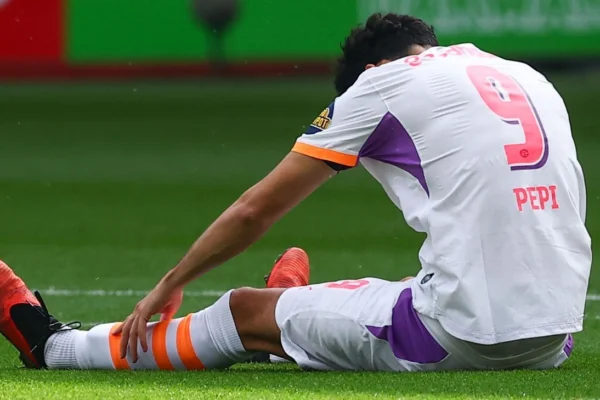
Read more:Ricardo Pepi’s injury in PSV match a concern for USMNT
The NWSL does not have any centralized academy structure or reserve league and, according to sources, has no plans to have either anytime soon.
That has left academies and player development to individual teams. Ambitions for each are wide-ranging among NWSL teams.
The PDR mechanism follows the 2022 implementation of the NWSL’s U-18 signing mechanism that allows teams to sign players age 18 and under. The NWSL eliminated its entry draft in mid-2024 upon the ratification of a new collective bargaining agreement.
Prior to the new CBA, players had limited agency and their rights were a free-for-all due to the NWSL’s antiquated “discovery” system that allowed teams to “claim” players who they had not previously engaged to sign.
Read more:Zoe Thompson, 14, sister of Gisele, Alyssa, signs Nike NIL deal
In the early years, those discovery rights became assets for trades that would, at times, block signings by opponents. Teams would also hold onto “NWSL rights” while players were signed with teams abroad.
Discovery rights to a young player were most prominently an issue in 2022, when Jaedyn Shaw signed with the San Diego Wave. Shaw, who was 17 at the time in 2022, had spent months training with the Washington Spirit before deciding to turn professional, but San Diego held her discovery rights and signed her.
Olivia Moultrie’s NWSL rights were also held by Portland‘s rival, Seattle Reign FC (OL Reign at the time) despite Moultrie training with the Thorns for two years before signing. Portland had to trade a third-round draft pick to acquire Moultrie’s rights.
Discovery rights no longer exist.