

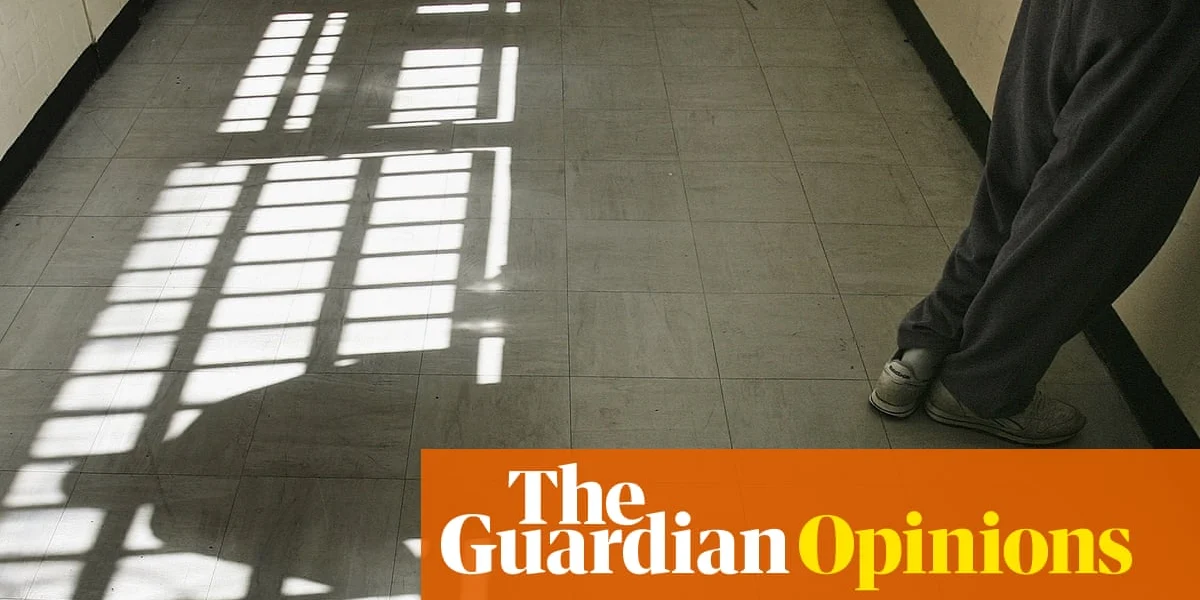
It is said that there can be no truer revelation of a society’s soul than the way it treats its children. The Bar Council of England and Wales has just concluded an expert review of the minimum age of criminal responsibility. At 10, it is the lowest in Europe. We recommend that it is raised to 14.
Society should have moved on since the 1800s, when Charles Dickens railed against the storm cloud of unfairness that gathered over children. However, Dickens’s anger at the law and society, and the harsh treatment of children, remains familiar today. England and Wales are outliers in bringing the criminal justice system to bear on young children who cause harm.
Under the criminal law, a child aged 10 can be detained by the police following arrest, and they will experience the same process and environment as an adult suspect. Children are subjected to the same initial police detention periods as adults. In the year to March 2024, 45% of children arrested were detained overnight, and research shows that on average they are detained for about 11 and a half hours.
Moreover, children find it difficult to engage with the significant cognitive demands of the criminal justice system and this is linked to increased suggestibility, acquiescence and compliance in interviews. Whatever adjustments are made to criminal procedures, children routinely struggle to participate and this challenges the fairness of their convictions.
Take Dylan (not his real name), a man now in his 30s, as he made a bid for his liberty earlier this year. This was after his sixth recall to prison for breach of licence conditions for a sentence he received when he was just 13. Dylan was 12 when he ran away from a children’s home and, along with his brother, approached a woman and asked her for a cigarette. When she refused, they grabbed at her handbag, causing her to fall, and they ran off. The prosecution and convictions that followed resulted in a period of detention for Dylan, together with a sentence of detention for public protection (DPP). This is the child equivalent of the deeply flawed imprisonment for public protection (IPP) sentences.Little did Dylan know then that he would spend most of the next two decades under the shadow of the sentence.
Read more:Romero says Argentina bothered by leaky defense in knockouts
Dylan completed his GCSEs in detention, and was released before he turned 18. At times, he succeeded in living in the community. But when things went wrong in his personal life, his early traumatic experiences and difficulties in securing appropriate accommodation were compounded by the relentless grip of the criminal justice process.
Because of the DPP, Dylan could easily be recalled to prison, even without committing a new offence, including for not living in an approved hostel. Finally, earlier this year, the Parole Board recognised that the indeterminate sentence itself had become increasingly relevant to the reasons for his recalls, which were linked more to poor compliance, rather than an increase in the risk of serious harm. Almost 20 years after the sentence was first imposed, he was finally unconditionally released. (New DPPs were abolished in 2012, but many that were previously issued are still in force.)
Read more:South Africa midfielder Jayden Adams dies aged 25, weeks after World Cup appearance
Even if a child does not live with a licence period, the stain of being through the criminal process endures and sullies their future.
Bringing young children into the criminal justice system is more likely to result in further offending. Home Office data shows that two-thirds of young offenders go on to commit more crime and 80% of adult persistent offenders first entered the justice system when they were children. And this disproportionately affects certain children. Those with disabilities and those from minority ethnic backgrounds are currently overrepresented in the legal system, and children with any level of social-care contact are more likely to have a criminal conviction or caution. Children in the legal system are more likely to have suffered childhood trauma including violence, sexual and physical abuse, traumatic brain injuries, parental absence or bereavement.
Read more:Diabetes: Adults more than twice as likely to have hearing loss
In the year to March 2025, 1,590 children aged between 10 and 14 were found guilty of offences, with only 22 receiving sentences of immediate custody. There were 233 first-time entrants to the criminal justice system aged between 10 and 12 with only one receiving a sentence of immediate custody. Criminal justice detention for children is vanishingly small and so alternatives to the criminal justice system should be seriously considered. By the time the court determines that locking up a child is not required, it is too late as they already have been through the criminal justice system.
Mechanisms that divert children away from the criminal legal system are not likely to result in an increase in crime among this cohort. Diversionary programmes are beneficial to the child and to the public, in terms of reducing future crime, and represent a beneficial deployment of public money.
The minimum age of criminal responsibility in England and Wales has remained unchanged for more than 60 years, whereas our scientific knowledge about children has not remained static. Evidence shows that the adolescent brain’s heightened neuroplasticity results in adolescents being more vulnerable to negative environmental influences, while at the same time being more capable of positive change.
The law should not stand still where knowledge has moved on. Protecting childhood and protecting society are not competing aims. In the long term, they are the same endeavour. The measure of a justice system lies not in how early it punishes children but in how wisely it protects their future.