
I am not especially superstitious but it tends to be a Friday afternoon when the collective mass of the hospital shudders to the realisation that the weekend is upon us and important questions are unanswered.
My patient is a man in his early 70s who has kept deteriorating after major cancer surgery two weeks ago. Instead of the progressive recovery he was told to expect, he has grown worse. Now he looks listless, with dismal blood pressure and failing kidneys.
The surface questions for me, an oncologist, are about fitness for chemotherapy and options for dialysis but really, the underlying request is “please specify that he is dying”.
To be so objective and transparent about a patient I have never met is practically hard and emotionally wrenching. But in these high-stakes situations, you sometimes need to cause grief to save grief; there is no avoiding the task at hand.
At the bedside, there is a lanky man I assume to be a son. When he says he is “only” the grandson, I look again and notice the young face, no older than 20. Oh dear.
Read more:Andoni Iraola admits Liverpool need more players, club ‘working hard’ to bolster squad
The patient opens his eyes, reports pain and closes his eyes. Discovering that he doesn’t speak English just makes my task harder.
“I am the oncologist,” I begin gently.
Alarm cramps the grandson’s face but he is one step ahead.
“Wait, you need to talk to my mum.”
While he texts her, I scrutinise the monitors, talk to the nurse and formulate my words. It’s frankly unfair how little time it takes to sum up the gravity of a situation. Emergency workers excel at this; oncologists are compelled.
When he hands me his phone, the screen is split into four windows. Important family meetings shouldn’t be held on FaceTime but, given the alternative of no meeting, it will do.
The patient shows no interest, so I move to the room’s edge, from where his grandson can still see me.
Read more:Dementia: We may prevent 50% of cases by understanding risk factors
I don’t know what the family knows and the margin for error is small, so my explanation is layered.
The operation was not intended as a cure; the idea was to reduce the burden and tackle the rest with chemotherapy. But his type of aggressive disease doesn’t respond well to chemotherapy, with the patient experience heavily balanced towards toxicity, making many past patients question its value. And now, the whole idea of chemotherapy is academic and I want to guide them through the next steps.
When I stop, the first thing the patient’s daughter says is that, in a few lines, I have told them more than they ever knew or had been advised to think about. If this is true, I feel bad.
In three weeks the family called the ambulance thrice, describing a sense of utter helplessness. “Everyone said wait to see the oncologist.” But soon, waiting became impossible.
His daughter concludes that the prognosis looks grim and says there is no point in keeping him in hospital. I stay silent just long enough for her brother to ask if their father will live weeks or months. I can’t help feeling grateful that he is making this easy for me.
Read more:Denise O’Sullivan near deal to join Gotham on loan from Liverpool – sources
The conversation I had been dreading would have involved futile life-prolonging measures such as dialysis and intubation. People in their early 70s are not old by today’s standards and shocked families understandably want “everything done”. I gently say to hope for months but prepare for weeks. The family exhales, giving me my first opportunity to look up from the screen.
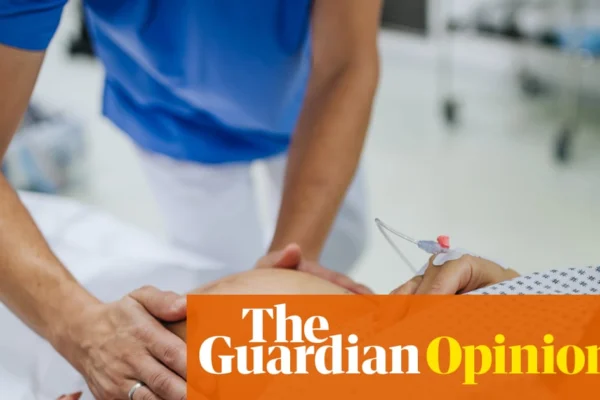
And it’s then that I realise the grandson has been holding his grandfather’s hand and crying. Now, he hastens to wipe his face but his one soggy tissue is not equal to the task. It is a picture of bewilderment and love and mourning. Thisis the sight that trips me up.
He reminds me of my own son of a similar age, doing similar things that young people are meant to: studying, working, going out with friends, considering an expansive future. Their hardest decisions shouldn’t yet involve the finitude of life.
Stepping forward, I touch his free hand. “I am sorry you were all alone; you are very brave.” He sniffles. I ask if he has questions but can see that he’s just a boy who wants his mother. So I depart and leave his mum to do the hard work.
Read more:Disney’s live-action ‘Moana’ crashes to shore with an underwhelming splash at the box office
All weekend, I wonder about the grandson.
In my anxiety to get the job done, did I neglect to shield the young man from bad news? At least I could have given him the option to leave. But I also remember that, as the conversation turned heavy, he chose to stay, displaying both love and duty towards his vulnerable grandparent.
A colleague observed how rare it is to see young visitors in the hospital any more. The medicalisation of ageing means that infirmity and dying have moved into professional institutions, making youth regard hospitals as restricted zones rather than spaces for an extension of care.
Well-meaning parents naturally want to spare their children and youth trauma but, in truth, we are just avoiding the realities of physical and cognitive decline. In a digital culture that glorifies “looksmaxxing”, the hospital forces a reckoning with incapacity, vulnerability and co-dependency. And, while many fear saying or doing the wrong thing at the bedside, it is through trial and error that one learns the emotional vocabulary to handle serious illness.
When we spare our youth a window into the indignities of ageing, and the universal reality of death and dying, we might be prolonging their innocence. But then we just postpone to middle age the struggle to reconcile with these issues.
Read more:The office lunch was once a luxury. Now it’s just a pain | Dave Schilling | The Guardian
The avoidance of illness doesn’t erase the fact of it. I don’t have the sophistication of trained counsellors but it seems to me that when people first face a major health crisis (or the illness of a parent), it turns into their existential crisis. In that moment, a lack of coping mechanisms is hard to make up for.
I had never thought about it this way until another colleague observed the moral injury to doctors and nurses who then become surrogate families for lonely and distressed patients. This adds immense emotional burden to an already strained profession.
It’s daunting to think that the grandson will always remember my dire announcement at his grandfather’s bedside. I admire his courage and forbearance. I salute his parents for entrusting him with a task that many would not.
And I hope that more of us will think about how to carefully but deliberately expose our youth to the realities of life and death that all of us must eventually face.