

Kalo te përmbajtja
  • EN
  • SQ
  • IT
  • FR
  • ES
  • DE
  • EL
VA-NEWS VA-NEWS
  • Home
  • News
  • Opinion
  • Health
  • Technology
  • Sport
  • Lifestyle
  • Entertainment
  • Travel
LIVE
Navigation

VA-NEWS

  • Home
  • News
  • Opinion
  • Health
  • Technology
  • Sport
  • Lifestyle
  • Entertainment
  • Travel
Shortcuts
Home Latest
LIVE
Gjuha
  • EN
  • SQ
  • IT
  • FR
  • ES
  • DE
  • EL

Search news

  1. Kryefaqja
  2. Opinion
  3. For parents staring down the barrel of six weeks’ childcare: take a tip from orangutans | Helen Pilcher | The Guardian
Opinion

For parents staring down the barrel of six weeks’ childcare: take a tip from orangutans | Helen Pilcher | The Guardian

• July 29, 2026 • 5 min read
◉ WhatsApp 𝕏 X
News

The school summer holidays are upon us. Cue the annual expectation that parents will conjure up six weeks of affordable, memory-making fun while holding down a job and hanging on to their sanity. Baking, picnics and den building may be wholesome, but they also involve spending time with your children. By day four, the den starts to look less like a place of adventure and more like somewhere to hide till September.

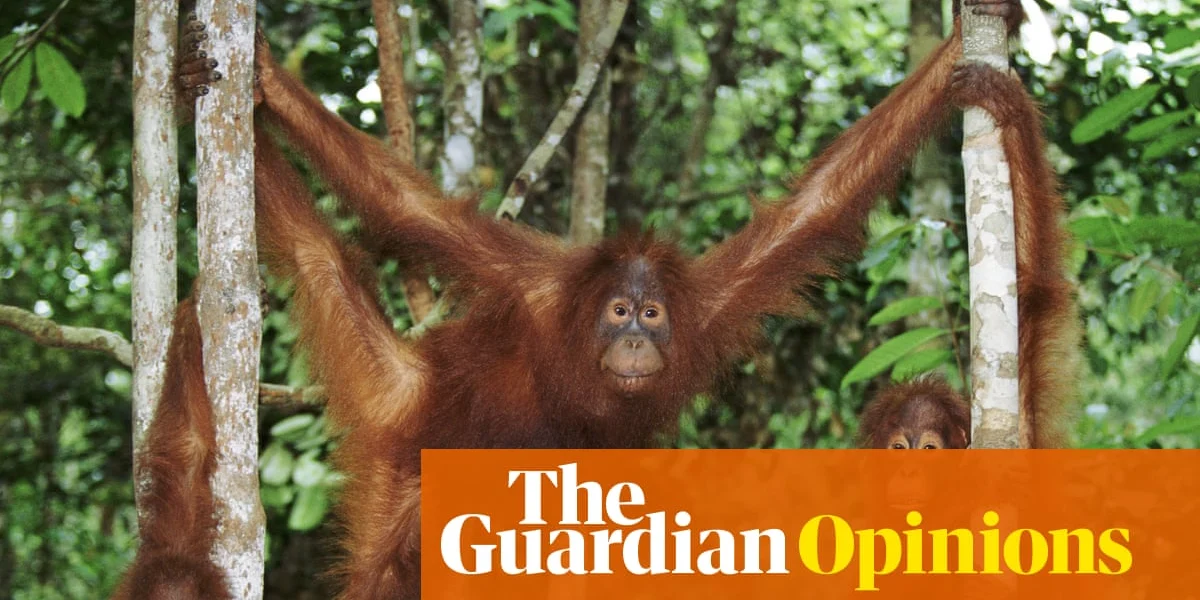
The answer, of course, is the playdate: the socially sanctioned art of abdicating responsibility for a few precious hours so you can finish a cup of tea while it’s still warm. And it turns out that humans aren’t the only ones to have discovered the benefits of a little parental outsourcing. A recent study suggests that orangutan mothers also arrange playdates for their offspring.

Read more:Gotham FC, Esther González agree to mutually terminate contract

Orangutans are a solitary species, with their own territories and a strong preference for personal space. Mothers give birth to a single infant, which they raise for six to seven years – all without a partner, screens or the godsend that is Bluey. Given this solitary lifestyle, you might expect the ginger giants to avoid encounters with other youngsters. Not so.

Researchers studied 30,000 hours’ worth of observations from 31 wild Bornean mother-offspring pairs and found that mums made trips into the territories of other mums who had similarly aged offspring. Then the youngsters mucked about for a bit. Then they went home.

Read more:He’s commander-in-chief of chaos. Now we’re all victims of Trump’s wars | Nesrine Malik | The Guardian

The juveniles get the immediate reward, but for the mothers, arranging these encounters comes at a cost. Travelling to a playdate takes time and energy, leaving less of the day for feeding. Which raises the question: why bother with playtime at all?

The answer may lie in how widespread play is across the animal kingdom. Baby Barbary macaques goof around. Bear cubs rough and tumble. And it’s not just mammals. Caimans play chase, sharks mess around with beach toys and octopuses manipulate Lego bricks.

Read more:My generation shouldn’t be scared of a care tax – we’re paying one already | Gaby Hinsliff | The Guardian

Play is particularly common among socially complex species. Here, there is rarely any obvious planning; instead, the behaviour seems to emerge naturally when adults come together. Brown bear cubs, for example, run riot when their mothers gather at salmon streams. Baby spider monkeys fool around when their mothers sit down to groom each other. It’s the equivalent of human parents meeting for a coffee or a chat, while the kids play under the table. Orangutans are different because their youngsters’ play isn’t simply a side-effect of adults hanging out – it is something that mothers make happen.

The fact that so many animals bother making time for play suggests it is far from frivolous. For young animals, it is a rehearsal for life itself. They learn how to communicate, cooperate, compete and resolve conflicts. They test their bodies, explore the rules of social interaction and push the boundaries of what they can do. This can have tangible repercussions. Brown bear cubs that play more are more likely to survive, while male bottlenose dolphins that are more playful go on to father more offspring.

Read more:2 Texas men charged after England World Cup gear stolen

But play is not just the preserve of the young. Given its importance, one of the biggest mistakes we make as humans is to assume that play belongs to childhood. Adult corvids make no such distinction when they snowboard down frozen roofs, nor do bumble bees when they roll wooden balls. In the animal kingdom, many adults continue to play long after they have mastered the skills needed to survive. Far from being a waste of time, play might help adults navigate the challenges that life throws their way.

Scientists are now finding that this idea may apply to humans too. Xiangyou “Sharon” Shen from Oregon State University and Zoe Crawley from Vanderbilt University study the psychology of playfulness in people. During the Covid-19 pandemic, they found that adults who were more playful coped better with the upheaval of lockdown. Playful people didn’t perceive the world as being less stressful or risky. Instead, they were better at finding creative ways to work around problems and remained more optimistic. As the pair put it, playful people don’t wear rose-tinted glasses. Playfulness is more like a colour spotlight that shines on some aspects of an environment but not others. Playfulness doesn’t remove stress, but it can change the way you experience it.

Read more:Besieged by lobbyists, will UK ministers protect our ecosystems? No, they’ll chicken out | George Monbiot | The Guardian

This doesn’t mean that we should all break out into a spontaneous game of tag. Instead, playfulness is about cultivating a flexible, curious approach to life. Play is less about what we do and more about how we do it. So, to all the parents staring down the barrel of six weeks of childcare and wondering how they will survive: don’t just arrange playdates for your children. Make room for a little playfulness yourself. Messing around is not a sign that you take life less seriously. It may be one of the things that keeps you sane.


Read also
Opinion

Britain promised to protect Hongkongers from China. Why does it now seem ready to sacrifice them? | Nathan Law | The Guardian

Opinion

Burnham is taking a bold risk by busting the big lie of politics – that change is impossible | Frances Ryan | The Guardian

Tags: #Animals #Bees #Children #Covid-19 #Energy #Environment #Lego #Oregon #Psychology #Will

Journalist

From the same category
  • Britain promised to protect Hongkongers from China. Why does it now seem ready to sacrifice them? | Nathan Law | The Guardian
  • Burnham is taking a bold risk by busting the big lie of politics – that change is impossible | Frances Ryan | The Guardian
  • I’m a refugee who reports on America’s ills. I still believe in its promise | Lok Darjee | The Guardian
  • Ben Carroll will want to distance himself from Jacinta Allan’s unpopularity – but will that be enough to save Victorian Labor? | Jon Faine | The Guardian
  • The (spin) doctor is in: the Albanese government is in good health, but that could all vanish in an instant | Peter Lewis | The Guardian
From the same tags
  • Burnham is taking a bold risk by busting the big lie of politics – that change is impossible | Frances Ryan | The Guardian
  • How do we prevent AI agents from going rogue? It starts with a new kind of measurement | Bruce Schneier and Barath Raghavan | The Guardian
  • I’m a refugee who reports on America’s ills. I still believe in its promise | Lok Darjee | The Guardian
  • Ben Carroll will want to distance himself from Jacinta Allan’s unpopularity – but will that be enough to save Victorian Labor? | Jon Faine | The Guardian
  • The (spin) doctor is in: the Albanese government is in good health, but that could all vanish in an instant | Peter Lewis | The Guardian
Më të lexuarat — 48h
  1. 01
    Opinion Tariffs are Trump’s favorite plaything – and his justifications are absurd | Steven Greenhouse | The Guardian 2 lexime · 1 day ago
  2. 02
    Football Juventus keen on Joshua Zirkzee, Man United open to offers – sources 2 lexime · 14 hours ago
  3. 03
    Football IFAB: VAR process of red card for Switzerland’s Embolo was wrong 2 lexime · 12 hours ago
  4. 04
    Lifestyle Artist Betye Saar, whose work reflected Black identity, has died at 99 1 lexime · 1 day ago
  5. 05
    Lifestyle Marlon James, Douglas Stuart and Elizabeth Strout are among Booker Prize semifinalists 1 lexime · 11 hours ago
  6. 06
    Football FIFA’s Gianni Infantino slams World Cup critics for ‘spreading hate’ 1 lexime · 2 days ago
  7. 07
    Football Lopes Cabral stunner for Cape Verde voted best World Cup goal 1 lexime · 1 day ago
Similar articles
Opinion

Britain promised to protect Hongkongers from China. Why does it now seem ready to sacrifice them? | Nathan Law | The Guardian

As authoritarian countries such as Russia, China and Iran are more active in engaging in long-arm strategies to…

• 21 minutes ago • 5 min read
Opinion

Burnham is taking a bold risk by busting the big lie of politics – that change is impossible | Frances Ryan | The Guardian

This is the danger zone. The period when one prime minister leaves office and the next takes over…

• 21 minutes ago • 6 min read
Opinion

I’m a refugee who reports on America’s ills. I still believe in its promise | Lok Darjee | The Guardian

It was a hot, dry afternoon, sometime in the spring of 2009. I was wearing an oversized T-shirt…

• 21 minutes ago • 9 min read
VA-NEWS VA-NEWS

Modern portal of reliable, independent and multilingual news. Accurate information, every day.

  • Health
  • Lifestyle
  • News
    • World
  • Opinion
  • Sport
    • Football
  • uncategorized
  • © 2026 VA News. Made with ♥ in Albania
    ⌂ Home ◷ Latest

    Powered by
    ►
    Necessary cookies enable essential site features like secure log-ins and consent preference adjustments. They do not store personal data.
    None
    ►
    Functional cookies support features like content sharing on social media, collecting feedback, and enabling third-party tools.
    None
    ►
    Analytical cookies track visitor interactions, providing insights on metrics like visitor count, bounce rate, and traffic sources.
    None
    ►
    Advertisement cookies deliver personalized ads based on your previous visits and analyze the effectiveness of ad campaigns.
    None
    ►
    Unclassified cookies are cookies that we are in the process of classifying, together with the providers of individual cookies.
    None
    Powered by