

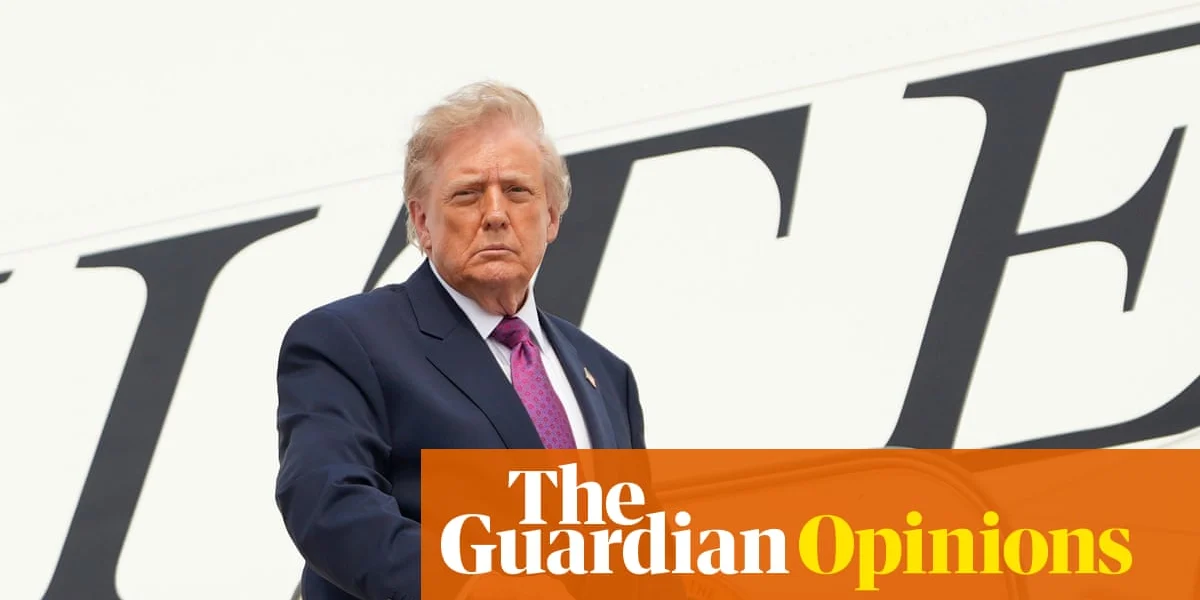
Donald Trump has found a new way to promise victory over Iran. After months of war have failed to force Iran’s capitulation or collapse, his administration has unveiled what the US Treasury secretary, Scott Bessent, calls Operation Economic Outcast: an effort to cut it off from what remains of the global economy and threaten foreign governments, banks and companies with sanctions if they continue doing business with Tehran.
There is no question that Iran is vulnerable. Its economy has been battered by years of sanctions, war and a months-long US naval blockade. Iranian officials acknowledge that oil exports and access to foreign currency have been severely constrained. Ordinary Iranians are already enduring high inflation, currency depreciation and worsening living standards. Further economic strangulation will inflict significant additional hardship.
Iran also wants an end to the war. Its president, Masoud Pezeshkian, has said it should seek peace while it can still negotiate from a position of “power and dignity”. But Iran needing a deal is not the same as Iran preparing to surrender. That distinction has repeatedly eluded Trump in formulating his Iran policy: ramping up pressure is not the same as having a strategy. Iran gets a move too.
Read more:How Mark Carney’s speeches have become political earthquakes | Ted Widmer | The Guardian
Indeed, Iranian officials increasingly suggest this strategy has the opposite effect than what was intended. Each successive escalation, in their telling, demonstrates why Iran relinquishing its remaining leverage would simply leave it vulnerable to the next round of US pressure. The emerging strategy therefore appears to combine bargaining with endurance: seek an agreement while demonstrating that it can withstand the pressure without capitulating or abandoning its core terms.
This is why recent Iranian rhetoric deserves more attention than it has received.
Read more:Coffee: Your daily caffeine hit could support heart, liver health
Mohsen Rezaei, the new head of Iran’s supreme national security council, has called participation in Washington’s economic campaign an “act of war”. He says Tehran will first try to persuade neighbouring states not to participate, but has threatened their interests if they do. He has even warned that Iran could prevent Gulf oil exports through routes designed to bypass Hormuz.
These statements should not simply be dismissed as declarations of defiance for an audience in Iran. They reflect a consistent strategic logic: Iran cannot defeat the US economically, but it can try to make the economic strangulation of Iran prohibitively expensive for Washington and the countries it needs to enforce it.
That could mean tightening pressure on Hormuz, threatening infrastructure that enables alternative oil-export routes or putting greater pressure on US interests across the region. None of this would help ordinary Iranians. Escalation would compound their suffering. But that is precisely why Washington should think beyond the first-order effects of its own actions.
There is another weakness in Trump’s plan. For Bessent’s threat to work, Washington must persuade or coerce much of the world into participating, especially China, the principal buyer of Iranian oil. Yet Beijing is moving in the opposite direction. It has ordered firms not to comply with US sanctions targeting Chinese buyers of Iranian oil, while its top court recently highlighted a ruling penalising a Singaporean company for complying with US sanctions. Beijing has now warned it will take “all necessary measures” if Chinese interests are targeted.
Washington therefore faces an uncomfortable choice: tolerate continued trade between Iran and China, its neighbours and other partners, or dramatically escalate coercion of the governments, banks and companies that keep those channels open. That risks multiplying the US’s economic confrontations at a moment when it needs international cooperation to isolate Tehran. Bessent acknowledged the danger when asked why Washington was not immediately imposing its most sweeping secondary sanctions. “Why would I want to blow up the global financial system?” he responded. That is quite an admission for an operation advertised as “economic D-day”.
With the midterms approaching, the White House has strong incentives to avoid another major escalation that could further disrupt Gulf energy flows and send fuel prices soaring. Tehran knows this. Its gamble is that it can endure and reroute enough commerce while imposing enough costs that Washington and its partners eventually prefer a settlement to continued confrontation.
That makes this a dangerous contest of endurance. Washington is betting Iran’s economy completely breaks first. Tehran is betting the US’s tolerance for the war and its mounting economic costs breaks first.
This has been the recurring flaw in Trump’s approach. In 2018, he left the 2015 nuclear deal with Iran, in an attempt to secure more favourable terms. Iran instead expanded its nuclear programme. Military conflict was supposed to force Tehran to accept US terms. Instead, the war expanded and Hormuz became a central source of Iranian leverage. Now intensified economic strangulation is supposed to accomplish what military power could not.
Unless Trump starts thinking several moves ahead, his latest attempt to force Iran into submission could leave the US with even higher energy prices, an even more confrontational adversary and yet another escalation it never counted on.