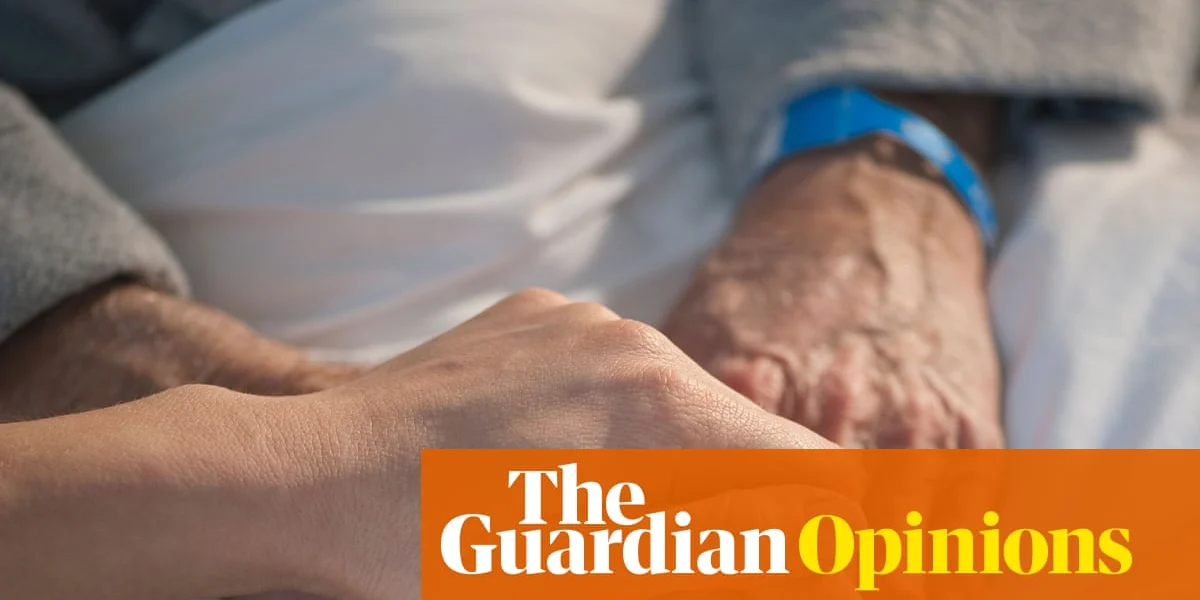
“If you don’t mind, can we start with the patient who has died?”
“But he has died,” I say to the resident, eyeing our long list of the living.
“The family is getting agitated.”
I hear “agitated” and my senses sharpen. We approach the patient’s room, knock and enter as a team.
The death was expected, but its certification hadn’t occurred yet. It had been delayed for several hours for the usual reasons: many patients, too few doctors.
The room is overflowing with family. Despite my apprehension, it is only right that I take responsibility.
“I am sorry for your loss, and especially sorry that it has taken us hours to get here,” I say. “It shouldn’t have been this way.”
The family nods. To my relief, no one looks angry. They are just exhausted.
Read more:USMNT’s Pochettino said he hopes Folarin Balogun can find ‘best place to perform’
My eyes settle on the patient, whom I had met on his last admission. He had presented with sepsis and survived against the odds but never recovered enough to return home. Age and frailty, compounded by his equally vulnerable wife, kept him in hospital for weeks while his family searched for a suitable nursing home. He lasted just two days there, barely long enough to become accustomed to the new bed, before being sent back to hospital by ambulance.
This time, sepsis took his life.
It is the only time I have seen him at peace. He looks asleep, without doctors and nurses probing and prodding him. I suspect no one in the room regrets that his suffering is over, which is not to say they do not mourn his loss.
I look at his forlorn wife, sitting closest to him. How long has she been perched on her walking frame? What will that posture do to her bent back? Around her, children and grandchildren are gathered. No one is crying. Everyone is anticipating.
It dawns on me that, although some of them are in their 50s, this may be their first “milestone” death: the first time they have had to navigate the practical aftermath of someone they love dying.
Sure enough, the questions come tumbling out.
“What happens now?”
“We don’t have a funeral plan.”
“Is there a deadline to get him out?”
“Do you need this bed?”
Even at this moment, the family is worrying about everyone else.
“Please don’t stress,” I say gently. “You can stay in this room for as long as you need. We are used to taking care of the details.”
This simple orientation, offered at a time of enormous disorientation, seems to calm them.
We have fact sheets for constipation. Why isn’t there one for “What to do on the day your loved one dies”?
For a routine death, there is a well-established process: ward, mortuary, funeral home. Necessary, orderly and administrative.
But families may remember something else.
They will remember how we treated them. And, importantly, how we treated the person they loved.
I ask the family to step outside for a few moments while we certify the death, and I instruct one of the two interns to stay behind to do so, while the rest of us return to our other patients.
Just then, the resident whispers, “They haven’t done this before.”
Read more:New heart attack definition could improve diagnosis for women
The compassion in her voice stops me.
How is that possible? How have not one, but two seasoned interns managed to avoid the unavoidable – a death in their first few weeks on the job?
Trusting my resident to teach them, I leave to see the other patients. When we eventually meet again, there is no time to debrief.
The next day, though, I ask after them.
A death generates an extraordinary amount of administration, mainly for the family.
For doctors, the death certificate is the clinical part: date, time, cause of death, signature.
But certifying that death is also a deeply human act.
Before reducing the fullness of a life to the sterility of an online form, how do we pause to acknowledge the person? How do we perform our final act with humility, remembering that this patient was once someone with experiences, ambitions, mistakes, relationships and memories?
A wise boss once taught me to first close the door to the patient’s room and stand still for a minute.
Take in the last book someone was reading. The last “get well soon” drawing tacked to the wall. The fading flowers sent by a friend. The last menu, left blank.
Frankly, a minute is an awfully long time to feel confronted by mortality. But it has never failed to humble me.
My interns tell me that the nurses and social workers had swung into action, just as promised. When they re-entered the room to certify the death, some relatives were still there.
If the interns felt self-conscious, they did not let it show.
“At each step, we talked to our patient as if he was listening,” they say, “explaining what we were doing. It felt right.”
Of all the details, this is the small revelation that moves me most.
These young doctors understood something that is easy to lose in the machinery of a hospital: death does not turn a person into an administrative task.
There is a final act of medicine after treatment has ended. It is to pause, to explain, to make room for grief, and to treat the dead with the same dignity we aspired to when they were alive.
Public perception increasingly casts doctors as impatient, even harsh. But this was the art of medicine at its best: compassion for a grieving family and empathy for a patient who will file neither complaint nor compliment.
In my final week of rounds, I tell my team how proud I am of their work. One day, they will remember their first death as I remember mine.
In a profession increasingly measured by what we do, perhaps grace resides in how we act when there is nothing left to do.