Prime ministerAndy Burnham has hit the ground running, tackling head-on three of the public’s burning concerns: falling standards of living, failing public services and a remote, out-of-touch, over-centralised Whitehall. Now, this autumn, a fourth challenge, reversing the decades-long decline of civic engagement, is about to move centre stage to achieve his ambition to put citizens back in control of their communities.
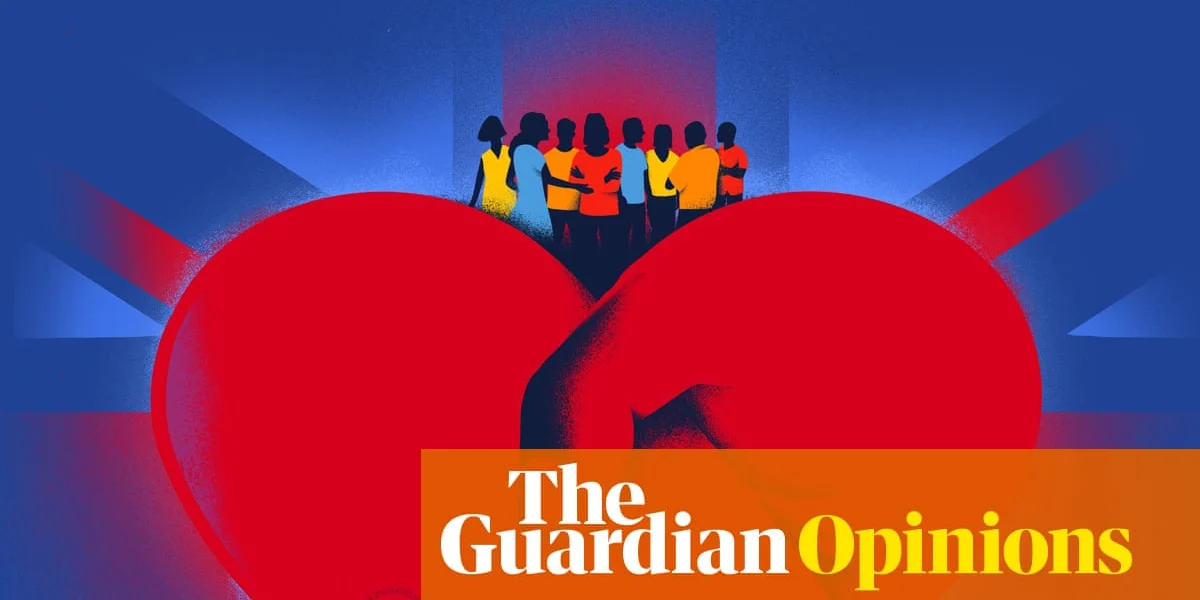
For while there are tens of thousands of local champions bringing towns, cities and villages together, Britain is suffering a civic recession, a hollowing out of the associations, clubs and organisations that once were the beating hearts of our communities.
It is a sobering fact that almost 50% of British adults are not members of any community organisation of any kind, neither a civic association nor church nor faith group, nor even a sports club.
Trade union membership has halved from more than 13 million in 1979 to less than 7 million in 2025. Then there is the widespread collapse in religious adherence – the fall in Church of Scotland membership from 1.3 million in the 1950s to less than 300,000 today being one of the most dramatic indicators. The long-established Women’s Institute has seen its UK membership fall from a peak of 470,000 in the 1950s to about 170,000 today. Since 2000, the UK has lost about 1,200 youth centres. Working men’s clubs – which were once at the centre of industrial communities – have fallen from a peak of 4,000 in the 1970s to about 1,800 now, their membership dwindling from 4 million to under 1 million. And the number of pubs in the UK, the heart of many communities, has dropped from 75,000 in the 1960s to about 45,000 today. For a fleeting moment, the boost in volunteering during the pandemic obscured a drop from 27% of all adults a decade ago to just 17% now.
But the breakdown is not just in formal memberships, but in informal, everyday relationships too: young people in particular are vulnerable, with soaring numbers in England reporting having no close friends at all.
Read more:For Sandra Bullock and Nicole Kidman, ‘Practical Magic 2′ heals old wounds
If our physical infrastructure – our roads, railways and airports – broke down, there would be a public outcry and a demand for their immediate repair. If our financial infrastructure collapsed – if cash machines shut down and bank transfers failed – there would be panic. But the breakdown of our civic infrastructure is happening in plain sight and it needs urgent remedy.
This change is not unique to Britain. A survey of more than 30,000 people in 20 countries provides compelling evidence that, in tandem with economic decline, civic decline helps explain the widespread loss of trust, nostalgia for the past and lower levels of tolerance that are the surface manifestations of what is a deep and widespread dissatisfaction with the status quo. It should not be a surprise that many now talk despairingly of a broken society as well as a broken economy.
This sense of decline, combined with social isolation and a feeling that “traditional values” have been lost, encourages a zero-sum view of the world: the belief that life is an endless struggle between “us” and “them” – whether “them” is defined as immigrants, foreigners or simply “others”. In this view, our very commitment to democracy and a rules-based international order becomes tenuous: widespread dissatisfaction means that people agitate for their government to exclusively pursue the interests of a narrowly defined population. The fact is that someone who is not involved in their local community and has little contact with people of different ethnicities or religious views is much more likely to support rightwing populist nationalist parties and to oppose cooperation between countries.
So No 10’s plans to transfer power from the centre to regions are best seen as what is called a “double devolution”; extending spending and decision-making power beyond local authorities downwards to local communities to empower a new generation of active citizens. But this must be complemented by a boom in civic participation. An opt-out national community service for young people, a remodelled Pride in Place programme to put local people and not politicians in control, legislating participatory budgeting to allocate funding for local services, and designing services to be much more accessible to people should all now be under consideration as part of a nationwide consultation on rebuilding community life.
Learning from a Danish law that requires municipalities to fund voluntary associations and provide venues for their activities, a UK civic capital fund could go further and guarantee support to all those who want to form or join clubs in their neighbourhoods, with only one stipulation: they are open to all and contribute to the common good. Such a fund could assist with travel, venue hire, membership fees and anything that constitutes a “participation tax”.
Read more:Enzo Maresca: Man City spending spree necessary to compete with Arsenal
Promoting civic education and introducing volunteering hours to the school curriculum have proved to be effective, from Ontario, where pupil volunteering is mandatory, to Sweden, where school councils are given real decision-making powers. An Erasmus-style exchange – this time between the nations and regions of the UK – could help young people connect across religious, ethnic and ideological divides.
Recent evidence shows areas without quality local news see the least civic activity and are more prone to online misinformation. So support should be given to local newspapers and websites, including through an expansion of the BBC local democracy reporting service. Online community groups also have a role to play: in my own home town, the Facebook page Love Kirkcaldy has nearly 60,000 members – roughly as many as the population of the wider town itself. The page acts as a community noticeboard but also now brings people together face to face in clubs. Such forums help us to better get to know our neighbours, and restore faith and trust in democracy.
Between them, measures like these can rebuild an ethic of mutuality and civic obligation. The distinctive feature of a successful community organisation is not just that we belong to it but that it belongs to us. And while governments, local and national, can create the conditions for a stronger civic society, the most effective way to build one is the simple act of one person inviting another person to join in.
It is when neighbours no longer talk of “the school”, “the hospital”, “the library” and “the community centre”, or even “my school”, “my hospital”, “my library” and “my community centre”, but instead speak of “our school”, “our hospital”, “our library” and “our community centre”, that we will know a community has been reborn and there is a renewed sense that we are all part of a shared future.