

Kalo te përmbajtja
  • EN
  • SQ
  • IT
  • FR
  • ES
  • DE
  • EL
VA-NEWS VA-NEWS
  • Home
  • News
  • Opinion
  • Health
  • Technology
  • Sport
  • Lifestyle
  • Entertainment
  • Travel
LIVE
Navigation

VA-NEWS

  • Home
  • News
  • Opinion
  • Health
  • Technology
  • Sport
  • Lifestyle
  • Entertainment
  • Travel
Shortcuts
Home Latest
LIVE
Gjuha
  • EN
  • SQ
  • IT
  • FR
  • ES
  • DE
  • EL

Search news

  1. Kryefaqja
  2. Opinion
  3. The far right is becoming normalised in Germany – and winning. Australia should take heed | Charlotte Feakins | The Guardian
Opinion

The far right is becoming normalised in Germany – and winning. Australia should take heed | Charlotte Feakins | The Guardian

• September 13, 2026 • 5 min read
◉ WhatsApp 𝕏 X
News

The recent win for the Alternative für Deutschland (AfD) in Germany is shocking, except it’s not shocking. The writing has been on the wall for quite some time.

Last Sunday, the far-right, pro-Russian and anti-immigration AfD won almost 44% of the vote in the election in Saxony-Anhalt, a largely rural state in the former East Germany, more than doubling its previous result and finishing far ahead of the Christian Democrats.

It sits within a troubling global trend. In 2025, nearly one in four countries worldwide experienced democratic backsliding, with Europe and North America home to six of the 10 countries newly identified as autocratising, including Italy, the UK and the US.

Read more:Arsenal’s Gabriel ‘eager’ to take another Champions League final penalty: ‘If it happens again, I’ll be there’

Despite the cultural and historical differences, Australia is not immune. We cannot afford to be complacent.

This time last year, I travelled to Mecklenburg-Vorpommern, a predominantly rural region in Germany’s north-east, to examine the culture of the far right and its counter-responses as part of my research. Like Saxony-Anhalt, it’s an area where the AfD has significant support. My colleagues and I spent days walking the streets of towns and cities, including Rostock and Greifswald, as well as attending an anti-fascist music festival. We wanted to understand how extremism was encountered and expressed in everyday life. But what we found, or more precisely did not find, surprised us.

Read more:How much does Donald Trump care about winning the midterms? Apparently, not much at all | Jonathan Freedland | The Guardian

For a politics so extreme and increasingly popular, visual expressions of the far right were remarkably scarce. We encountered graffitied walls and hundreds of activist stickers on street signs, lamp-posts and electricity boxes. Of these, only one or two were associated with the far right. The counter-movement dominated the streetscape. Its stickers and graffiti were vibrant, loud and sharp, with a clear intent and recurring “anti-fascist” message. Yet a subtler pattern was emerging. The far right was made visible not through its own stickers or graffiti, but in the intolerance directed towards the counter-movement: freshly placed anti-fascist and pro-refugee stickers were being actively defaced.

Looking back now, that landscape feels strangely prescient. As far-right ideas move beyond the fringe and enter mainstream political discourse, they become harder to detect, let alone recognise as extreme – an insidious process that gradually reshapes what is considered “normal”.

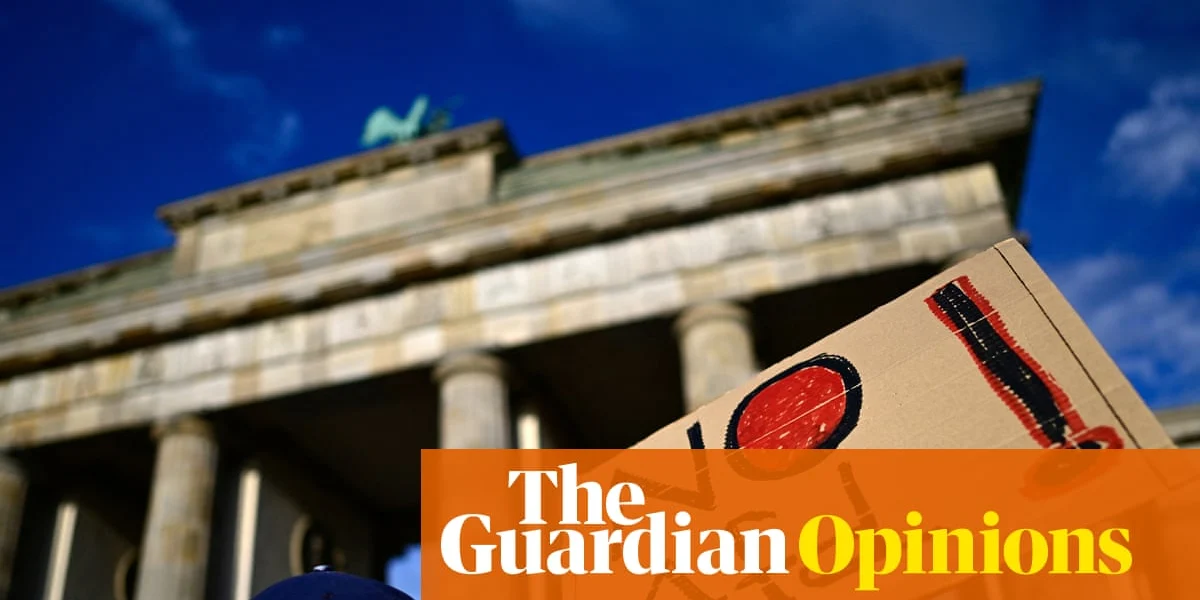
In Australia, we tend to imagine the far right as young white men dressed in black and wearing balaclavas, marching through the streets, performing Nazi salutes or standing in front of historic buildings holding banners. These deliberate acts of spectacle are designed to attract attention, provoke and intimidate. They are easy to identify and condemn, appearing separate from the political mainstream.

Read more:What can halt Fifa’s authoritarian turn under Infantino? Change from the outside | Soccer | The Guardian

But far-right politics does not only appear wearing a balaclava. Increasingly, it does not look extreme at all. Across Europe, far-right politicians are neat, polished and smooth-talking. They are unnervingly normal. Their messages are often simple and repeatable, circulating like memes through algorithm-driven news feeds, amplified by increasingly powerful actors in the tech and media sectors and, in some cases, legitimised at the ballot box.

While One Nation politicians are a long way from the smooth-talking politicians we see in the AfD, the minor party’s recent successes in byelections in Farrer and Secret Harbour should make us take notice.

Read more:Longevity: 30-minute brisk walk may be as effective as 7,500 steps

AfD and One Nation may not look or even sound the same, but they are singing from the same song sheet. Their histories, politics and contexts are different, but both draw on exclusion, national restoration, grievance and distrust. Their growing electoral success raises a critical question: why are these ideas finding a more receptive audience now?

Part of the answer may lie in how the future is imagined. Climate disruption is intensifying amid economic insecurity, war and displacement. AI is transforming how we work, communicate and understand what is real, while immense wealth and technological power are increasingly concentrated in the hands of a few. These are real, present-day challenges, and the anxiety surrounding them is being amplified through social media feeds in which extreme, frightening and divisive versions of events can dominate. At a time when the future feels increasingly uncertain, rightwing populist politics offers something simple and seductive: certainty, belonging and the promise of a return to an imagined past.

Read more:For baseball’s Black and Latino players, it’s always 1926 somewhere | MLB | The Guardian

As these pressures compound, their impacts radiate through our economies, communities and politics. Instead of looking sideways for someone to blame, we need to think more critically: to question where power is held, who benefits from the decisions being made, and who is being asked to bear their consequences. Otherwise, legitimate fears about the future can too easily be used to turn people against each other.


Dr Charlotte Feakins is a heritage researcher and lecturer at the University of Sydney and co-convener of an upcoming symposium on why the humanities matter in uncertain times

Read also
Opinion

Think of the parable of a frog in boiling water. That’s us dithering as the ‘unprecedented‘ weather becomes more extreme | Helen Pilcher | The Guardian

Opinion

Putin would rather keep killing than admit he’s lost. As a winter of misery looms in Ukraine, Nato must step in | Simon Tisdall | The Guardian

Tags: #Australia #Culture #Democrats #Europe #Far right #festival #Has #media #Music

Journalist

From the same category
  • Think of the parable of a frog in boiling water. That’s us dithering as the ‘unprecedented‘ weather becomes more extreme | Helen Pilcher | The Guardian
  • Putin would rather keep killing than admit he’s lost. As a winter of misery looms in Ukraine, Nato must step in | Simon Tisdall | The Guardian
  • As Australia faces an AI-generated future, a human rights act is needed more than ever | Julianne Schultz | The Guardian
  • Why is the Trump administration calling bike lanes ‘DEI’? | Dave Schilling | The Guardian
  • The perilous economic conditions facing the UK can be traced back to Trump | Richard Partington | The Guardian
From the same tags
  • Jonathan David scores first Atlético goal, gives team ‘something different’
  • Premier League referees’ body apologizes to Man United after derby offside controversy
  • NWSL’s Houston Dash fire manager Gautrat, director Kilgore
  • Man United 0-1 Man City (Sep 13, 2026) Game Analysis – ESPN
  • Eva Olid not planning on changing Man United tactics after winless start
Më të lexuarat — 48h
  1. 01
    Football Arsenal’s Mikel Arteta fumes at Sunderland penalty decision: ‘Unacceptable’ 4 lexime · 1 day ago
  2. 02
    Football Xabi Alonso wants more ‘boring’ wins as Chelsea draw with Hull 4 lexime · 2 days ago
  3. 03
    Football Liverpool ratings: Barcola, Wirtz, Gravenberch struggle in Fulham draw 3 lexime · 1 day ago
  4. 04
    Football Elversberg 1-2 Bayern (Sep 13, 2026) Game Analysis – ESPN 3 lexime · 14 hours ago
  5. 05
    Football Real Madrid 4-1 Rayo (Sep 12, 2026) Game Analysis – ESPN 3 lexime · 1 day ago
  6. 06
    Football Sunderland 0-2 Arsenal (Sep 12, 2026) Game Analysis – ESPN 3 lexime · 1 day ago
  7. 07
    Football Mourinho on Madrid’s Diomande: Huge potential but a lot to learn 3 lexime · 1 day ago
Similar articles
Opinion

Think of the parable of a frog in boiling water. That’s us dithering as the ‘unprecedented‘ weather becomes more extreme | Helen Pilcher | The Guardian

Recently, I overheard a conversation in a cafe where someone described their toast as “awesome”. I felt myself…

• 20 hours ago • 5 min read
Opinion

Putin would rather keep killing than admit he’s lost. As a winter of misery looms in Ukraine, Nato must step in | Simon Tisdall | The Guardian

Ukraine’s people face a winter from hell. Thwarted on the battlefield, Russia is stepping up systematic, daily attacks…

• 20 hours ago • 7 min read
Opinion

As Australia faces an AI-generated future, a human rights act is needed more than ever | Julianne Schultz | The Guardian

As we hurtle towards a post-human future, the absence of a human rights act in Australia will put…

• 20 hours ago • 5 min read
VA-NEWS VA-NEWS

Modern portal of reliable, independent and multilingual news. Accurate information, every day.

  • Health
  • Lifestyle
  • News
    • World
  • Opinion
  • Sport
    • Football
  • uncategorized
  • © 2026 VA News. Made with ♥ in Albania
    ⌂ Home ◷ Latest

    Powered by
    ►
    Necessary cookies enable essential site features like secure log-ins and consent preference adjustments. They do not store personal data.
    None
    ►
    Functional cookies support features like content sharing on social media, collecting feedback, and enabling third-party tools.
    None
    ►
    Analytical cookies track visitor interactions, providing insights on metrics like visitor count, bounce rate, and traffic sources.
    None
    ►
    Advertisement cookies deliver personalized ads based on your previous visits and analyze the effectiveness of ad campaigns.
    None
    ►
    Unclassified cookies are cookies that we are in the process of classifying, together with the providers of individual cookies.
    None
    Powered by