
After my adoptive father died in November last year, my adoptive siblings found a short story by Enid Blyton among his possessions. The Child Who Was Chosen was read to us as children to explain the circumstances of my adoption. It follows a nice middle-class couple whose domestic bliss is marred by childlessness, prompting them to go to a “very kind lady” who helps them to find a “chosen baby” instead. In its foreword, Blyton advises adoptive parents to tell the tale to their adopted child “again and again … so that to him ‘adoption’ means something lovely”.
The “chosen child” narrative, where parents tell adoptees they were specially picked, helped to shape the still widespread public perception of adoption as unambiguously altruistic. But it has also long been criticised by adult adoptees for masking the trauma of separation from their original parents. Reading Blyton’s saccharine story, I was struck by its glaring omissions. There is no mention of how the boy, who is unnamed until he is adopted, came to be put up for adoption; nor any suggestion that he once had another family and identity. There is no recognition of his first mother or her loss, only the loneliness of the prospective adoptive mother. The woman from the adoption agency also tells the couple that if this child isn’t the one they really want, she will find another one – as though she’s running a baby market.
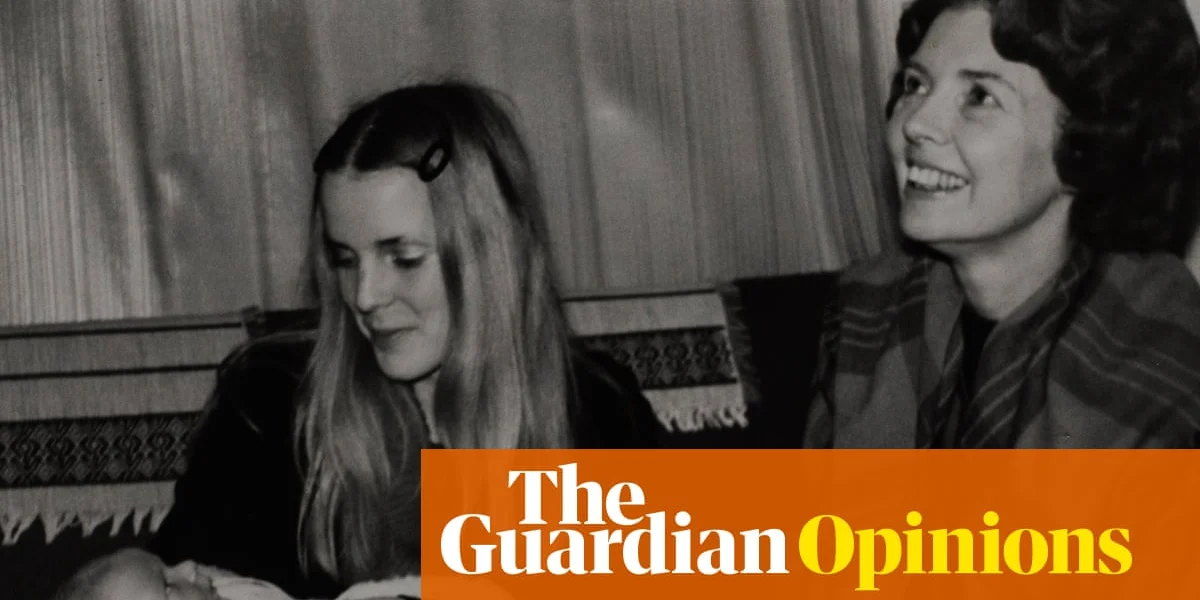
Indeed, Blyton’s tale, published in 1955, now reads like propaganda for an era of forced adoption. Between 1949 and 1976, an estimated 185,000 babies, myself included, were taken from unmarried mothers in England and Wales. These women were coerced into signing adoption consent forms due to a culture of shame surrounding pregnancy outside marriage. The reverend who oversaw my own adoption at a north London Baptist children’s home in 1974 described my first mother (the term many affected women prefer to “birth mother”), then 20 years old, as a “rebellious daughter” and “a determined but probably disturbed girl”.
On Thursday, the UK government formally apologised to mothers and adoptees in England affected by historical forced adoption. Survivors have waited a long time for this. In 2023, a recommendation by a parliamentary committee on human rights for a UK government apology was rejected by Rishi Sunak’s administration. In March of this year, the education committee called on ministers to urgently apologise, reminding them that many survivors are nearing the end of their lives. Indeed, many affected first mothers, including my own, have already died, as well as many adoptees.
The two parliamentary inquiries into historical forced adoptions heard harrowing testimony. Prof Gordon Harold, of the University of Cambridge, told the education committee earlier this year that the adoption system was “designed to punish and place – an unmarried mother is to be punished; a child is to be placed”. The former Labour MP Ann Keen, who was sent to a Swansea mother and baby home when she was 17 in 1966, told MPs that she was forced to give birth without pain relief and recalled being told by hospital staff: “You will remember the pain because you’ve been a bad girl.” Sally Ells, the co-founder of the Adult Adoptee Movement, said the loss of her original family “was never acknowledged”. “I felt alien throughout my childhood, and that is a feeling that persists,” she added.
The apology given by the prime minister, Keir Starmer, will be welcomed by survivors for recognising that many unmarried mothers were denied the choice to keep their babies and made to feel ashamed, while the children who were taken lost their identity and family history. But words are not enough. There needs to be proper redress for mothers and adoptees that reflects not only their individual pain and suffering, but also the systemic nature of the injustice they were subjected to by religious organisations, charities and state-run mother and baby homes.
Read more:Riding high at a World Cup on home soil, the time is now for the USMNT
The government would point to the fact that it has announced a £4m support package to help adoptees access their adoption records, fund intermediary services for adoption reunion, improve access to mental health support and carry out research and testimonial projects to document the long-term impact on survivors. But the details are sketchy and there appear to be some significant gaps in the proposals.
Indeed, while better access to mental health support will help, survivors really need free high-quality therapy, not least to help with navigating reunion with their original parents or the child taken from them. Many adoptees have told me that they ended up estranged from their adoptive family, their original family and sometimes even both due to the challenges of reunion. Although I had a few advice sessions with a support worker from a specialist adoption charity to help me to prepare to meet my first mother, they were insufficient. Our meetings increasingly felt like counselling sessions for her, which I was unprepared to handle, leading to the eventual breakdown of our relationship.
Better access to adoption records will benefit many adoptees who lack the information and advice to start tracing their first families. But those who are successful in obtaining their file often receive very limited information due to poor record-keeping and gatekeeping by social services and adoption agencies. I know of some adoptees who have only received a single page of vague information or heavily redacted forms, which prevented them from pursuing reunion. While my own records are much fuller, they omit anything from one of the agencies involved, which still exists.
Adoptees also need access to screening for inherited health conditions. Some have only discovered a hereditary disease risk during adoption reunion, which aggravated the stress of that process. I was recently diagnosed with a kidney condition that my maternal grandfather suffered from. This was originally misdiagnosed, partly due to a lack of family medical history.
The government apology made no mention of giving adoptees the right to revert to their original identity. But this is important for those who experienced abuse and neglect from their adoptive families, including racism against transracial adoptees. Adult adoptees in Australia can discharge their adoptions under reforms introduced after the country formally apologised for forced adoption in 2013.
Read more:Ansu Fati joins Monaco from Barcelona on a permanent deal
Then there is the question of the current adoption system. The government’s apology points out that things are different today, with strong legal safeguards, clear consent requirements and independent judicial oversight. But the truth is that the current system is in crisis. A growing number of adoptive families are breaking up, with traumatised children returned to the care system due to a lack of therapeutic support.
The other side of this crisis is the lack of support for birth families where children are at risk of being removed. Much early intervention support has been cut due to austerity. Some campaigners argue this is a significant reason why the UK has a high rate of adoption without parental consent compared with other countries in Europe.
Read more:How Norway’s ‘Viking Row’ was made, and then took over the World Cup
Policymakers and social workers must also thoroughly grapple with the legacy of forced adoption to ensure that historic biases, such as the idealised model of the white middle-class nuclear family, no longer unduly influence their decisions. The agency that handled my adoption opposed my maternal grandparents, who were a lecturer and a teacher, from adopting me on the grounds that it would be an unnatural family setup that could lead to childhood delinquency. While professional attitudes have changed, there is still scant support for kinship care in the UK.
In recent years, Blyton’s reputation has been reassessed, amid complaints that her writing was racist and sexist. Similarly, it is long past time to abandon the fairytale of adoption in which love is enough – and to face the more complicated reality.