
When I first moved to England, nearly two decades ago, I was invited to attend a talk in London on “the future of British identity”. It was a heated debate from the start, and it became all the more intense when the subject of putting colonial history in the school curriculum was raised. The two main speakers held opposite views and they traded barbs wrapped in velvet – scathing but polite at the same time. It wasn’t just the particulars of the oratory that stayed with me, but what happened afterwards. When the session was over, I saw the speakers shake hands, and then I heard one of them casually ask the other whether he would like to go for a pint. Off they went looking for a nearby pub, these two men who were at loggerheads on so many issues.
I stood there absorbing what I had just witnessed. That two people with clashing worldviews could still find the openness of heart to share a drink together somehow left a bigger impact on me than anything that had been said that evening. This is because I came from Türkiye, a country of profound political chasms and unhealed social fractures. Equally, I had lived in the US for about five years in the aftermath of 9/11 – writing and teaching in various universities in Boston, Michigan and Arizona, which gave me the chance to observe the deepening fissures between liberal campuses and anti-liberal small towns.
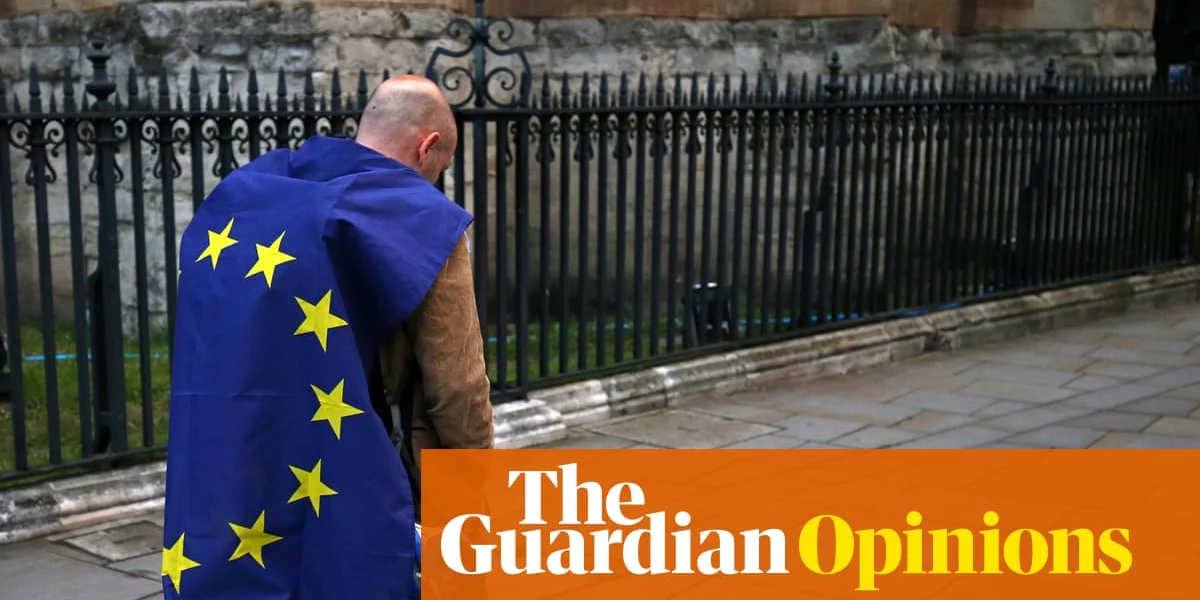
That day in London, I could not help but notice and appreciate that in Britain, despite many obvious points of contention, people from different camps could still find a common ground. As I am writing this piece in the week of the 10th anniversary of the Brexit referendum, so much has changed, and this distinctive characteristic has been sadly shattered. Nowadays, “opponents” are regarded as “enemies”.
Read more:USMNT’s Balogun has the World Cup, Europe’s biggest clubs taking notice
I have seen this at first hand. On my way back from the Hay festival this month I was told by a local man that we were in a time of war. He was not talking about Ukraine or Iran. He was referring to Westminster as a battleground. “They are all enemies and this is a war,” he repeated, before calling anyone who voted Labour, Green or Conservative “traitors”.
There is a direct correlation between this kind of incendiary rhetoric and a frightening rise in political and social violence. History has shown us, time and again, that polarisation, populism and ethnonationalism are preceded by a sinister shift in the usage of words. In his essay Politics and the English Language, George Orwell reminded us that a systematic degradation in speech goes hand in hand with a decay in critical thinking, deterioration in politics and the loss of shared reality.
In 2018, in Liverpool, an Istanbul-based artist, Banu Cennetoglu, had an art project dedicated to dead migrants and refugees. The memorial featured the names of more than 34,000 people who had lost their lives as they were trying to reach Europe. This installation was repeatedly vandalised and torn down. It was then sprayed with these words: “Invaders not refugees.” When refugees are called invaders, when political opponents become enemies, when people who vote differently are accused of being traitors, it becomes easier to dehumanise the other. A study carried out by researchers from the University of Michigan, Columbia University and Stony Brook University in 2023 revealed that sweeping generic statements about whole categories of people exacerbate existing divisions. This further erodes coexistence and social cohesion.
Over the years, I have become a British national and the UK, just like the English language, has become my home. I am old enough to remember a time when the words “diversity” or “multiculturalism” or “pluralism” were used in a positive sense. That no longer is the case. Now we are being told that we will be safer in the embrace of sameness. Politics has become increasingly dualistic between clashing certainties. Dualities in the shape of “leave versus remain”, “woke versus anti-woke”, “us versus them”, “natives versus immigrants” are being further amplified by social media platforms and tech empires that make enormous amounts of profit from climates of anxiety, anger and animosity.
Read more:Iran deny U.S. claim that team tried to bring Revolutionary Guard member to L.A.
Brexit revealed and reinforced the faultlines between political fractions, between generations and between locations. A study conducted by King’s College in 2025 found that “perceptions of division in the UK have reached their highest point” and “84% of the public now says the country feels divided”.
At almost every talk I give at literary festivals and book events across the country, someone in the audience tells me how Brexit broke their family relations and friendships. Over dinner tables, people either choose not to bring up politics at all or if they do, they quickly fall into enraged silence. Relatives have stopped talking to relatives. We disconnect and disengage. But that is when things become dangerous.
Read more:Sources: Mauricio Pochettino in positive talks over new USMNT contract
Constant political tension, social distrust and extreme polarisation only serve undemocratic tendencies and demagogues. Things become worse when political tribes turn into epistemological tribes and people start getting their information from “alternative” sources, abandoning the common ground of shared truth. When we cannot even agree on what the reality is, we have no reason to listen to each other.
Emotions matter. It is a heartbreaking irony that very often illiberal figures are more capable and simply better in connecting with people’s emotions than many of their democratic counterparts. The truth is that so many people today are worried about the future. The UK, even though one of the richest countries in the world, suffers from severe class, wealth and regional inequalities, all of which must be taken seriously. There must be a new and calmer language that connects, heals and treats each and every one with dignity. Not hierarchy. Not duality.
Read more:Scotland fans come to terms with being in third-place limbo
That language could come from the arts, which are ever more vital in an era of turbulence. There you will often find quiet thinkers and bridge builders. An untapped potential for empathy instead of anger and apathy. When we know each other’s stories, each other’s sorrows and dreams, we can realise that we have far more in common. We can stop treating voters of different persuasions as static blocs. In times of crisis it is all the more important to support cultural centres, youth centres, literary festivals and libraries. Change often comes not from those who shout the loudest, but from more humble corners.
Today, multiple polls indicate that a majority of Britons believe that Brexit has either failed to deliver its rosy promises or it was a mistake from the beginning. But this does not necessarily mean there is a general appetite to open up the subject again. In the week of this anniversary, we need to pause and think carefully about what has changed in our social contract and where the democratic language has been damaged. Much has been broken, but can also be mended.